Last Updated on 03/31/2026 by thecleaningninjas.com
[LATEST BRANDED VERSION]

House cleaning isn’t a boring chore—it’s environmental biology in action. That “exhale” you feel when your space goes from chaotic to clean? That’s your nervous system reading the room and quietly deciding, We’re safe now.
At The Cleaning Ninjas Inc, we treat house cleaning like precision work, because your environment is not just where you live—it’s the control panel for your hormones, focus, sleep, relationships, and recovery. When we do a deep cleaning, we’re not only removing dust; we’re reducing threat signals, lowering stress chemistry, and restoring order your brain can actually relax into.
And these rules don’t care about square footage. The biology works the same whether you live in a sprawling house or a compact city apartment. A clean apartment can be a sanctuary. A messy mansion can be a stress lab.
This post expands the conversation beyond dopamine into the full stack: cortisol, oxytocin (the “nesting effect”), melatonin and Growth Hormone (your nightly repair cycle), plus the “Field” concept—how a space shifts from chaotic to coherent, and how that coherence affects the humans inside.
1. Andrew Huberman’s Take: Dopamine, Momentum, and Why House Cleaning Works
Neurobiology experts like Andrew Huberman frame dopamine as the molecule of pursuit—your internal “keep going” signal. It’s not just a reward chemical; it’s the driver of forward motion.
Here’s the problem: clutter creates a constant background list of “unresolved tasks.” Mail piles, sticky counters, a chair that’s become a clothing rack—your brain tags it all as unfinished. That cognitive friction quietly taxes your ability to initiate work, workouts, and even conversation.
House cleaning fixes that in a very literal way. Each cleaned surface is visible progress, which your brain reads as success. This is why a consistent bi-weekly house cleaning rhythm can feel like upgrading your brain’s operating system: fewer open loops, less friction, more momentum.
And yes—this works whether you’re maintaining a five-bedroom home or doing apartment cleaning in a 600-square-foot high-rise. The brain responds to what it can see, not your mortgage.

2. UCLA’s Findings: Clutter Raises Cortisol (Because Your Brain Thinks It’s a Threat)
Research from UCLA’s Center on Everyday Lives of Families (CELF) linked “cluttered” homes with elevated cortisol patterns—aka the stress hormone that makes everything feel urgent, loud, and harder than it needs to be.
That matters because cortisol isn’t just “stress.” It’s preparedness. When your environment looks unfinished, your nervous system stays slightly mobilized: scanning, bracing, anticipating. Over time, that baseline tension shows up as shorter temper, worse sleep, and lower motivation.
A professional deep cleaning is essentially a “cortisol downshift” for your space. Remove the cues of disorder and your body is more likely to drop out of fight-or-flight and into rest-and-digest—whether you’re doing house cleaning in a suburban home or apartment cleaning in the middle of a busy city.
3. Jordan Peterson, Agency, and the “I Run This Place” Signal
Jordan Peterson’s “clean your room” advice stuck because it’s less about dust and more about agency. In a world that’s unpredictable, your immediate environment is the one domain where you can reliably create order.
A consistent house cleaning routine is a daily vote for competence. It’s a small but powerful message to your brain: I can influence outcomes. That psychological traction matters—especially when work is chaotic, parenting is relentless, or life is doing that fun thing where it throws three problems at you at once.
And again, scale is irrelevant. Agency works the same in a large house or a compact apartment. Order is a signal, not a square-footage flex.
4. Gretchen Rubin + Environmental Biology: Outer Order, Inner Calm (and Better Chemistry)
Gretchen Rubin popularized “Outer Order, Inner Calm,” and it holds up because it matches how humans are built. Your brain is constantly running a safety scan. When your environment is predictably clean, that scan quiets down.
Dopamine gives you the “progress” buzz. But the longer-lasting benefit is calm—more emotional steadiness, less irritability, and (often) better sleep. In practical terms: house cleaning isn’t just aesthetic. It’s how you make your environment biologically easier to live in.
This is where the post widens into what we’ll call Environmental Biology: the study of how your space shapes your hormones and behavior. You don’t just live in your home—your nervous system is responding to it all day.

5. Visual Noise, Attention, and the Secret Tax You’ve Been Paying
Your brain has limited attention bandwidth. Clutter hijacks it. Every object out of place is a tiny “ping” to your nervous system—an open loop asking for resolution.
That’s why messy counters can make you feel tired before you’ve even started the day. You’re spending mental energy ignoring your surroundings.
This is one reason bi-weekly house cleaning is such a cheat code: it prevents visual noise from compounding into decision fatigue. It’s also why apartment cleaning can be even more dramatic—smaller spaces amplify visual signals. A little mess can feel like a lot because it’s always in your line of sight.
6. Joe Dispenza, “The Field,” and Why a Clean Space Feels Coherent
Dr. Joe Dispenza talks about how environment and state reinforce each other. Live in chaos long enough and your body normalizes the stress chemistry—high baseline cortisol, constant stimulation, and that weird restlessness when things get “too quiet.”
Now add the concept many people call “The Field”: the felt sense of a space—the vibe, if you want the casual term. Chaotic spaces feel noisy because they are information-dense and unresolved. Clean spaces feel coherent because the signals align: surfaces cleared, items placed intentionally, air moving, light bouncing.
From an Environmental Biology lens, the “Field” is your nervous system’s interpretation of order vs. threat. When you clean, you shift the room from chaotic to coherent—and the biology of everyone inside shifts with it. Couples argue less. Kids regulate faster. You breathe deeper without negotiating with yourself.
This isn’t mystical; it’s what happens when your sensory inputs stop screaming.
7. Oxytocin and the “Nesting Effect”: Clean Spaces Create Safety (and Better Relationships)
Let’s talk about the hormone nobody mentions in cleaning articles (even though it’s quietly running your home): oxytocin—the bonding chemical tied to trust, affection, and that “we’re good” feeling in relationships.
A clean home or apartment creates what we’ll call the Nesting Effect: a sanctuary of safety. When your space is orderly, your body relaxes out of threat mode (lower cortisol), which makes it easier for oxytocin-driven behaviors to show up: warmth, patience, playfulness, connection.
In a messy environment, everyone’s nervous system is a little sharper. In a clean environment, people are more likely to soften. That is why house cleaning isn’t just for your floors—it’s for your family culture.
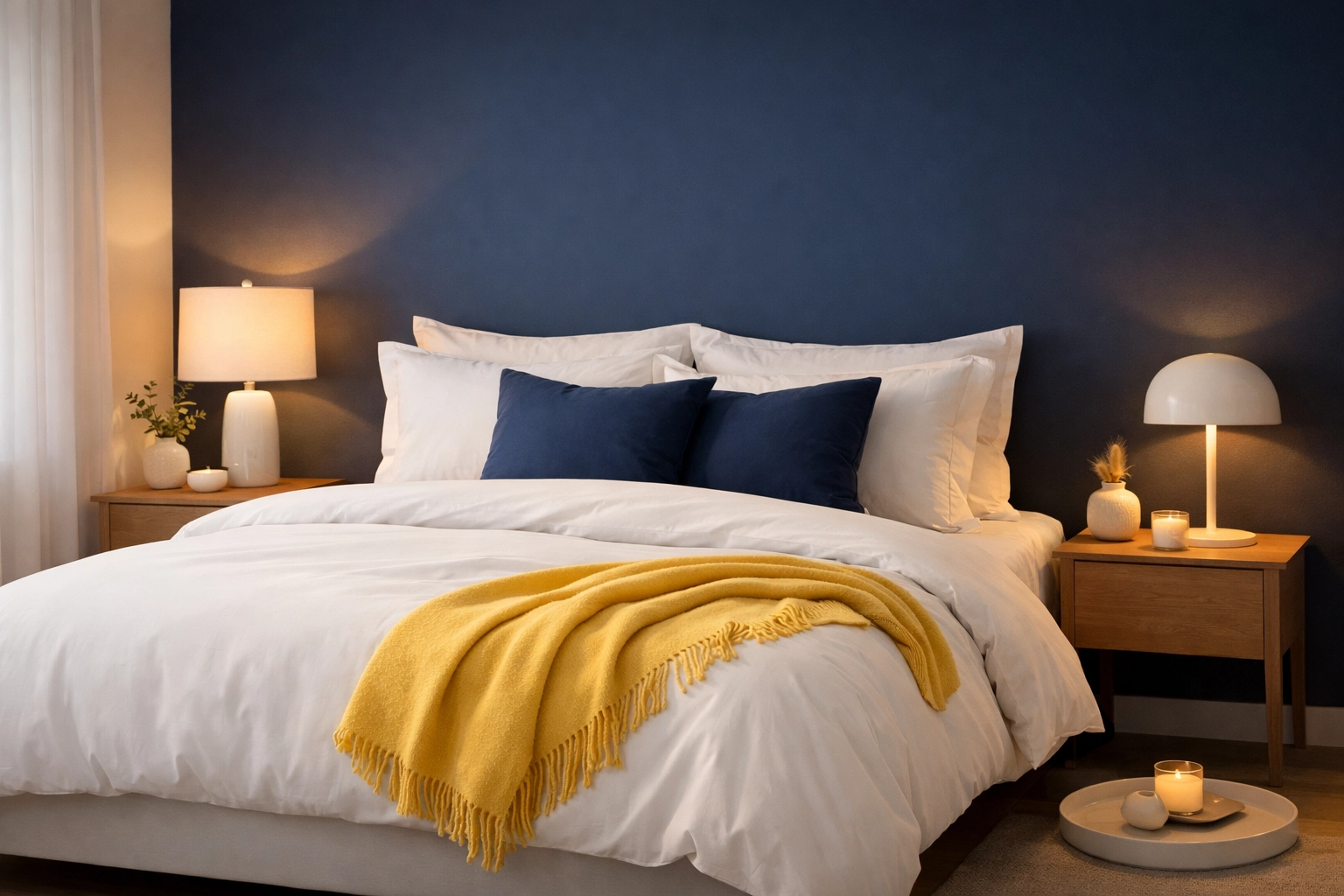
8. Melatonin + Growth Hormone: The “Nightly Repair Cycle” Starts With a Clean Bedroom
Sleep isn’t just rest—it’s a biological repair shift. Your brain uses darkness and routine to produce melatonin, the hormone that helps initiate sleep and coordinate circadian timing. Once sleep is deep and stable, your body increases pulses of Growth Hormone (GH)—a major player in tissue repair, recovery, and healthy aging.
Here’s the punchline: a chaotic bedroom sabotages the conditions that support that cycle.
An organized, clean bedroom reduces sensory friction: fewer distractions, less dust, less “unfinished business” your brain wants to solve at 11:47 PM. Think of house cleaning as the physical prerequisite for a truly quiet nervous system. If you want an elite recovery routine, start with an environment that actually allows melatonin to do its job—whether that bedroom is in a huge house or a studio apartment.
9. The Bigger Narrative: Environmental Biology (Rubin, Huberman, Dispenza—All Point to the Same Thing)
Keep the names, zoom out the lens:
- Huberman gives you the dopamine mechanics of progress and focus.
- Rubin captures the psychology: outer order really does create inner calm.
- Dispenza adds the state-environment feedback loop: your space trains your chemistry.
Put together, you get the operating principle: your environment is a biological input. That’s Environmental Biology. Clean spaces are coherent. Coherent spaces lower cortisol, support bonding (oxytocin), protect focus (dopamine), and set the stage for sleep hormones (melatonin + GH).
And yes, your address doesn’t change this. A compact apartment can be a world-class recovery chamber. A big house can be a sensory junk drawer. The variable is not size—it’s signal quality.
One last practical note: the fastest way to maintain high signal quality is consistency. That’s why bi-weekly house cleaning is so effective; it prevents the “drift” back into chaos that quietly raises your stress baseline.
Breaking the Chaos Cycle (Without Needing a New Personality)
People don’t “choose” chaos the way they choose a paint color. They adapt to it. Once your body normalizes a high-stimulation environment, calm can feel unfamiliar.
That’s why a professional deep cleaning is powerful: it creates an immediate before/after contrast your biology can feel. After that, recurring house cleaning (or consistent apartment cleaning) keeps the system from sliding back.
This is where The Cleaning Ninjas Inc comes in. We’re not here to judge your “busy season.” We’re here to restore order with ninja-like efficiency and eco-friendly products—so your home supports your life instead of competing with it.
Why The Cleaning Ninjas Inc Is Built for High-Standard House Cleaning (and Apartment Cleaning)
At The Cleaning Ninjas Inc, we do more than surface-level shine. We’re your partners in sustainable order—reliability, detail, and green products that keep your environment clean without bringing harsh chemical drama into the room.
Whether you need:
- a one-time deep cleaning to reset the baseline, or
- recurring bi-weekly house cleaning to keep the biology consistent,
we’ve got you.
Explore services here: https://thecleaningninjas.com/our-services/
Final Thought: You Don’t Just Feel Better—You Become Easier to Live With
A clean home isn’t a luxury. It’s a lever. House cleaning reduces stress signals, supports bonding, improves focus, and protects the nightly repair cycle that keeps your body and brain resilient.
Ready to upgrade your space into a biological sanctuary?
👉 Book your cleaning with The Cleaning Ninjas
Common Questions About House Cleaning, Apartment Cleaning, and Your Biology
Does house cleaning actually reduce stress?
Yes. Clutter acts like a persistent stress cue. Removing it (especially through deep cleaning) reduces sensory load and supports lower cortisol patterns over time.
Does apartment cleaning matter as much as house cleaning?
Often more. Smaller spaces concentrate visual noise. Apartment cleaning can create a bigger perceived shift because order is always in view.
How often should I schedule bi-weekly house cleaning?
Bi-weekly house cleaning is the sweet spot for many households: frequent enough to prevent buildup, spaced enough to feel efficient and sustainable.
What’s the difference between regular house cleaning and deep cleaning?
Regular house cleaning maintains order. Deep cleaning resets it—targeting buildup your brain may “tune out,” even while your nervous system still reacts to it.
Is there any science connecting environment to sleep hormones like melatonin?
Melatonin production depends on circadian timing and darkness, but sleep quality is strongly affected by stress and arousal. A clean, organized bedroom reduces distractions and supports a calmer pre-sleep state—making it easier for the body to enter the nightly repair cycle (including GH pulses).