Category: House Cleaning
SEO Title: Heater Dusting: Improve Efficiency & Indoor Air Quality | The Cleaning Ninjas
When the temperature drops and that first frost hits the windowpane, there is nothing quite like the cozy hum of a heater kicking on.
But have you ever noticed a faint, singed smell the first time you fire it up for the season? Or perhaps you’ve wondered why one room feels like a sauna while the other is still a refrigerator? Usually, we blame the thermostat or the age of the unit, but often, the culprit is much smaller and sneakier: dust.
At The Cleaning Ninjas Inc, we talk a lot about sparkling countertops and vacuumed floors, but some of the most important cleaning happens in the spots you can’t easily see. Dusting your heaters isn’t just about making the house look nice for guests; it’s about making your home breathe better and your wallet feel a little heavier. In this guide, we’re going to dive into why heater maintenance is a game-changer for your indoor air quality and how you can tackle baseboards and radiators like a pro.
The Hidden Cost of a Dusty Heater
It’s easy to think of dust as just a cosmetic nuisance: a thin grey film that settles on the TV stand. But when it settles inside your heating system, it becomes a literal blanket of insulation where you don't want it.
Research shows that regular heater dusting can improve HVAC efficiency by anywhere from 5% to 15%. That might not sound like a massive number on paper, but when you look at your monthly energy bill during a mid-winter cold snap, that 15% is a significant chunk of change. Every pound of accumulated dirt forces your system to work harder.
Think of it this way: your heater is trying to push warmth into your room. If the heat exchanger or the coils are coated in dust, that dust acts as a barrier. The heat has to fight through the "dust blanket" before it can even start warming your air. This causes the system to run longer and cycle more frequently, which leads to premature wear and tear. A system that is constantly struggling is a system that is headed for an expensive repair call.
Breathing Easy: Dust and Your Air Quality
Beyond the financial aspect, there is the matter of what you are actually breathing. When your heater turns on, it creates airflow. If your vents, radiators, or baseboard fins are caked in dust, pet hair, and dander, that airflow picks up those particles and circulates them through every room in your house.
For anyone in the family with allergies or asthma, this is a recipe for a long, sniffly winter. Dust isn't just "dirt"; it’s a cocktail of skin cells, fabric fibers, pollen, and microscopic debris. When it hits the heating elements and gets scorched, it releases that "burnt dust" smell and can irritate your lungs. By keeping these areas clean, you are effectively reducing the load on your air filters, allowing them to do their actual job of catching smaller pollutants rather than being overwhelmed by "floor bunnies" that got sucked into the intake.
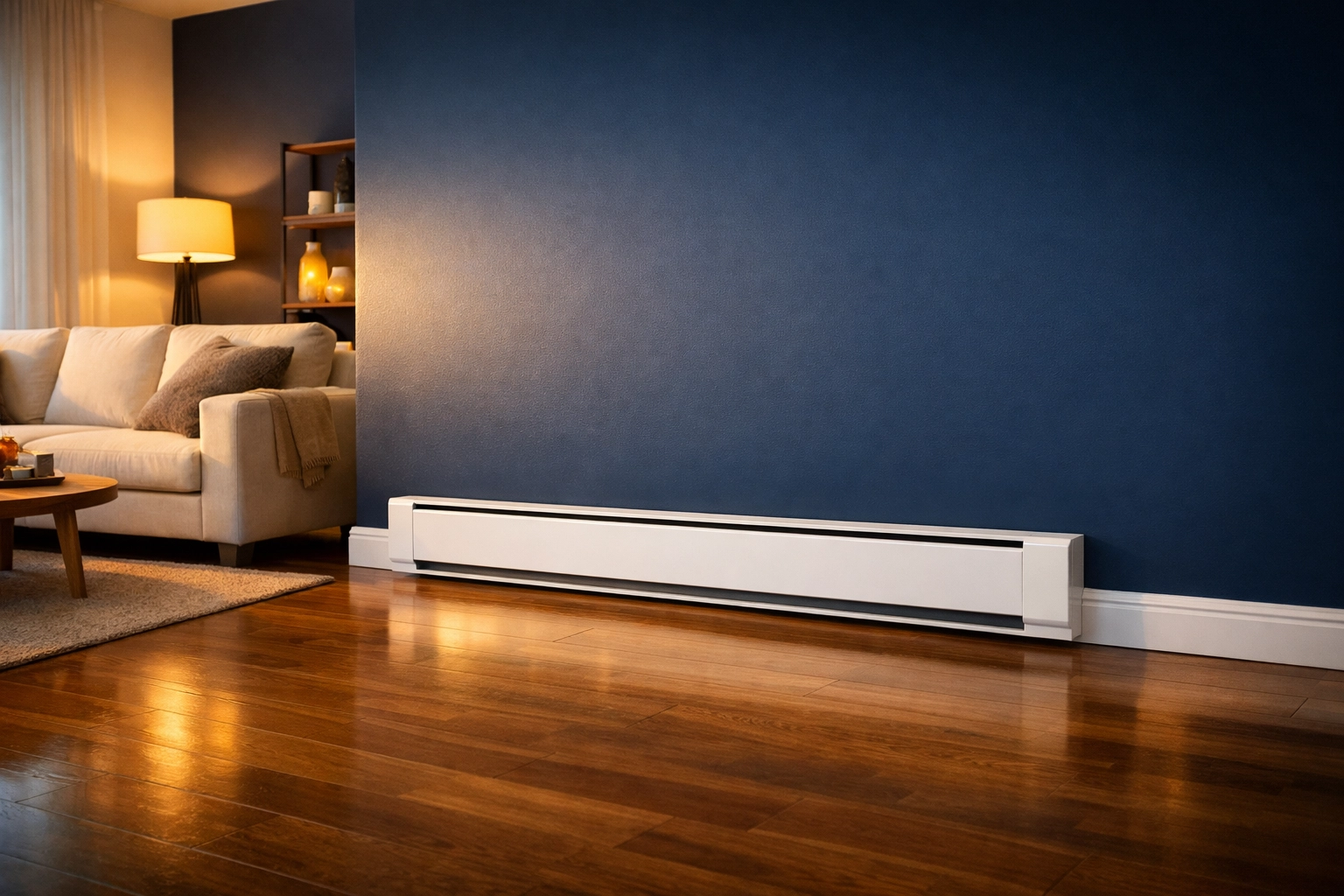
How to Clean Baseboard Heaters
Baseboard heaters are notorious for being dust magnets. Because they sit right at floor level, they catch everything that falls. They work through convection: drawing cold air in through the bottom, heating it up via metal fins, and releasing it out the top. If those fins are clogged, the convection process breaks down.
Step 1: Safety First
Before you even touch a cleaning tool, turn the heater off. If it’s an electric baseboard, turn off the breaker. If it’s hydronic (water-based), just make sure the thermostat is turned down so the unit is cool to the touch. You don't want to burn your fingers or melt your vacuum attachments.
Step 2: Remove the Cover
Most baseboard covers can be popped off or unscrewed. Removing the cover gives you direct access to the "fins": those thin metal plates that look like a horizontal accordion. This is where the magic happens, and where the dust hides.
Step 3: The Vacuum Phase
Use a vacuum with a crevice tool or a soft brush attachment. Gently run the brush along the fins. Be careful! These fins are often made of thin aluminum and can bend easily. If they bend, they block airflow. If you do accidentally bend a few, you can gently straighten them with a pair of pliers or a "fin comb" from a hardware store.
Step 4: The Detail Work
Sometimes vacuuming isn't enough, especially if there is pet hair stuck deep between the fins. A long-bristled paintbrush is a secret "ninja" tool here. Use the brush to flick the dust out of the crevices while holding the vacuum nozzle nearby to catch the debris.
Taming the Radiator
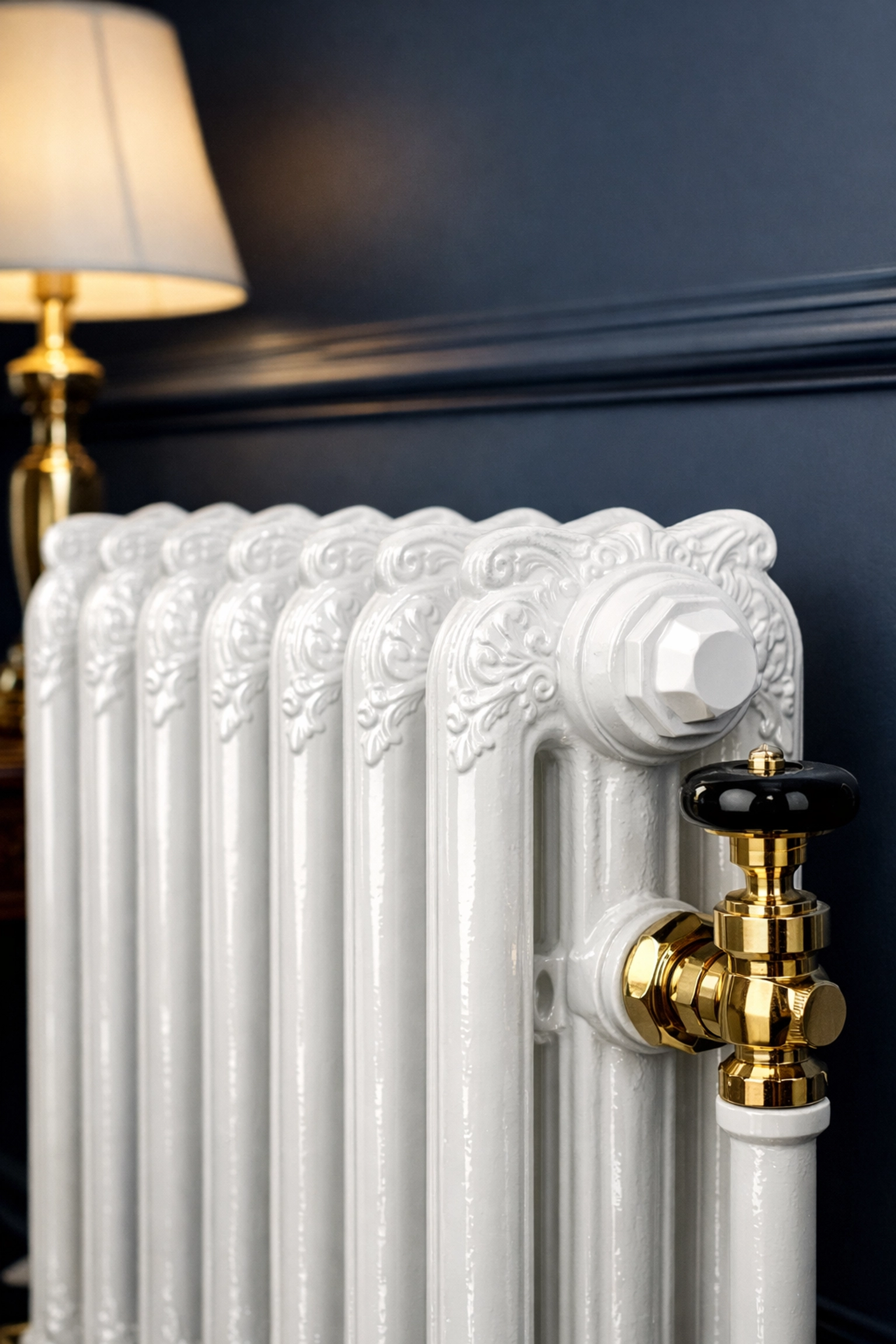
Radiators, whether the old-school cast iron versions or modern flat-panel styles, have a lot of surface area. While they don't have the same "fins" as baseboards, they have plenty of nooks and crannies that are hard to reach.
The "Damp Cloth" Method
For cast iron radiators, the goal is to get between the columns. A long-handled microfiber duster is great, but if you don't have one, you can wrap a damp cloth around a yardstick or a thin coat hanger. The dampness helps trap the dust so it doesn't just fly into the air.
The Blow-Out Trick
If you have a radiator that is particularly difficult to reach, you can place a damp towel or a sheet on the floor behind and underneath the radiator. Then, use a hairdryer on the "cool" setting (or a leaf blower if you’re feeling adventurous and have the space!) to blow the dust out from the back. The damp towel will catch the flying debris so it doesn't just settle elsewhere in the room.

Maintaining Vents and Registers
If you have a forced-air system, your "heaters" are actually the vents in the floor or ceiling. These act as the gateway for your home’s air.
- Remove the Grates: Don't just vacuum through the slats. Take the grates off entirely.
- Wash the Grates: You can actually wash most metal vent covers in the sink with warm, soapy water. This removes the oily film that often builds up and causes dust to stick.
- Reach into the Duct: Use your vacuum hose to reach as far into the duct as possible. You’d be surprised what falls down there: Legos, dog kibble, and enough dust to build a second cat.
When to Call in the Ninjas
We know that life gets busy. Sometimes, the thought of unscrewing baseboard covers and scrubbing radiator columns is the last thing you want to do on your weekend. That’s where we come in. While we focus on making your living spaces shine, a comprehensive home cleaning often reveals just how much hidden dust is lurking in these utility areas.
If you feel like your home is constantly dusty no matter how much you wipe the tables, it might be time for a professional top-to-bottom clean. You can check out our services to see how we can help take the burden of deep cleaning off your shoulders. Our team is trained to spot those "hidden" dust zones that most people overlook.
Long-Term Benefits of Heater Maintenance
Consistency is the key to a healthy home. By adding heater dusting to your seasonal cleaning routine: ideally once in the fall before you turn the heat on, and once in the spring when you turn it off: you’re doing more than just cleaning. You’re performing preventive maintenance.
- Component Longevity: As mentioned in our research, dust can cause blower motors to overheat. When a motor has to work through a layer of grit, it generates more friction and heat. Keeping things clean extends the life of these expensive parts.
- Reduced Filter Waste: When your heaters are clean, your air filters stay cleaner longer. This means you aren't throwing away filters every three weeks because they’re clogged with visible grey lint.
- The "Clean House" Smell: There is a distinct difference between a house that is "surface clean" and a house that is truly deep-cleaned. Eliminating the source of scorched dust odors makes your home feel fresher the moment you walk through the door.
A Quick Ninja Tip for the Road
If you’re doing a quick weekly tidy, don't forget the "intake" vents (the large ones, usually located in a hallway or near the floor). These are the lungs of your heating system. If these are covered in dust, your heater is basically trying to breathe through a straw. A 30-second swipe with a vacuum attachment once a week can save you a lot of trouble in the long run.
At The Cleaning Ninjas Inc, we believe a clean home is a happy, healthy, and efficient home. Whether you're DIY-ing your heater maintenance or looking for a team to handle the heavy lifting, keeping that dust at bay is one of the best things you can do for your space.
If you want to learn more about our philosophy and the team behind the masks, feel free to visit our About Us page. We’re always here to help you win the war against dust!
Stay warm, stay efficient, and keep those heaters humming!