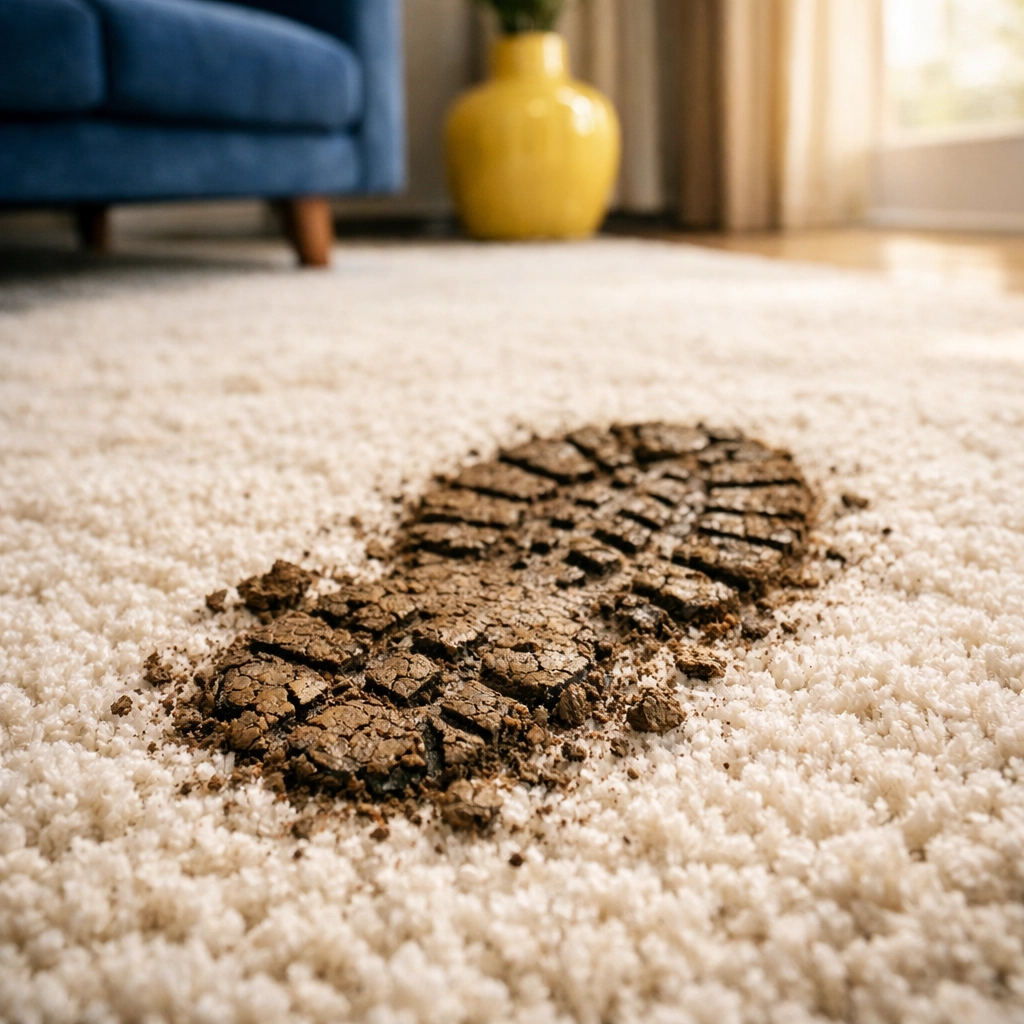
You’ve finally reached the end of your home renovation journey. The dust has settled, the new fixtures are gleaming, and the contractor has officially packed up their tools. It’s a moment for celebration, until you look down. Right across your once-pristine hallway carpet is a trail of muddy, gritty boot prints. It’s the calling card of a job well done, but it’s definitely not the aesthetic you were going for.
Post-construction cleaning is a beast of its own. Unlike your weekly tidy-up, construction debris involves specialized materials: drywall dust, fine sawdust, and the heavy-duty mud tracked in from outdoor work sites. If you tackle these stains the wrong way, you risk turning a temporary mess into a permanent part of your flooring. Here at The Cleaning Ninjas Inc, we believe every homeowner can channel their inner ninja to restore their space.
In this guide, we’re going to walk through the exact process of rescuing your carpets from those stubborn contractor boot prints using eco-friendly methods that are safe for your family, your pets, and the environment.
Why Contractor Dirt is a Different Beast
Before we grab the scrub brush, we need to understand what we’re dealing with. Contractor mud isn't just "dirt." It often contains high levels of grit, sand, and sometimes even trace amounts of construction chemicals or residues.
When someone walks across your carpet with heavy work boots, they aren't just placing dirt on top of the fibers; they are grinding it deep into the backing. The pressure of a 200-pound person plus the weight of their tools forces those particles into the very "V" of the carpet pile. If you start scrubbing immediately, those sharp grit particles act like tiny saws, shredding the delicate carpet fibers and causing "shading" or permanent wear patterns. Our goal is extraction, not friction.
Step 1: The Golden Rule of Mud – Wait!
It sounds counterintuitive. Your instinct is to grab a wet rag and start wiping the second you see a footprint. Stop right there. If the mud is still wet, wiping it will only smear the liquefied soil deeper into the carpet and expand the surface area of the stain.
The most important tip we can give you is to let the mud dry completely. Depending on the humidity in your home, this could take a few hours or even overnight. You want the mud to reach a dry, crusty state where it can be crumbled. By waiting, you allow the soil to bond to itself rather than the carpet fibers, making it much easier to remove without using harsh chemicals.
Step 2: The Dry Extraction (The Power of the Vacuum)
Once the footprints are bone-dry, it’s time for the most critical phase: dry extraction. This is where most people go wrong by skipping straight to liquids.
- Break it up: Take a blunt object, like the edge of a spoon, and gently tap the dried mud prints. You want to crack the "crust" of the mud so it turns back into dry dust and dirt. Be careful not to scrape too hard; you just want to loosen the bond.
- Vacuum, Vacuum, Vacuum: Use a high-quality vacuum cleaner with a brush roll (beater bar) if your carpet type allows it. Move the vacuum slowly over the footprints in multiple directions, north to south, then east to west. This "cross-hatching" technique ensures the vacuum's suction pulls dirt from every angle of the fiber.
- The Detail Tool: Use the crevice tool or the small upholstery attachment to get right into the base of the carpet where the grit likes to hide.
By the time you finish this step, the visible "chunkiness" of the footprint should be gone, leaving only a faint shadow or stain behind.
Step 3: Preparing Your Eco-Friendly Ninja Solution
We are big fans of keeping things green. You don't need industrial-strength solvents to handle most construction tracks. In fact, heavy chemicals can often leave a sticky residue that actually attracts more dirt later on.
For a safe, effective cleaning solution, mix the following:
- 2 cups of warm (not boiling) water.
- 1 tablespoon of clear, eco-friendly dish soap (ensure it doesn't contain bleach).
- 1 tablespoon of white distilled vinegar (the vinegar helps break down alkaline construction dust like drywall or lime).
Mix this gently in a bowl or a spray bottle. The goal is a light sudsy mixture that lifts the pigment of the soil without soaking the carpet padding.

Step 4: The Blotting Technique (No Scrubbing Allowed!)
This is where you earn your ninja headband. When you apply your solution, the technique is everything.
The Blotting Process:
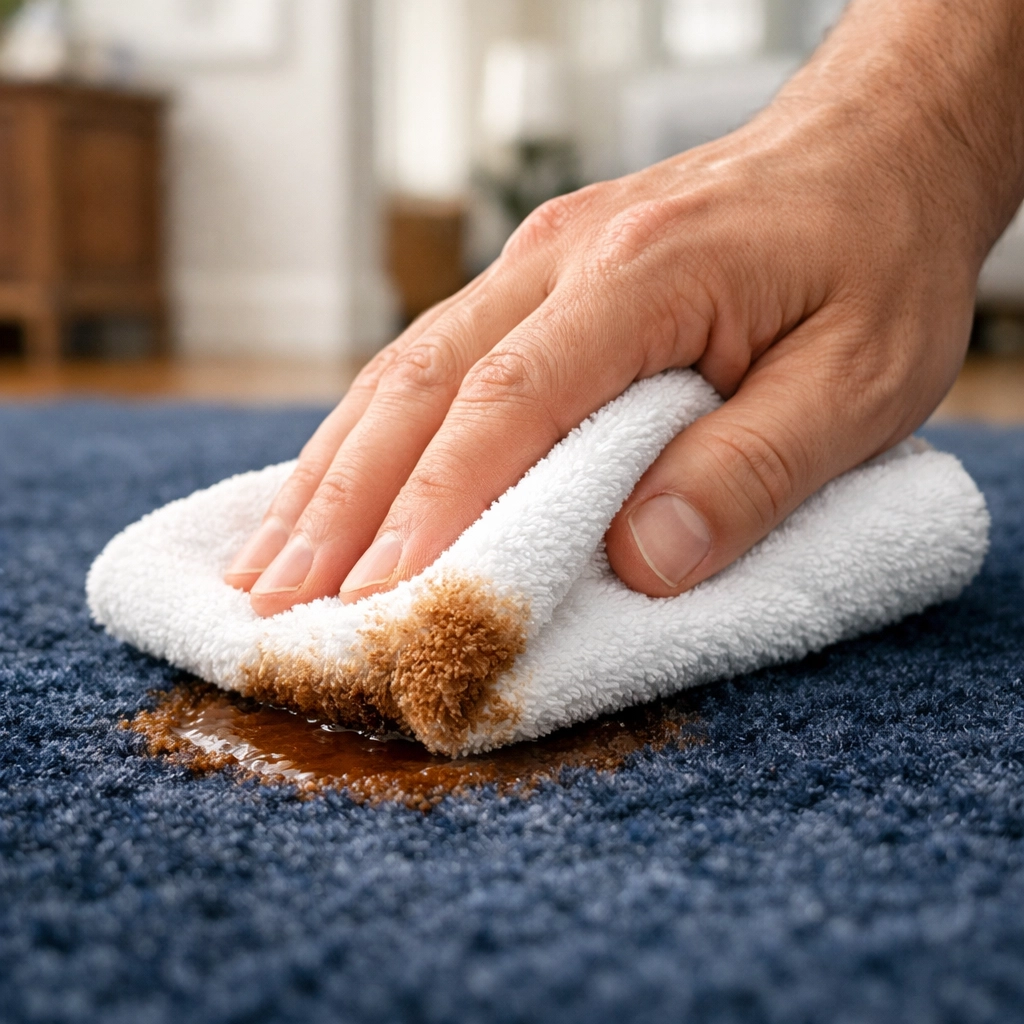
- Work from the Outside In: Dampen a clean, white microfiber cloth with your solution. Start at the outer edges of the footprint and work toward the center. This prevents the stain from spreading outward.
- Apply Pressure: Press down firmly on the stain, hold for a few seconds, and lift. You should see the brown pigment transferring from the carpet to your white cloth.
- Rotate the Cloth: Always use a clean section of the cloth for every blot. If you use a dirty section, you’re just pushing mud back into the floor.
- Rinse with Water: Once the stain seems gone, take a fresh cloth dampened only with plain water and blot again. This removes any soap residue. Soap left in a carpet is a magnet for future dust.
Step 5: Deep Extraction for Heavy Grit
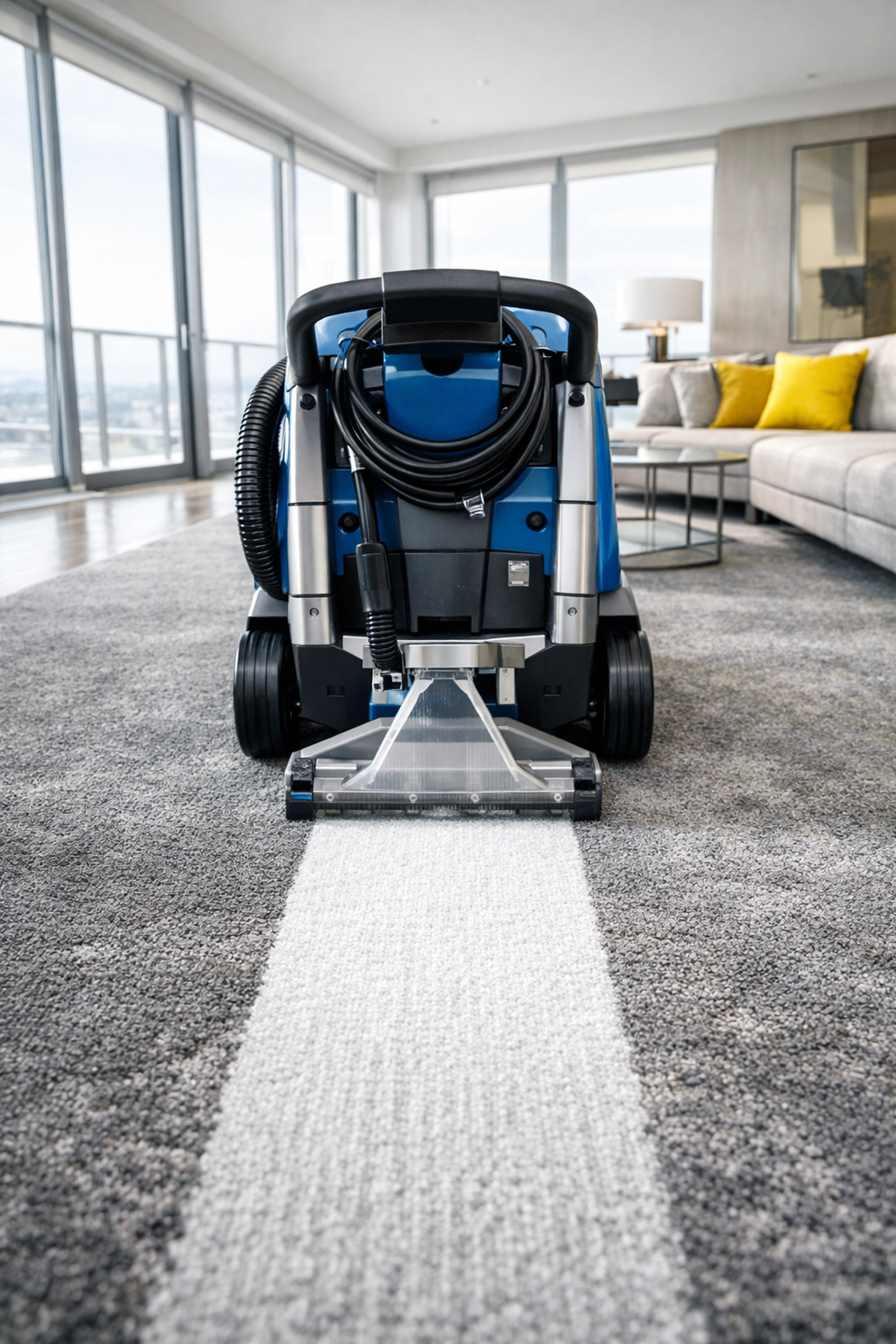
If the contractor prints covered a large area or the mud was particularly clay-heavy, manual blotting might not be enough. This is when you bring in a home carpet extractor or "shampooer."
When using a machine, follow these eco-friendly tips:
- Skip the "Stock" Detergent: Many machine detergents are loaded with artificial fragrances. You can often use a mixture of water and a small amount of vinegar in the tank for a cleaner, fresher result.
- Don't Over-Wet: Run the machine over the area with the water trigger squeezed, then go over it 3-4 times without the trigger to suck up as much moisture as possible. A damp carpet is a happy carpet; a soaked carpet can grow mold.
- Use a Fan: Point a floor fan at the treated area to speed up drying. The faster it dries, the less chance there is of "wicking," which is when deep-seated stains travel back up the fiber as the water evaporates.
Dealing with "The Ghost of Footprints Past" (Wicking)
Sometimes, you’ll clean a carpet, it looks great, and then 24 hours later, the footprint mysteriously reappears. This isn't magic; it’s wicking. It happens when the soil was so deep in the backing that the moisture used during cleaning pulled it up to the surface.
If this happens, don't panic. Simply repeat the blotting process with a dry towel. Place a heavy book on top of a stack of clean white towels over the spot and leave it for a few hours. This "sandwich" will draw the moisture and the remaining soil into the towel.
Prevention: The Best Ninja Defense
While we love a good cleaning challenge, the best way to handle contractor footprints is to prevent them. If you have more work scheduled, here are a few quick tips:
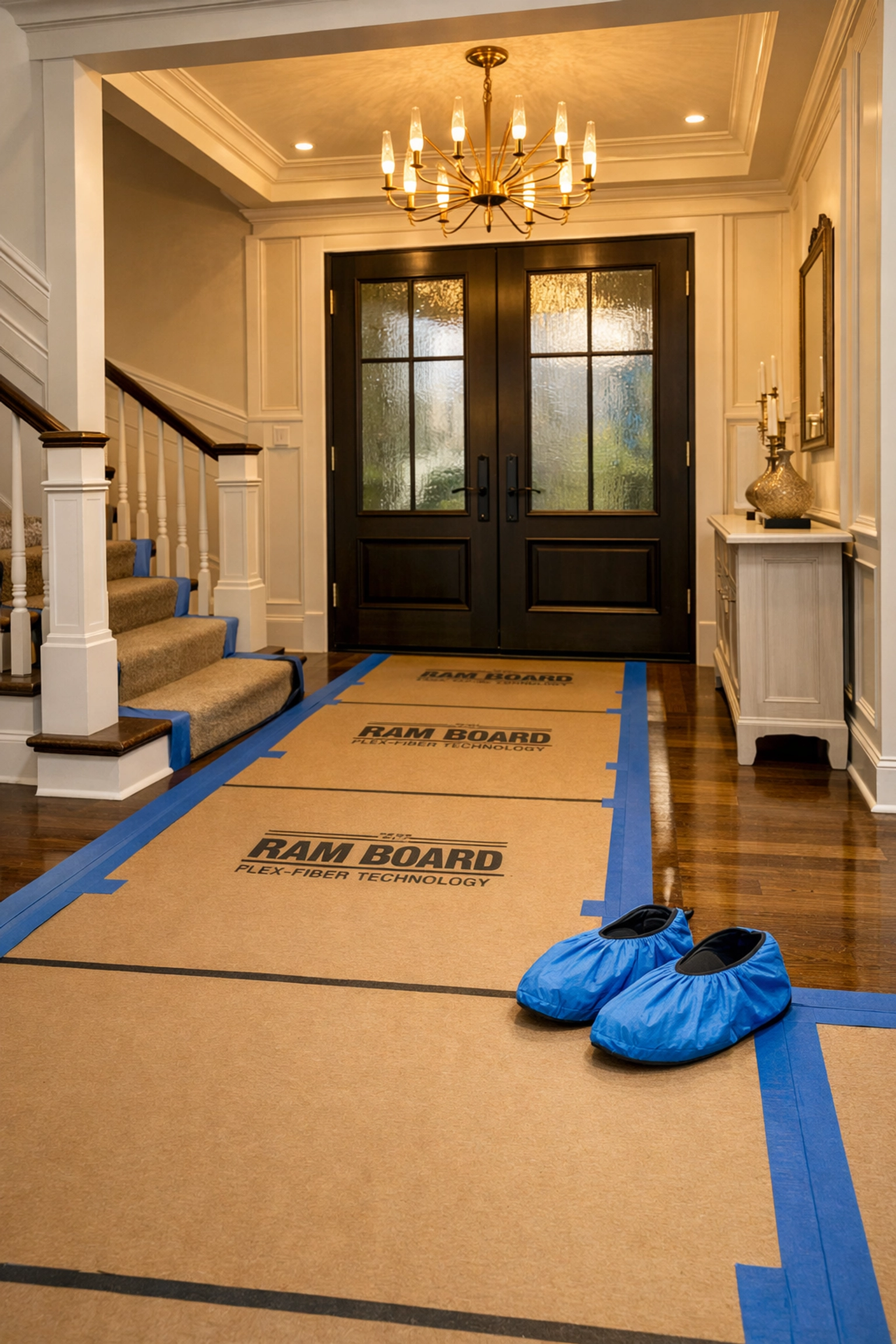
- Ram Board or Floor Protection: Ask your contractors to lay down floor protection in high-traffic paths.
- The "Bootie" Rule: Keep a box of disposable shoe covers by the door. Most professional contractors are happy to use them if provided.
- Walk-off Mats: Place heavy-duty mats both inside and outside the entrance to the construction zone.
Final Thoughts
Rescuing your carpets doesn't have to be a stressful ordeal. By being patient, letting the mud dry, and using gentle, eco-friendly extraction techniques, you can erase the evidence of the construction chaos.
If you’re interested in more ways to keep your home pristine after a big project, check out our other cleaning tips. You can also learn more about us and our philosophy on maintaining a healthy, happy home environment. For a full list of how we can help you keep your space in top shape, feel free to browse our services.
Now, take a deep breath, enjoy your newly renovated space, and walk across that clean carpet with confidence (and maybe without your shoes on!).