When you walk into a kitchen that’s just been through a professional weekly house cleaning, there’s a certain sparkle that hits you. The countertops are clear, the sink is gleaming, and everything feels "Ninja-approved." But as any home chef knows, the tools of the trade: specifically your kitchen knives: require a level of care that goes beyond a simple wipe-down.
At The Cleaning Ninjas Inc., we believe that a clean home is a safe home, and nowhere is that more true than when handling sharp blades. Whether you’re a culinary enthusiast or someone who just needs to slice an apple without a struggle, knowing how to clean and maintain your knives is essential. In this installment of The Cleaning Ninjas Tip, we’re diving into the safe, eco-friendly, and effective ways to keep your cutlery in top-tier shape.
Why Your Dishwasher is the Enemy of Quality Steel
It’s tempting. We get it. After a long day of cooking, the last thing you want to do is stand over the sink. You might think, "It says dishwasher safe on the box, so why not?"
Here is the "Ninja" truth: The dishwasher is a hostile environment for a quality knife. First, the high-heat cycles can actually alter the temper of the steel over time, making the blade more brittle or prone to dulling. Second, the aggressive water jets cause the knives to rattle around. If the edge of your chef's knife hits a plastic rack or another utensil, it can chip or dull instantly.
Furthermore, the detergents used in dishwashers are often highly abrasive. They can cause "pitting" in the metal and can dry out wooden handles until they crack or separate from the tang of the knife. If you’re paying for a bi weekly house cleaning service to keep your kitchen pristine, don't let a 60-minute dishwasher cycle undo the value of your expensive cutlery. Hand-washing is the only way to go.
The Ninja Hand-Washing Technique
Safety is our number one priority. When you’re washing something that can cut you, you need a system. Here is our recommended step-by-step process for cleaning your knives safely:
- Point Away: Always keep the sharp edge of the blade facing away from your body and your fingers.
- The Flat Surface Method: Instead of holding the knife in mid-air, lay it flat on a cutting board or against the side of the sink. This gives the blade stability and reduces the chance of it slipping.
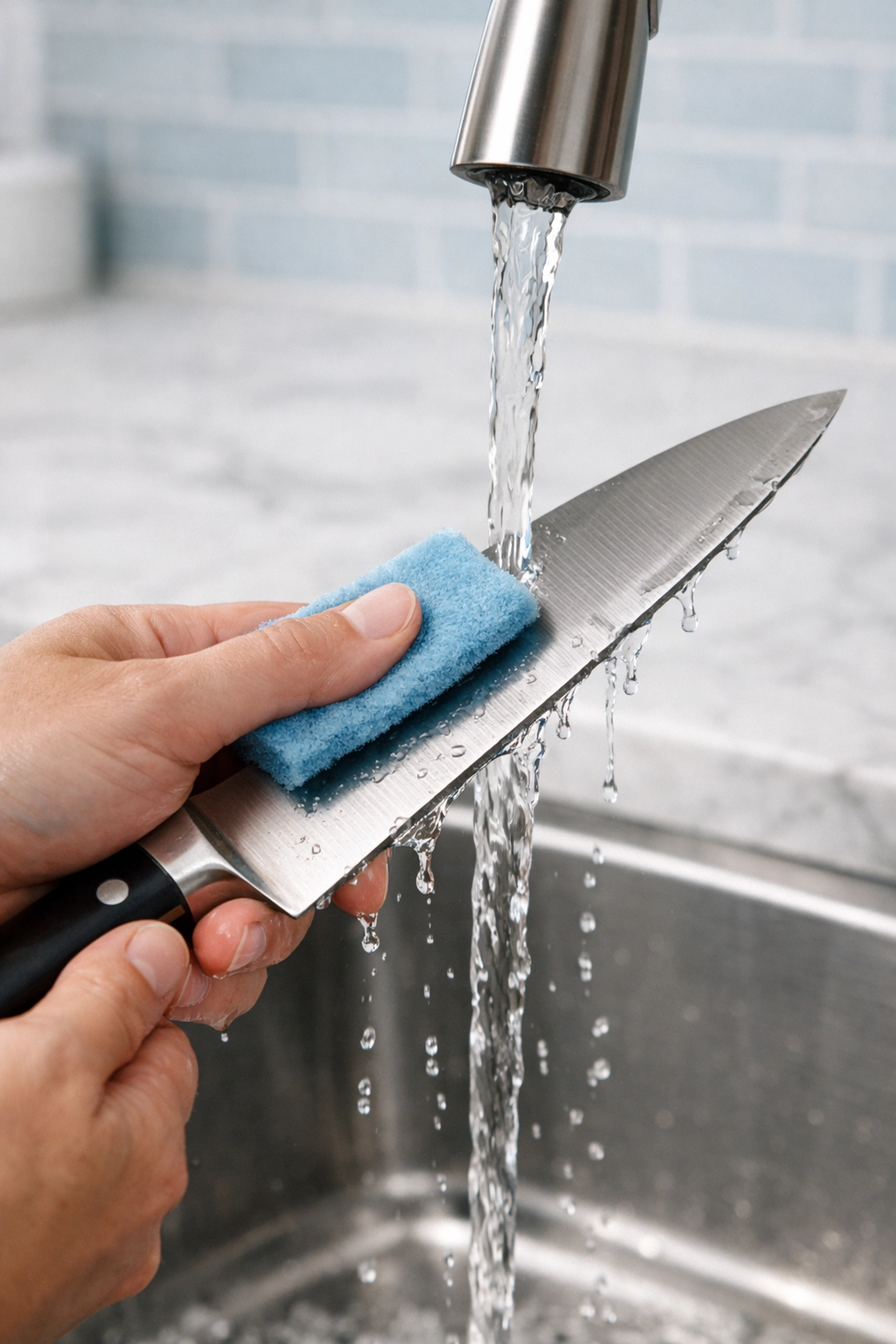
- The Spine Wipe: Use a soft sponge or a microfiber cloth. Apply a small amount of eco-friendly dish soap. Fold the cloth over the spine (the top, blunt edge) of the knife. Grip the spine through the cloth and pull the cloth toward the edge, moving from the handle toward the tip. Never, ever "saw" the cloth back and forth along the sharp edge.
- Temperature Matters: Use warm water. It doesn't need to be scalding. Warm water helps break down fats and oils from food without risking burns to your hands.
Eco-Friendly Solutions for Stubborn Stains
As a company that values green cleaning, we love using items you probably already have in your pantry. Sometimes, standard dish soap doesn't quite get the job done, especially if you’ve been cutting acidic foods or something that leaves a sticky residue.
- The Lemon and Salt Scrub: If you notice slight discoloration or "ghost" stains on your stainless steel blades, cut a lemon in half, dip it in coarse sea salt, and gently rub the blade. The acidity of the lemon acts as a natural bleach, while the salt provides just enough abrasion to lift stains without scratching the metal.
- Baking Soda Paste: For stuck-on food particles (like dried starch from potatoes), mix a tablespoon of baking soda with a few drops of water to create a thick paste. Apply it to the blade and let it sit for two minutes before wiping it away with a soft cloth. This is a staple tip we often share during our our services consultations because it's effective and non-toxic.
- Vinegar for Sanitization: If you’ve just finished prepping raw poultry, a quick spray of white vinegar after washing with soap and water can provide an extra layer of natural sanitization.
Never "Soak and Forget"
One of the biggest mistakes people make: and one of the most dangerous: is leaving knives in a sink full of soapy water.
From a safety perspective, reaching into a sink of opaque, sudsy water when a sharp chef’s knife is lurking at the bottom is a recipe for a trip to the emergency room. From a maintenance perspective, soaking is a nightmare for your knives. Water can seep into the handle, leading to rot in wood or rust in the rivets. If you can't wash it immediately, at least leave it visible on the counter or in a designated "dirty" tray: never submerged in the sink.
The Importance of Immediate Drying
Rust is the silent killer of even the best kitchen knives. Even "stainless" steel isn't actually "stain-proof": it's just "stain-resistant." If left damp, tiny spots of oxidation can form.
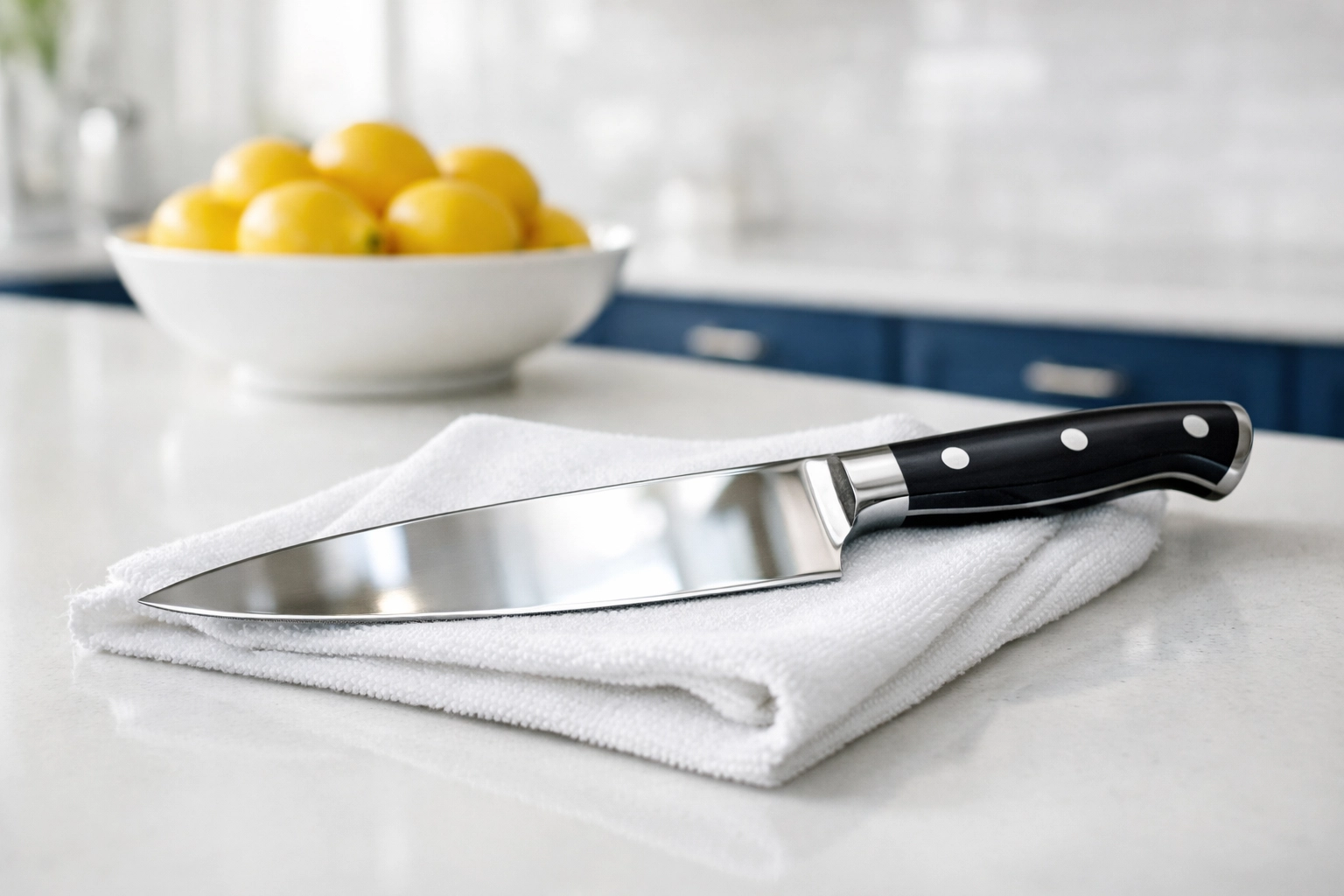
As soon as you finish rinsing your knife, dry it immediately with a clean, lint-free towel. Just like the washing process, wipe from the spine toward the edge. Ensuring the knife is 100% dry before putting it away prevents the growth of bacteria and mold, especially if you store your knives in a wooden block.
Integrating Knife Care into Your Cleaning Routine
We often tell our clients that maintaining a home is about the small habits. If you have a weekly house cleaning routine, you might use that time to hone your blades or check your knife block for crumbs and dust.
If you’re someone who prefers a bi weekly house cleaning schedule, you might take those extra few minutes every second weekend to apply a food-grade mineral oil to your wooden knife handles. This keeps the wood hydrated and prevents it from absorbing water or food odors.
Safe Storage for Longevity
Where you put your knife after it's clean is just as important as how you cleaned it. Throwing a sharp knife into a "junk drawer" or a general utensil drawer is dangerous for your fingers and bad for the blade. Every time the drawer opens and closes, the knife slides around, hitting other metal objects and losing its edge.
The Best Storage Options:
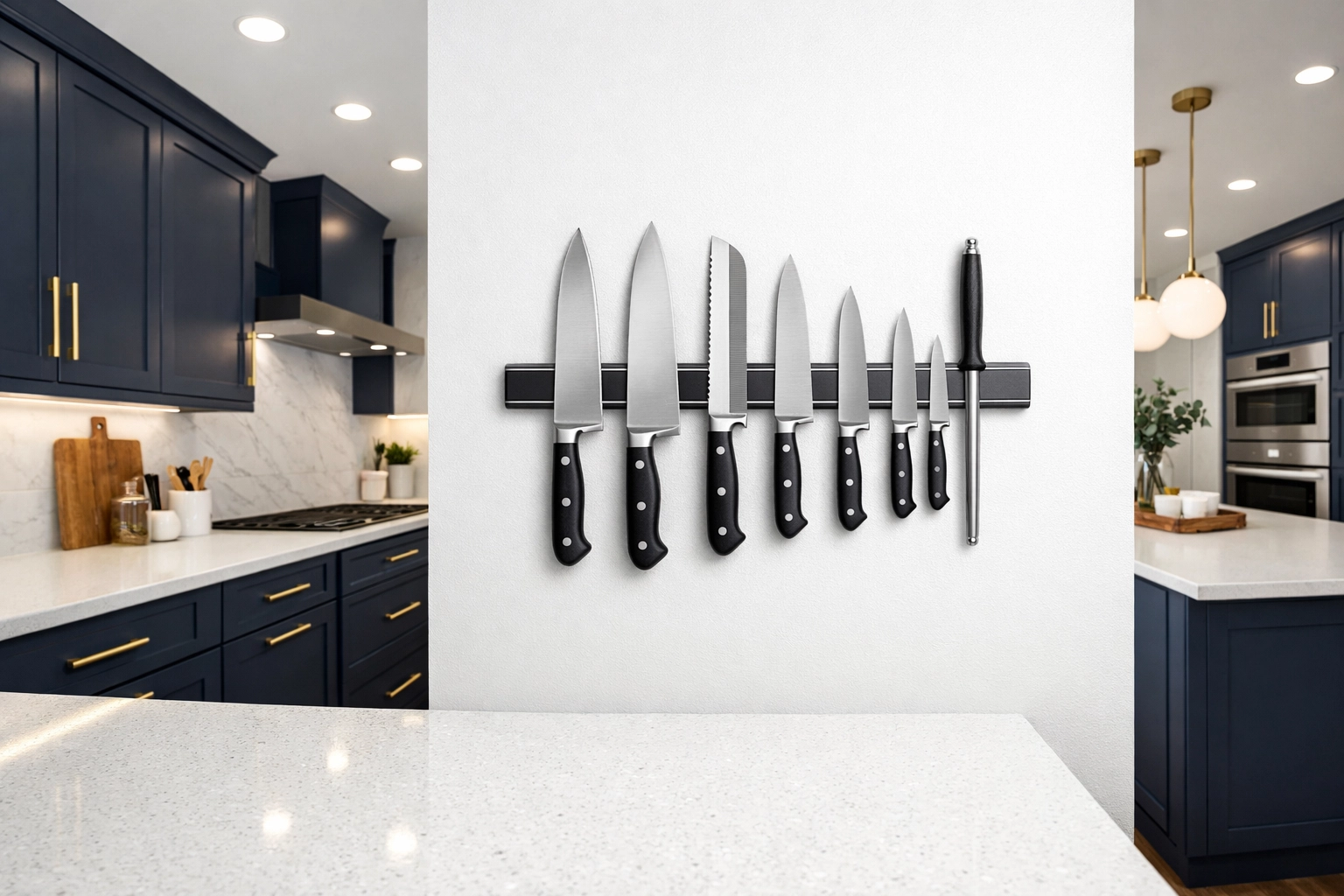
- Magnetic Strips: These are great because they keep the knives visible, dry, and out of reach of children. Plus, they look pretty "Ninja" on the wall!
- Knife Blocks: If you use a block, make sure to clean the slots occasionally with compressed air or a thin pipe cleaner to prevent dust buildup.
- Blade Guards: If you must keep them in a drawer, invest in inexpensive plastic blade guards (sheaths).
When to Call in the Pros
At The Cleaning Ninjas Inc., we handle the heavy lifting: the floors, the bathrooms, the deep-cleaning of your kitchen surfaces. But we know that the heart of the home is in the details. Taking care of your kitchen knives is a way to respect your tools and ensure that your cooking experience is as smooth as possible.
If you’re feeling overwhelmed by the state of your kitchen or the rest of your home, we’re here to help. You can learn more about us and our philosophy of friendly, efficient cleaning. We treat every home with the precision of a ninja, ensuring that every corner: from the baseboards to the backsplash: is handled with care.
A Quick Recap for the Busy Homeowner
To keep your knives sharp, safe, and shiny, remember these four Ninja rules:
- Hand-wash only with mild soap and warm water.
- Dry immediately to prevent rust and bacteria.
- Never soak knives in a sink where you can't see them.
- Use eco-friendly scrubs like baking soda or lemon for tough stains.
By following these simple steps, you'll extend the life of your cutlery and make your time in the kitchen much more enjoyable. Whether you see us for your weekly house cleaning or just follow along with our tips, we're glad to be a part of your journey toward a cleaner, happier home.
Stay sharp, stay safe, and keep those kitchens gleaming!