If there is one piece of kitchen gear that strikes fear into the hearts of home cooks and professional cleaners alike, it’s the cast iron skillet. We’ve all heard the horror stories: "Don't use soap!" or "If it gets wet, it’s ruined!" At The Cleaning Ninjas Inc, we hear these concerns all the time. But here’s the truth, cast iron is actually one of the most durable, eco-friendly, and versatile tools in your kitchen. It’s almost impossible to truly "kill" a cast iron pan.
In this edition of The Cleaning Ninjas Tip, we’re breaking down the myths and giving you the ultimate guide to caring for your cast iron. Whether you’re a seasoned chef or just someone who inherited a rusty pan from grandma, we’ll show you how to keep it non-stick and sparkling using natural, earth-friendly methods. After all, when you’ve got your weekly house cleaning routine down to a science, you want your kitchen tools to reflect that same level of care.
The Great Soap Debate: Ninja Truths Revealed
Let’s start with the big one: Soap. For decades, the conventional wisdom was that soap would strip the "seasoning" (that beautiful, black, non-stick layer of carbonized oil) right off the pan.
Here is the Ninja secret: Modern dish soap is perfectly fine. Back in the day, soaps were made with lye and vinegar, which were incredibly harsh and could indeed eat through seasoning. Today’s mild dish soaps are designed to cut through grease without destroying the molecular bond of the polymerized oil on your skillet.
While you don't need to soak your pan in a bubble bath, a little bit of eco-friendly dish soap and warm water is the best way to ensure you aren't leaving behind old food particles that can go rancid. If you’re already investing in a bi weekly house cleaning service to keep your home healthy, using clean, safe methods for your cookware is the logical next step.
Step-by-Step: The Standard Ninja Clean
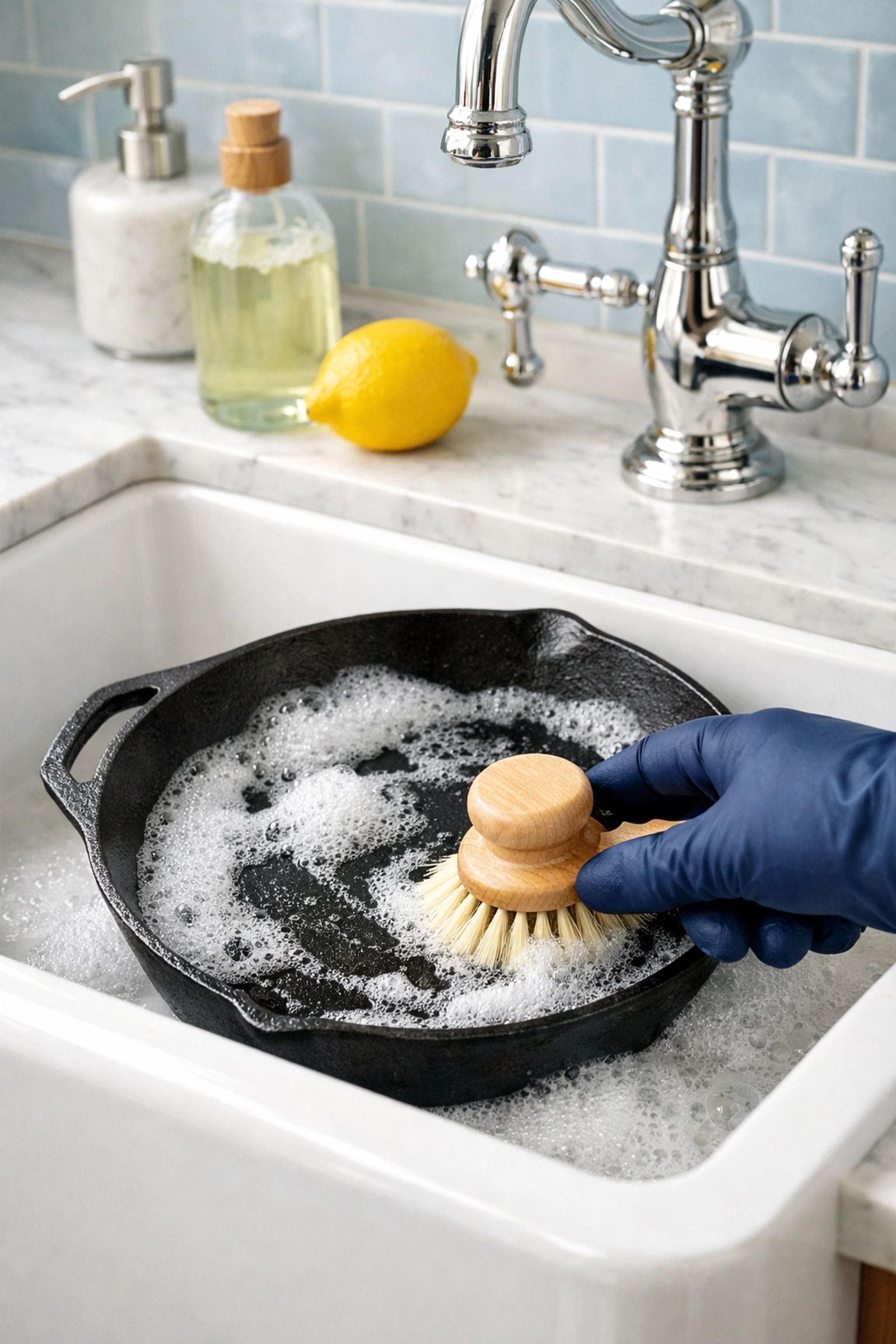
Cleaning your cast iron doesn't have to be a chore. Follow these steps immediately after cooking (while the pan is still warm but safe to touch) to keep it in peak condition:
- The Initial Rinse: Use warm water and a stiff-bristled brush. Avoid using steel wool for regular cleaning as it can be too abrasive and scratch the surface you've worked so hard to build up.
- The Gentle Scrub: If there’s some stubborn grease, add a drop of mild, biodegradable soap. Scrub gently.
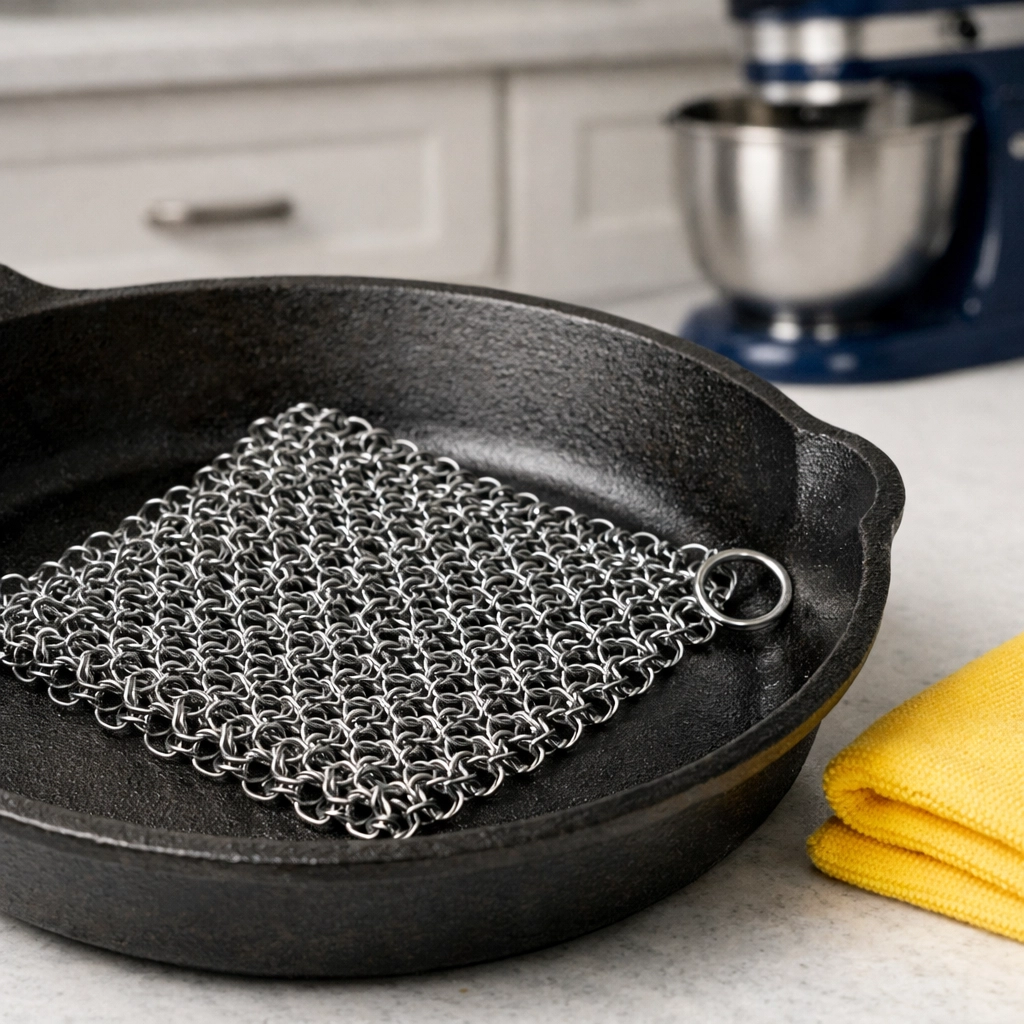
- The "Chain Mail" Method: If you have stuck-on bits of bacon or charred veggies, a chain mail scrubber is a Ninja’s best friend. It’s tough enough to knock off the food but rounded enough that it won't gouge the iron.
- Rinse Thoroughly: Make sure all the soap and food debris are gone.
The Most Important Step: The Dry Down
If there is one rule you must never break, it’s this: Never, ever leave your cast iron skillet to air dry.
Iron and water have a complicated relationship: specifically, they love to make rust. Even a tiny bit of moisture left in the bottom of the pan can lead to orange spots by morning. Once you’ve finished washing, dry the skillet immediately with a clean towel or paper towel.
To be extra "Ninja" about it, place the dried skillet over a low flame on your stove for 60 seconds. This ensures every last molecule of water evaporates. If you’re busy juggling kids and work, and finding time for a weekly house cleaning is tough enough, this little 60-second habit will save you hours of scrubbing rust later.
The Natural Scrub: The Power of Coarse Salt
If you’re looking for a completely soap-free, eco-friendly way to handle a messy pan, look no further than your pantry. Coarse sea salt or Kosher salt is an incredible natural abrasive.
When you have a pan that’s particularly gunked up, pour about half a cup of coarse salt into the warm skillet. Use a folded-up paper towel or a clean rag to scrub the salt around the pan. The grit of the salt will act like sandpaper, lifting off the burnt-on bits without damaging the iron. Once the salt looks dirty, dump it out, give the pan a quick rinse with warm water, and proceed to the drying phase.
This method is a favorite at The Cleaning Ninjas Inc because it avoids chemicals and uses items you already have on hand. It fits perfectly into a sustainable lifestyle.
Re-Seasoning: Building the Perfect Finish
"Seasoning" isn't salt and pepper; it’s the layer of oil that has been baked onto the metal. When oil is heated to a certain point, it undergoes polymerization, turning from a liquid into a hard, plastic-like film that protects the iron.
If your pan is looking dull, grey, or if food is starting to stick, it’s time for a re-seasoning session.
- Step 1: Clean the pan thoroughly and dry it on the stove.
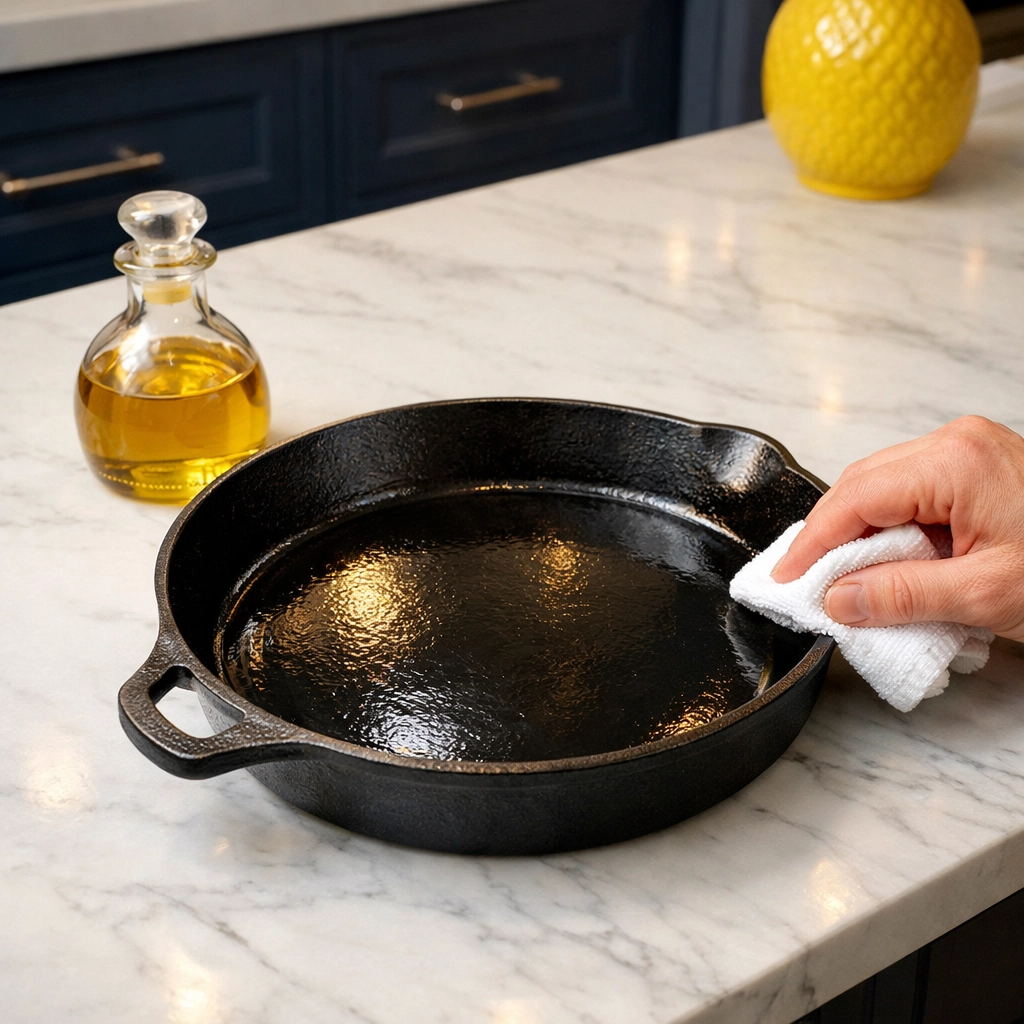
- Step 2: Apply a very thin layer of oil. Flaxseed oil is often cited as the gold standard, but plain vegetable oil or grapeseed oil works great too. The key is thin. You should wipe it on and then try to wipe it all off with a clean cloth. You only want a microscopic layer.
- Step 3: Place the pan upside down in your oven at 450°F for one hour. Putting it upside down prevents oil from pooling and becoming sticky.
- Step 4: Let it cool completely in the oven.

Rust Rescue: How to Save a Neglected Skillet
Did you find a rusty treasure at a garage sale? Or maybe you left your skillet in the sink overnight (it happens to the best of us!). Don't toss it.
To remove rust, you'll need a bit more elbow grease. Use a mesh scrub sponge or even a bit of fine-grade steel wool: this is the one time we give you permission to use the heavy stuff! Scrub until the orange is gone and you see the raw, grey iron. Once the rust is removed, you must immediately wash, dry, and perform the seasoning process mentioned above (likely 2 or 3 times) to seal the metal back up.
Caring for Enameled Cast Iron
It’s worth noting that some cast iron, like those beautiful colorful Dutch ovens, is enameled. These require different care. You don't need to season enameled iron because the glass coating does the protecting for you. For these, stick to gentle sponges and avoid metal tools entirely, as they can chip or scratch the enamel. If you have tough stains on your enamel, a paste of baking soda and water is a miracle worker.
Making Kitchen Care Part of Your Routine
We know that life gets busy. Between work, family, and trying to cook healthy meals, keeping up with specialized tasks like cast iron maintenance can feel overwhelming. That’s why many of our clients rely on our our services to handle the heavy lifting.
When you have a bi weekly house cleaning scheduled, it frees up your mental energy to focus on the things you love: like perfecting that pan-seared ribeye or baking the perfect cornbread. While our Ninjas handle the floors and the dusting, you can take those few extra minutes to properly dry and oil your skillet. It’s all about creating a home environment that supports your lifestyle.
Why We Love Cast Iron (And Why You Should Too)
At The Cleaning Ninjas Inc, we are big fans of products that last a lifetime. In a world of "disposable" non-stick pans that end up in landfills after two years, a cast iron skillet is a breath of fresh air. It’s a sustainable choice that actually gets better the more you use it.
By following these simple Ninja tips, you’re not just cleaning a pan; you’re preserving a tool that can be passed down for generations. It’s eco-friendly, chemical-free cooking at its finest.
If you ever feel like your kitchen (or the rest of your home) is getting ahead of you, remember that we’re here to help. You can learn more about us and our mission to bring peace and cleanliness to every home. Whether you need a one-time deep clean or a regular weekly house cleaning, we’ve got your back.
Now, go get that skillet out and cook something delicious! Just remember: scrub, dry, and oil. You’ve got this!