We’ve all been there. You receive a stunning bouquet of lilies or long-stemmed roses, and they come in a vase that is absolutely gorgeous, sleek, tall, and incredibly narrow. It looks like a piece of art on your dining room table. But then, a week passes. The flowers start to wilt, the water turns a questionable shade of yellow-green, and a mysterious film begins to grow on the inside of the glass.
You toss the flowers and go to wash the vase, only to realize that your hand doesn’t even make it past the knuckles. You try a bottle brush, but the neck is so skinny that the bristles just get smashed, and you can’t quite reach those stubborn corners at the bottom. It’s frustrating, right? You end up with a "clean-ish" vase that still has a cloudy ring around the middle.
Well, here at The Cleaning Ninjas Inc, we don’t do "clean-ish." We’re all about those clever shortcuts that actually work. Today, we’re letting you in on one of our favorite secret weapons: The Rice Hack.
Why Narrow Vases Are a Cleaning Nightmare
Before we dive into the "how-to," let’s talk about the "why." Why is it so hard to get these things clean? Narrow-necked glassware, decanters, and vintage bottles are designed for aesthetics, not for ease of maintenance. Over time, minerals from your tap water (calcium and magnesium) bond with the glass, creating that cloudy look known as hard water stains.
Combine that with the organic "slime" (biofilm) left behind by decaying flower stems, and you have a recipe for a permanent eyesore. If you don't get all that gunk out, the next time you put fresh flowers in that vase, the bacteria already living there will kill your new blooms even faster. It’s a vicious cycle!
The Ninja Tool Kit: What You’ll Need
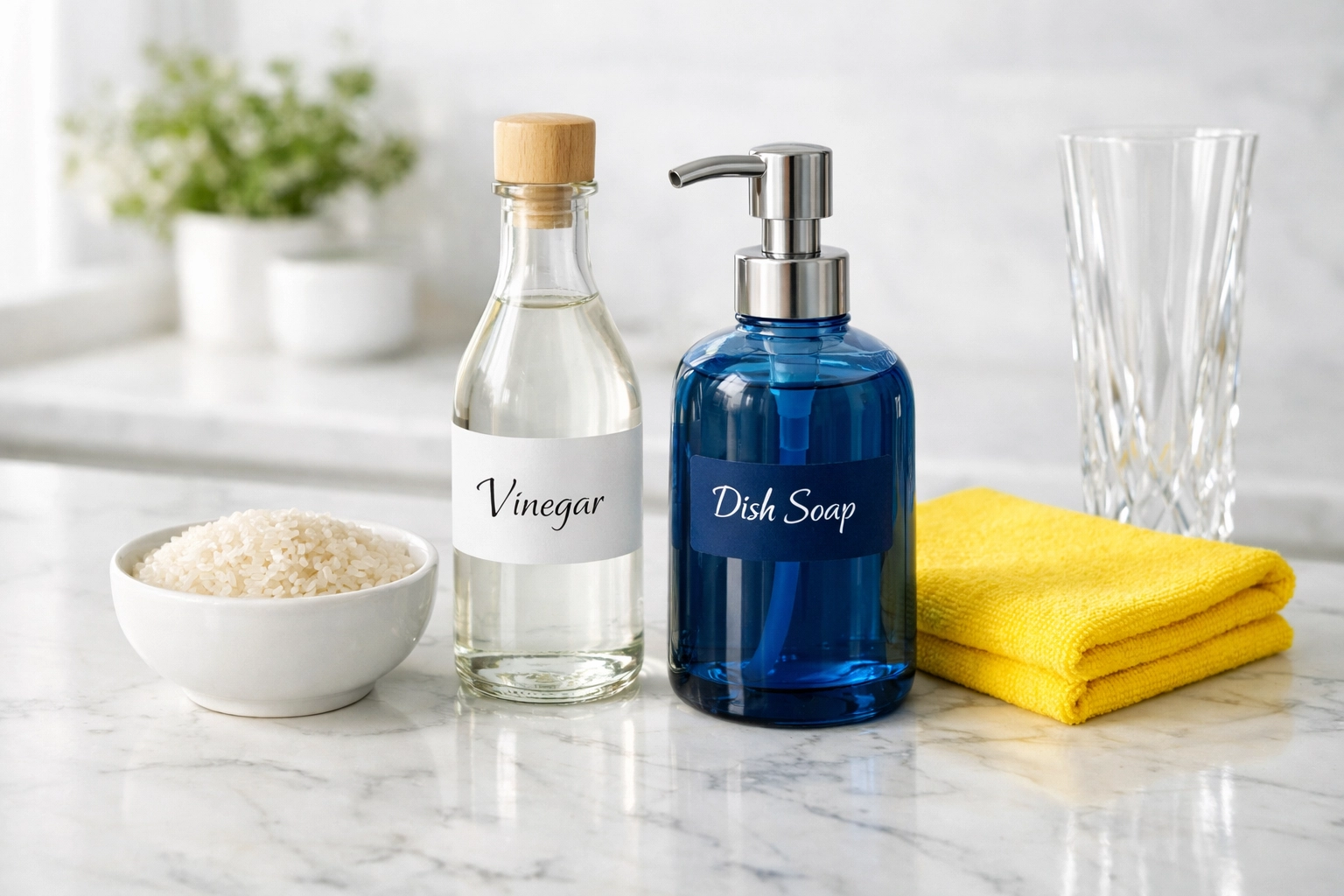
The beauty of the rice hack is that you probably already have everything you need in your pantry and under your kitchen sink. No need to run out and buy a specialized $20 flexible wand that you’ll only use once a year.
Here is your mission prep list:
- Uncooked Rice: Any cheap white or brown rice will do. You don't need the fancy organic jasmine for this!
- Warm Water: Not boiling (which can crack some glass), just nice and warm.
- Dish Soap: A good grease-cutting brand like Dawn is perfect.
- White Vinegar: This is the secret ingredient for cutting through mineral buildup.
- A Funnel (Optional): If the neck is really narrow, this saves you from picking up stray rice off the floor.
Step-by-Step: Executing the Rice Hack
Ready to reclaim your glassware? Follow these steps to become a vase-cleaning master.
1. The Prep
Clear some space at the sink. If your vase has any leftover flower bits or large chunks of debris, give it a quick preliminary rinse with warm water to clear out the "easy" stuff.
2. The Rice Entry
Pour about 1/2 cup to 1 cup of uncooked rice into the vase. You want enough rice so that when it’s mixed with liquid, it forms a sort of "slurry" that can move around with some weight behind it. If it’s a tiny bud vase, a few tablespoons will suffice.
3. The Cleaning Cocktail
Add a few drops of liquid dish soap. Then, pour in about two tablespoons of white vinegar. The vinegar acts as a mild acid to break down those cloudy mineral deposits, while the soap handles the organic grime.
4. Add the Water
Fill the vase about halfway with warm water. You want enough room left in the vase to allow the mixture to move freely when you shake it. If you fill it to the top, the rice won't have the momentum it needs to scrub the sides.
5. The Ninja Swirl
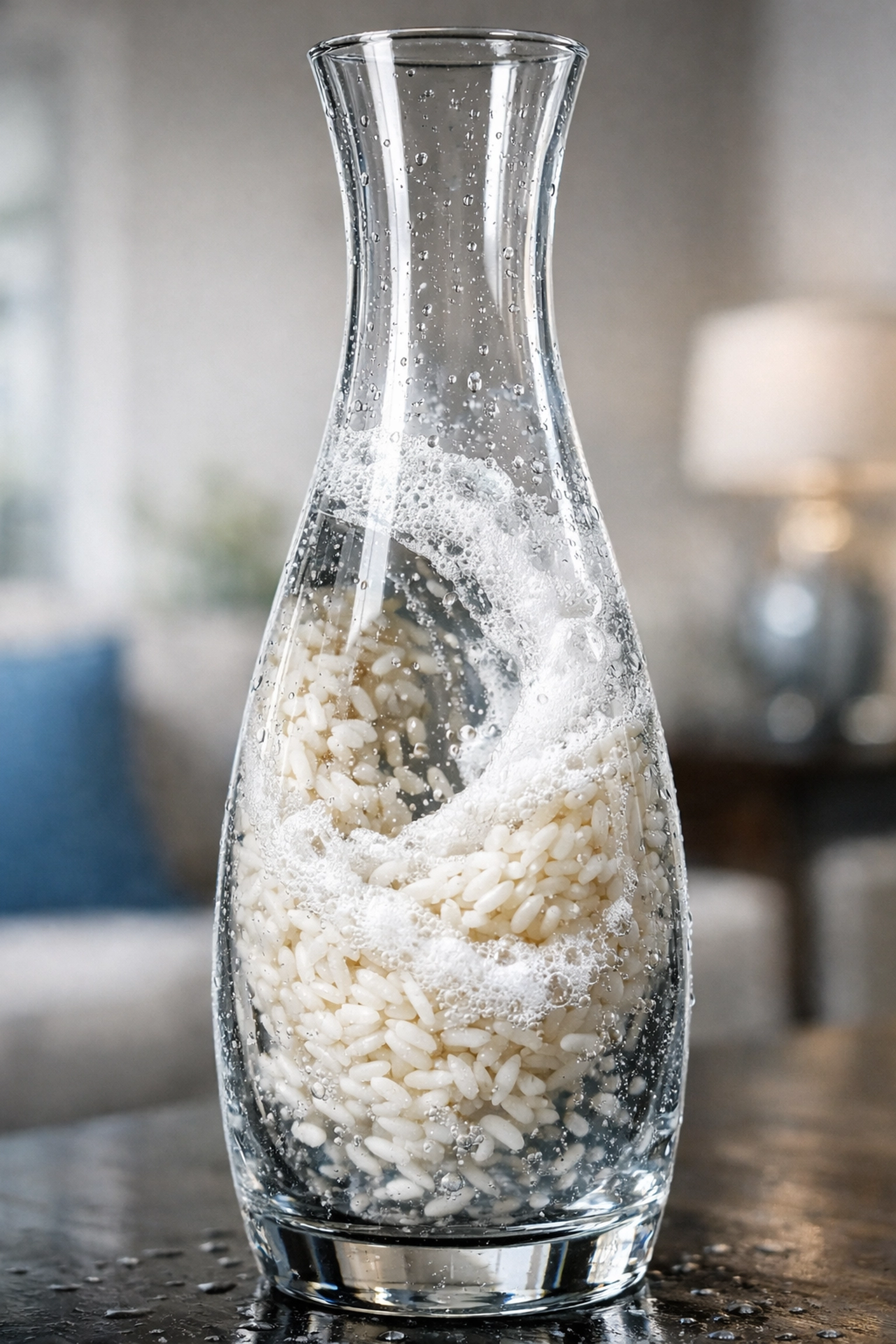
Cover the top of the vase firmly with your hand (or a cork/stopper if it has one). Now, give it a vigorous swirl and a gentle shake. Imagine the rice grains are tiny little scrub brushes. As you rotate the vase, the rice grains scrape against the interior walls, lifting away the film and the crusty bits that a brush simply can't reach.
Pro-Tip: Don’t just shake up and down. Use a circular motion to ensure the rice hits every single square inch of the interior surface.
6. The Inspection
Stop and take a look. Can you see the "gunk" floating in the water? If the stains are particularly stubborn, let the mixture sit for about 15 to 20 minutes to allow the vinegar to do its thing, then give it another round of swirling.
7. The Final Rinse
Once the glass looks crystal clear, pour the mixture out into a mesh strainer (don't send all that rice down your garbage disposal if you can help it!). Rinse the vase thoroughly with hot water until all the soap suds are gone.
Why Rice? The Science of the Scrub
You might be wondering, "Why rice? Why not sand or beads?"
Rice is the "Goldilocks" of abrasives for glassware. It’s hard enough to scrape away biofilm and mineral deposits, but it’s not hard enough to scratch the glass. Sand or small pebbles can actually create micro-scratches on the surface of delicate glass, which will eventually make the glass look dull and give bacteria even more places to hide.
Rice is also biodegradable and incredibly cheap. Plus, the shape of the grain: especially long-grain rice: is perfect for getting into the tight corners where the bottom of the vase meets the sides.
When to Call in the Professional Ninjas
While the rice hack is a total game-changer for your decorative items, we know that keeping a whole house "Ninja Clean" is a much bigger task. Life gets busy, and sometimes you’d rather spend your weekend enjoying a fresh bouquet of flowers rather than scrubbing the vases they go in.
That’s where we come in. At The Cleaning Ninjas Inc, we bring that same level of detail-oriented "hack" energy to every corner of your home. Whether it's deep cleaning your kitchen or making your bathrooms sparkle, we’ve got the skills and the passion to get the job done right. You can learn more about us and our mission to provide stress-free living to our community.
If you're feeling overwhelmed by your to-do list, check out our services to see how we can help you take back your time.

Beyond Vases: Other Uses for the Rice Hack
Don’t stop at flower vases! This technique works for a variety of tricky household items:
- Wine Decanters: Those wide-bottomed, narrow-necked decanters are notorious for red wine stains. The rice hack is the safest way to clean them without risking a break.
- Reusable Water Bottles: If you’ve got a metal or plastic bottle with a narrow mouth that smells a bit "funky," the rice, soap, and vinegar combo will sanitize it and remove the odor.
- Blender Jars: Sometimes the area under the blades is impossible to reach. A handful of rice and some soapy water, run on low speed for a few seconds, can help knock loose stubborn food particles (just be careful not to overwork the motor!).
- Baby Bottles: For those narrow bottles where a brush just doesn't feel like it's doing enough, the rice hack offers a gentle, non-toxic deep clean.
Final Thoughts from the Ninjas
The "Rice Hack" is a perfect example of how cleaning doesn't have to be complicated or expensive. It’s about using the right tool for the job: even if that tool usually belongs in a stir-fry!
A clean home is made up of these small victories. When your glassware sparkles, the whole room feels a little bit brighter. So, the next time you’re staring at a cloudy vase, don’t hide it in the back of the cupboard. Grab the rice, channel your inner cleaning ninja, and get that glass glowing again.
Happy cleaning, and remember: if the job gets too big, the Ninjas are always here to help!