Let’s talk about that one spot in your house that everyone sees but almost everyone forgets to clean: the lamp shade. You know the one. You’re sitting on the couch, the sun hits the lamp at just the right angle, and suddenly you realize your elegant linen shade has developed a fuzzy, grey sweater of dust. It’s not a great look, but we’ve all been there!
At The Cleaning Ninjas Inc, we see it all the time. Lamp shades are total dust magnets. Because they are often made of textured fabrics like cotton, linen, or synthetic blends, they act like a filter for every bit of pet dander, lint, and floating debris in your home. And here’s the kicker: if you try to wipe that dust away with a damp cloth or even a traditional feather duster, you usually end up just smearing the grime deeper into the fibers.
But don’t worry, we aren't going to let your decor suffer. We have a "Ninja Secret" that is going to change your cleaning game forever. Forget the vacuum attachments that are too bulky and the damp rags that leave streaks. All you need is a common household item: the humble lint roller.
Why the Lint Roller is a Game Changer
You probably have a lint roller stashed in your closet to save your black slacks from cat hair, but its true calling might actually be in your living room.
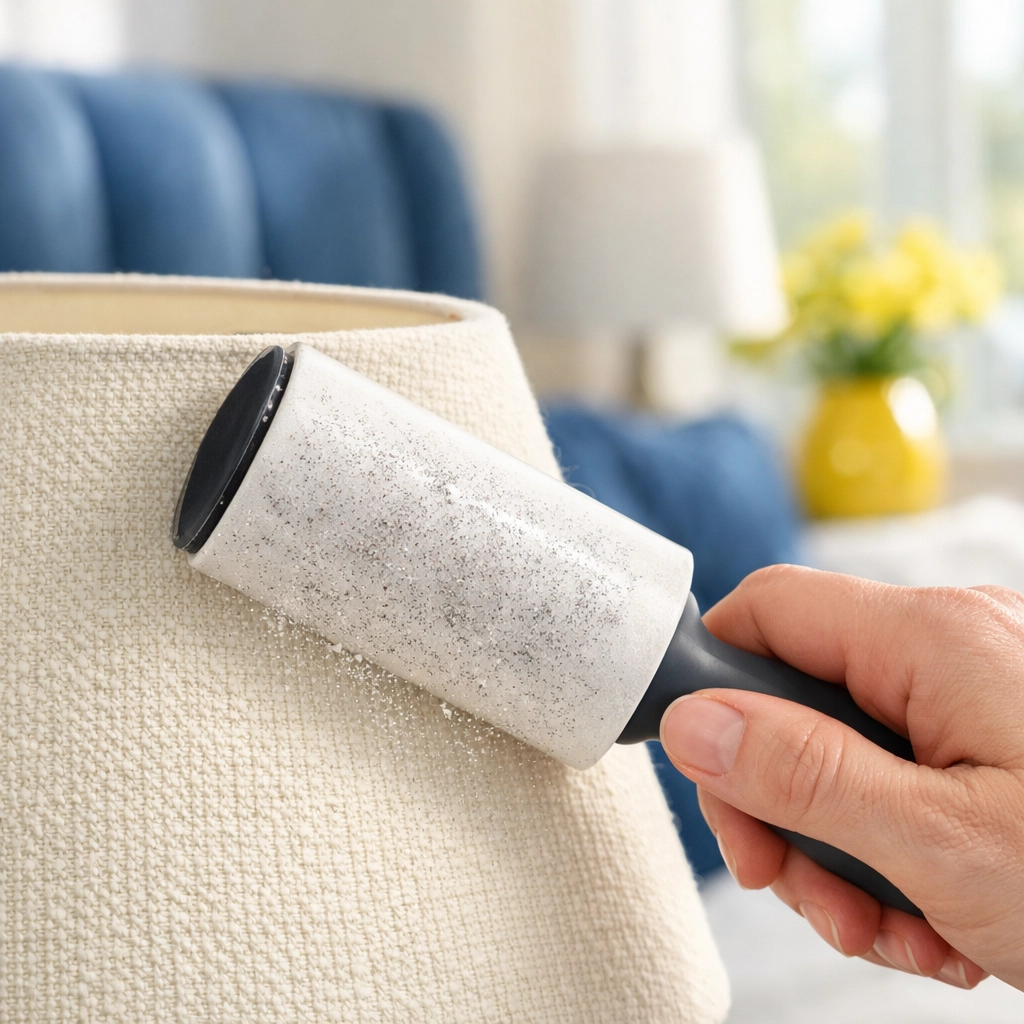
Using a lint roller on a lamp shade is incredibly effective because it uses a targeted adhesive to lift dust straight off the surface. Unlike a vacuum cleaner, which uses suction that can actually pull the fabric away from the frame or cause unsightly "suction dents," the lint roller stays on the surface. It’s gentle, it’s precise, and it doesn’t push the dirt around.
When you use a cloth, the friction can sometimes create a static charge that just makes the dust jump right back onto the shade a few minutes later. The lint roller traps the particles on the sticky sheet, meaning once they are gone, they are actually gone. Plus, it’s oddly satisfying to see that sheet go from white to grey, knowing your air quality just got a little bit better.

Step-by-Step: The Ninja Way to Roll
Cleaning a lamp shade might seem self-explanatory, but there is a technique to doing it right without damaging the shade or knocking the whole lamp over. Here is the play-by-play:
1. Safety First (And Stability)
Before you start rolling away, make sure the lamp is turned off and the bulb is cool to the touch. If the lamp is particularly light or top-heavy, use one hand to steady the base or the harp (the metal part that holds the shade). You don’t want a simple cleaning task to turn into a "broken lamp" situation.
2. Start from the Top
Gravity is a real thing, even for ninjas. Always start at the top of the lamp shade and work your way down in vertical strokes. This ensures that if any stray dust particles are knocked loose but not caught by the roller, they fall toward the area you haven't cleaned yet.
3. Be Systematic
Don't just roll randomly. Work in sections. Imagine the lamp shade is divided into "slices" like a pie. Complete one slice from top to bottom, then rotate the shade (or move around it) to the next section. This ensures you don't miss any spots, especially on the back of the lamp that faces the wall.
4. Don’t Forget the Inside
If your lamp shade has a wider bottom, dust often settles on the interior rim as well. Gently run the lint roller along the inside of the shade. You’ll be surprised how much hidden dust lives in there!
5. Change the Sheets Frequently
This is the most important tip. A lint roller only works if it's sticky. As soon as the sheet looks fuzzy or loses its "tack," peel it off and start with a fresh one. If you try to use a dirty sheet, you’re just rubbing old dust onto a new spot. For a standard-sized shade that hasn't been cleaned in a while, you might go through three or four sheets.
Material Matters: Is Your Shade a Good Candidate?
While we love this method, it’s important to know when to use it.
- Linen and Cotton: These are the MVP candidates for lint rolling. The adhesive picks up dust from the weave perfectly.
- Synthetic Blends: Most modern shades handle lint rollers beautifully.
- Black or Dark Shades: These show dust the most, and the lint roller is the only way to get them looking "brand new" without leaving white streaks from a cloth.
- Parchment or Paper: Be very careful here. If the paper is old or brittle, the adhesive might be too strong and could tear the surface. For these, a very soft, dry microfiber cloth is usually better.
- Silk or Pleated Shades: For silk, proceed with caution and use a "low-tack" roller if possible. For pleats, the roller won't reach the inner crevices. In that case, we recommend a soft-bristled paintbrush to whisk the dust out of the folds.
If you’re ever unsure about a specific fabric, check out our About Us page to see our commitment to professional care, or reach out to us for advice!
The "Vacuum vs. Roller" Debate
A lot of people ask us, "Why can't I just use the brush attachment on my vacuum?" You certainly can, but it’s risky.
Vacuum suction is powerful. If the fabric on your lamp shade isn't glued down perfectly or has aged, the vacuum can pull the fabric away from the internal plastic liner. This creates bubbles or "creases" that are impossible to fix. Furthermore, the plastic housing of a vacuum attachment can easily scratch or dent the delicate frame of the shade.
The lint roller offers a level of finesse that a 1200-watt vacuum just can’t match. It’s silent, it’s light, and it gives you total control. If you want to see the other high-quality techniques we use for home maintenance, feel free to browse our services.
Maintenance: How Often Should You Roll?
You don’t need to do this every day. In a standard home, a thorough lint rolling every six months is usually enough to keep the shades looking crisp and prevent the dust from "baking" onto the fabric from the heat of the lightbulb.
However, if you have pets that shed (looking at you, Golden Retrievers!) or if you live in a high-dust environment (like near a busy road or in a dry climate), you might want to add this to your monthly deep-clean rotation.

What If You’re Out of Lint Roller Sheets?
We’ve all been there: you’re in the cleaning zone, you grab the roller, and realize there is only one tiny, non-sticky sheet left. Don’t panic! You can achieve a similar result using masking tape or packing tape.
Simply wrap a piece of tape around your hand with the sticky side facing out. Gently dab the lamp shade in a "blotting" motion. It takes a little longer than a roller, but it’s just as effective at grabbing those stubborn particles. Just avoid using duct tape, as the adhesive is often too aggressive and can leave a sticky residue behind.
Pro Ninja Tip: Check Your Bulbs Too!
Since you’re already there cleaning the shade, why not take it a step further? Once the shade is clean, take a dry microfiber cloth and wipe down the lightbulb itself (again, make sure it's cool!). Dust on a lightbulb can actually reduce the amount of light emitted and, in extreme cases, cause a faint "burning dust" smell. A clean bulb and a clean shade will instantly make your room feel brighter and fresher.

Wrapping It Up
Cleaning doesn't always have to involve heavy machinery or expensive chemicals. Sometimes, the best tool for the job is already sitting in your junk drawer. The lint roller method is fast, affordable, and incredibly effective at keeping your home looking sharp.
At The Cleaning Ninjas Inc, we pride ourselves on these little "hacks" that make a big difference. We believe that a clean home is a happy home, and it's the small details: like a dust-free lamp shade: that really pull a room together.
If you’re feeling overwhelmed by the dust or just want a professional team to come in and work some ninja magic on your entire space, we’re here to help. You can check out more of our professional advice on our blog or reach out to us directly to see how we can make your home shine.
Happy rolling, and stay stealthy!