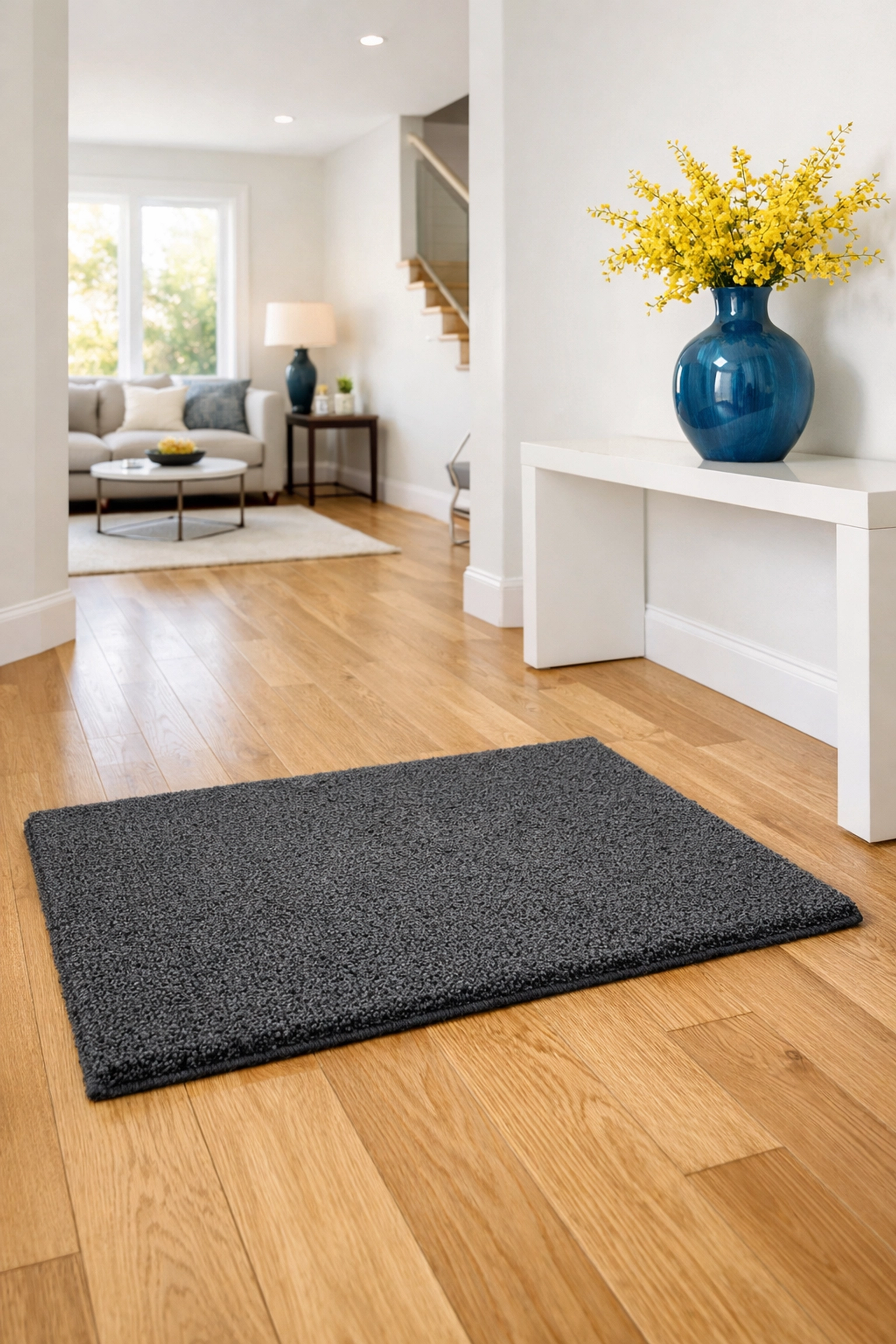
Think about your doormat for a second. It sits there, day in and day out, rain or shine, taking a literal beating from every pair of shoes that crosses your threshold. It’s the unsung hero of your home’s cleanliness. At The Cleaning Ninjas Inc, we like to think of the doormat as the "first line of defense." If your doormat is doing its job, it’s capturing up to 80% of the dirt, dust, and grime that would otherwise end up on your beautiful hardwood floors or tile.
But here’s the thing: a doormat can only hold so much. Once it’s "full" of dirt, it stops being a filter and starts being a source of debris. Every time you step on a dirty mat, you’re actually pushing old dirt deeper into the fibers or, worse, tracking it right into your living room. That’s why a deep clean is essential. We’re not just talking about a quick flick of the wrist; we’re talking about a Ninja-level deep clean that stops dirt dead in its tracks.
Why the Entrance Matters More Than You Think
When we talk about home maintenance, people often focus on the big stuff: kitchen counters, bathrooms, and windows. But the entryway is the gatekeeper. Environmental studies suggest that the majority of pollutants in our homes: including pesticides, lead dust, and allergens: are brought in on the soles of our shoes.
By maintaining a high-functioning doormat, you aren't just keeping the floor looking nice; you are actually improving your indoor air quality and reducing the amount of time you have to spend mopping. It’s a classic case of working smarter, not harder. A clean mat acts like a magnet for debris, but only if it has the "storage capacity" to take on new dirt.
Step 1: The Great Shake-Down
The first step in our Ninja routine is the most satisfying: the shake. You’d be surprised how much loose dirt a vacuum can’t pull out because it’s wedged deep in the base of the bristles.
Take your mat outside. Find a spot away from your open front door (you don't want that dust flying right back inside!) and give it a vigorous shake. For larger or heavier mats, hanging them over a porch railing and using a sturdy broom handle to give them a few good whacks is incredibly effective. You’ll see a literal cloud of dust depart from the mat. This is the stuff that’s been hiding under the surface, just waiting to hitch a ride on someone’s socks.
Ninja Tip: Always check the wind direction before you start whacking. You don’t want a face full of last month’s garden soil!
Step 2: The Double-Sided Vacuum Method
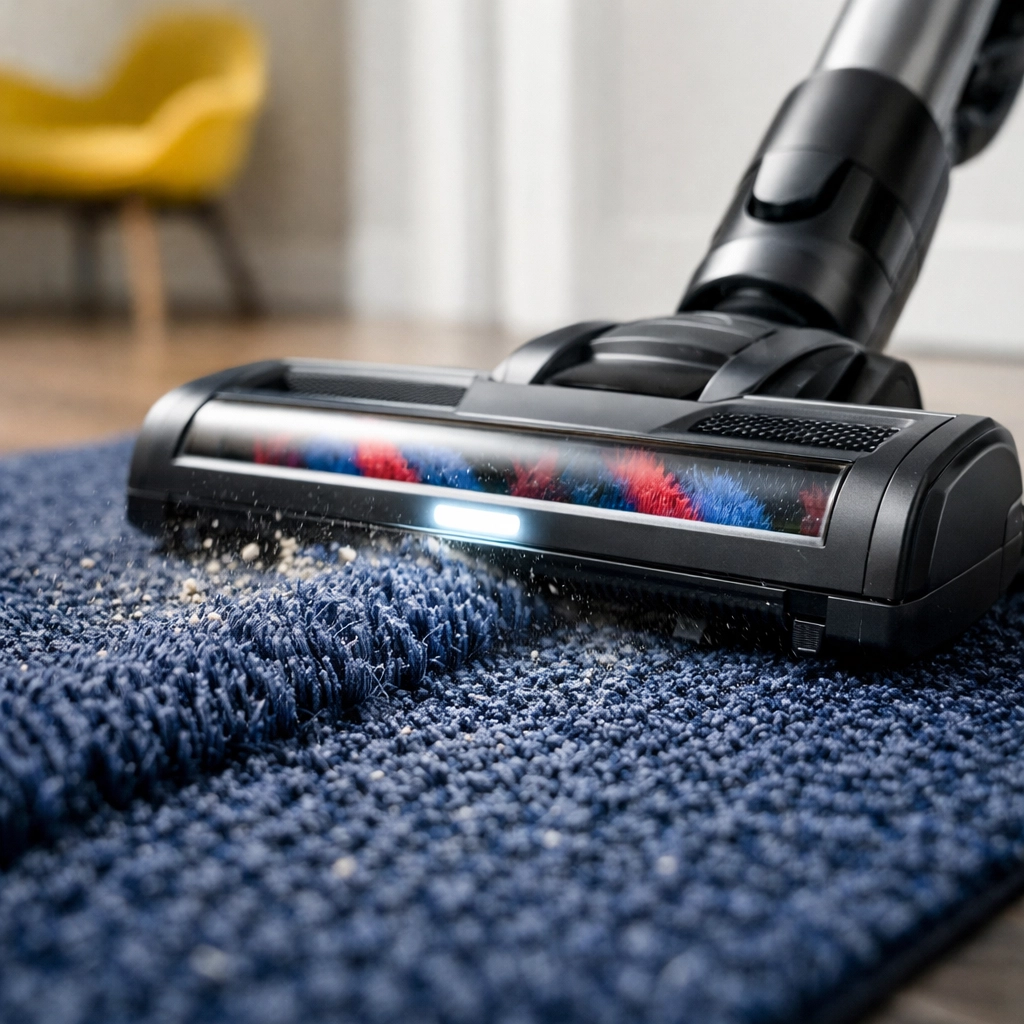
Once you’ve knocked out the heavy hitters, it’s time to bring in the technology. Most people vacuum the top of their doormat and call it a day. To truly deep clean, you need to use the "Double-Sided Method."
- Vacuum the Face: Use your vacuum’s highest suction setting and, if possible, a brush or beater bar attachment. Run it slowly over the surface in multiple directions. This pulls out the fine silt and sand that shaking missed.
- The Flip: Flip the mat over. Vacuum the underside. If your mat has a rubber or latex backing, dirt often gets trapped between the backing and the floor, acting like sandpaper that can scratch your floor's finish.
- The Floor Beneath: While the mat is flipped, vacuum the actual floor where the mat sits. Sand and grit often migrate under the mat, and if left there, they will grind into your flooring every time someone steps on the mat.
- The Final Face Pass: Flip it back over and give the top one last quick pass. The vibration from vacuuming the back often loosens even more deep-seated dust that you can now easily suck up.
If you’re interested in more ways to keep your home pristine, check out our blog for a library of "Ninja Tips."
Step 3: Assessing the Material
Before you bring out the water and soap, you need to know what your mat is made of. Not all mats are created equal, and a technique that works for a synthetic "Welcome" mat might ruin a natural fiber one.
Natural Fibers (Coir/Jute/Sisal)
Coir mats (those bristly brown ones made from coconut husks) are amazing at scraping mud off boots, but they are sensitive to moisture. If you get a coir mat too wet, the fibers can swell, discolor, or even rot.
- The Deep Clean: For these, stick primarily to shaking and vacuuming. If there’s a stain, use a stiff dry brush to break it up. If you must use water, use it very sparingly with a mild detergent and a sponge, then dry it immediately.
Synthetic Materials (Nylon/Polyester/Microfiber)
These are the workhorses of the modern home. They are durable and can usually handle a bit of "tough love" cleaning.
- The Deep Clean: These can handle a full wash. You can use a hose or a bucket of sudsy water to really get into the pores of the material.
Rubber and Plastic
These are common for heavy-duty outdoor use.
- The Deep Clean: These are the easiest. A quick blast with a garden hose and a scrub with a soapy broom usually does the trick.
Step 4: The Deep Scrub (For Synthetic and Rubber Mats)
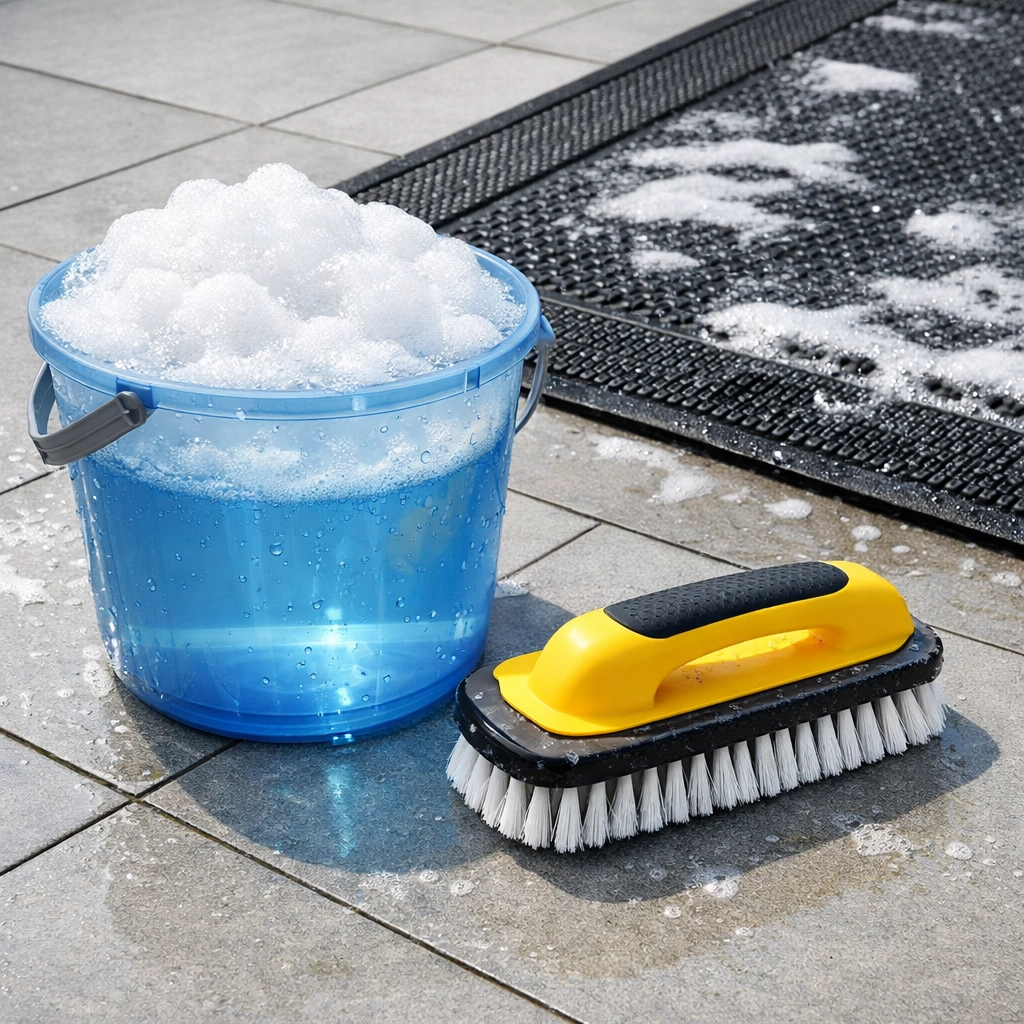
If your mat looks dingy even after vacuuming, it’s time for a bath. You don't need fancy chemicals for this: a simple mixture of lukewarm water and a few drops of mild dish soap works wonders.
The Process:
- Mix Your Solution: Fill a bucket with water and soap. Avoid bleach as it can break down the rubber backing or fade the colors.
- Scrub in Sections: Using a stiff-bristled brush, scrub the mat in circular motions. Focus on the areas that look most worn.
- Rinse Thoroughly: If you have a hose, use it. You want to make sure all the soap is gone. Leftover soap residue actually attracts dirt, which defeats the entire purpose of the clean!
Step 5: The Critical Drying Phase
This is where most people go wrong. They clean the mat, it looks great, and they plop it right back down on the floor. Do not do this.
A damp mat is a breeding ground for mold and mildew. Not only will it start to smell like a wet dog, but it can also trap moisture against your floor, potentially causing permanent damage to wood or stone surfaces.
- Hang it Up: Hang the mat over a sturdy rail or a couple of chairs.
- Airflow is Key: Ensure there is plenty of air moving around both sides of the mat.
- Avoid Direct Sunlight: While sun helps with drying and killing bacteria, long exposure can cause the colors of your mat to fade and the rubber backing to become brittle and crack. A shaded, breezy spot is best.
- The 24-Hour Rule: Give it at least 24 hours to dry completely. If you press your thumb into the fibers and feel even a hint of moisture, it’s not ready yet.
Dealing with Tough Stains
Sometimes, a general clean isn't enough. Maybe someone tracked in some oil from the driveway or dropped a bit of gum.
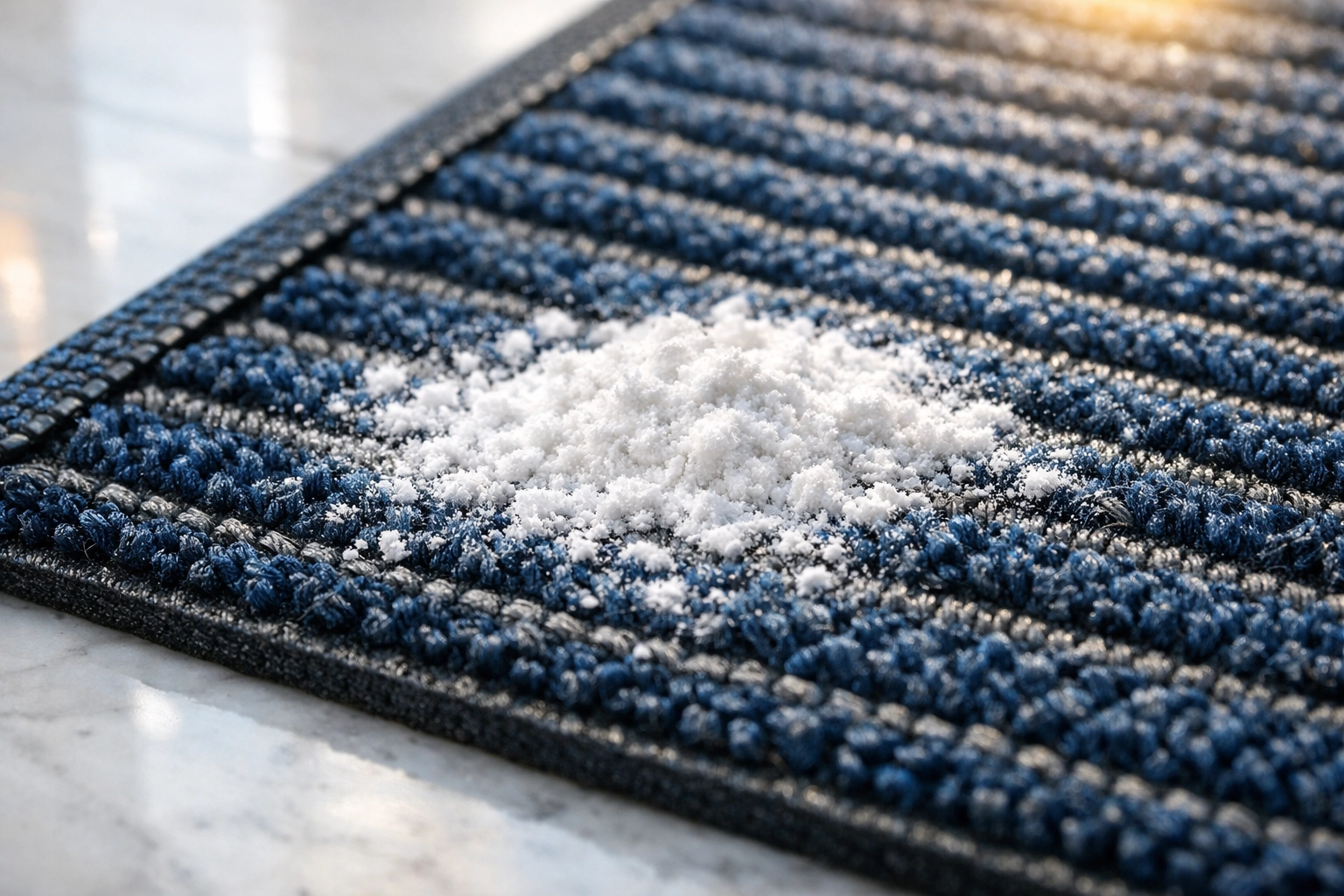
- Oil and Grease: Sprinkle a healthy amount of baking soda or cornstarch on the spot. Let it sit for an hour to soak up the oils, then vacuum it away. Follow up with a bit of dish soap (which is designed to cut grease) and a light scrub.
- Mud: Let it dry! Never try to clean wet mud; you’ll just push it deeper into the fibers. Once it’s dry and crumbly, use a stiff brush to break it up and vacuum it away.
- Odors: If your mat smells a bit "funky," sprinkle it liberally with baking soda. Let it sit for several hours (or overnight) before vacuuming. Baking soda is a natural neutralizer that won't harm your pets or kids.
The "Ninja" Maintenance Schedule
Consistency is the secret to a clean home. You don't want to wait until the mat looks like a dirt pit to take action. Here is our recommended schedule:
- Weekly: Give the mat a quick shake and a vacuum pass on the top. This takes 2 minutes but prevents dirt from settling.
- Monthly: Do the "Double-Sided Vacuum" and flip the mat. Check the floor underneath for grit.
- Seasonally: This is time for the deep scrub. Especially after winter (to remove salt and de-icer) and after spring (to remove heavy pollen).
If you find that your entryway is always a mess despite your best efforts, it might be time for a professional touch. Our team at The Cleaning Ninjas Inc specializes in keeping every corner of your home: including those tricky entryways: spotless. You can learn more about what we do on our About Us page or explore our services to see how we can help you reclaim your weekends.
Pro Tip: The Two-Mat Strategy
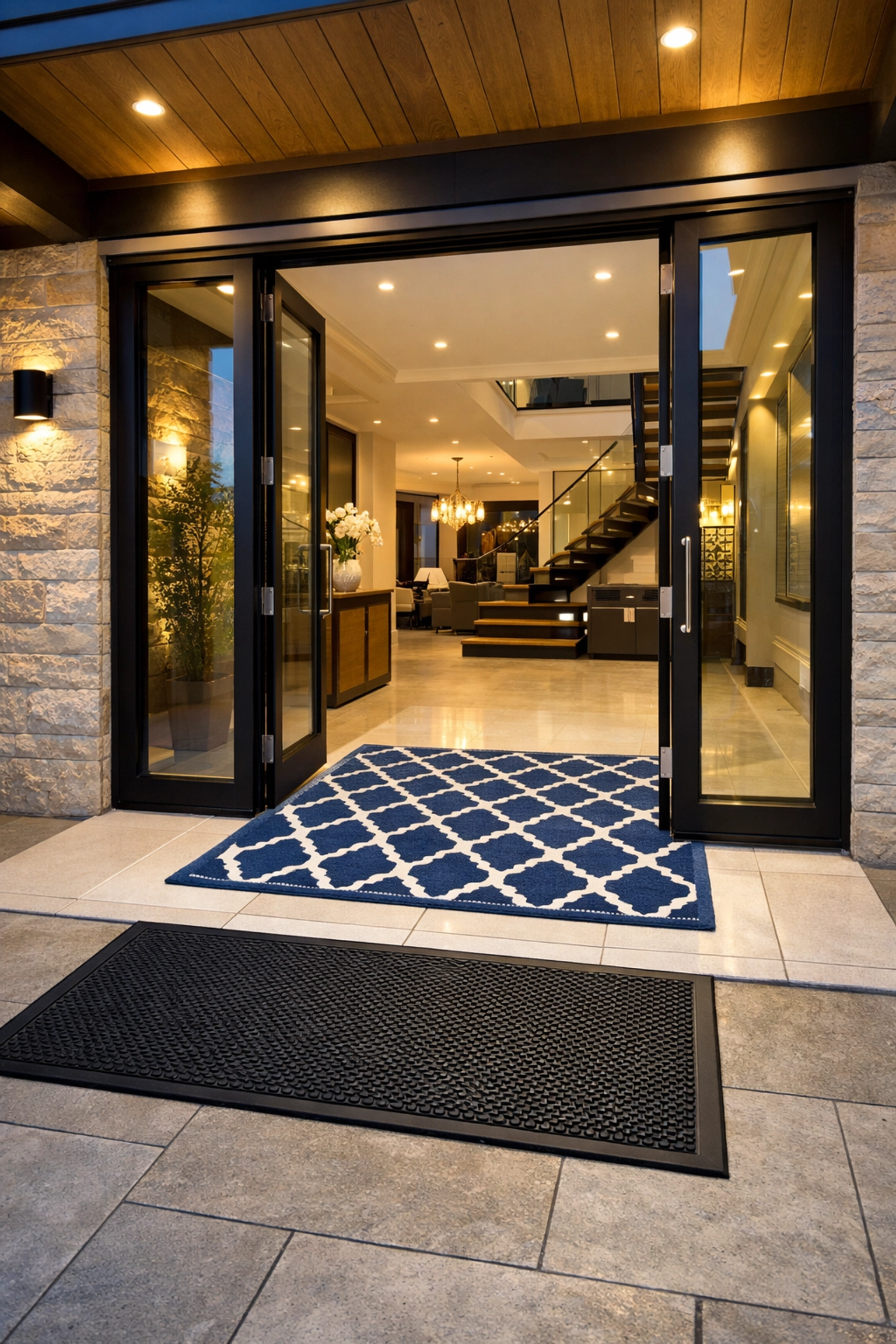
If you really want to be a Cleaning Ninja, use two mats.
- The Scraper: An outdoor mat made of heavy rubber or coir. Its job is to get the big chunks of mud and grit off the shoes.
- The Absorber: An indoor mat made of microfiber or cotton. Its job is to soak up moisture and trap the finer dust particles that the outdoor mat missed.
By the time someone’s feet hit your actual flooring, they’ve been cleaned twice!
Final Thoughts
A clean doormat is a small detail that makes a massive impact. It’s the gatekeeper of your home’s hygiene. By taking the time to properly shake, vacuum, and occasionally scrub your mats, you’re protecting your investment in your flooring and creating a healthier environment for your family.
Remember, stopping dirt at the door is always easier than chasing it around the house with a mop. Stay clean, stay ninja!