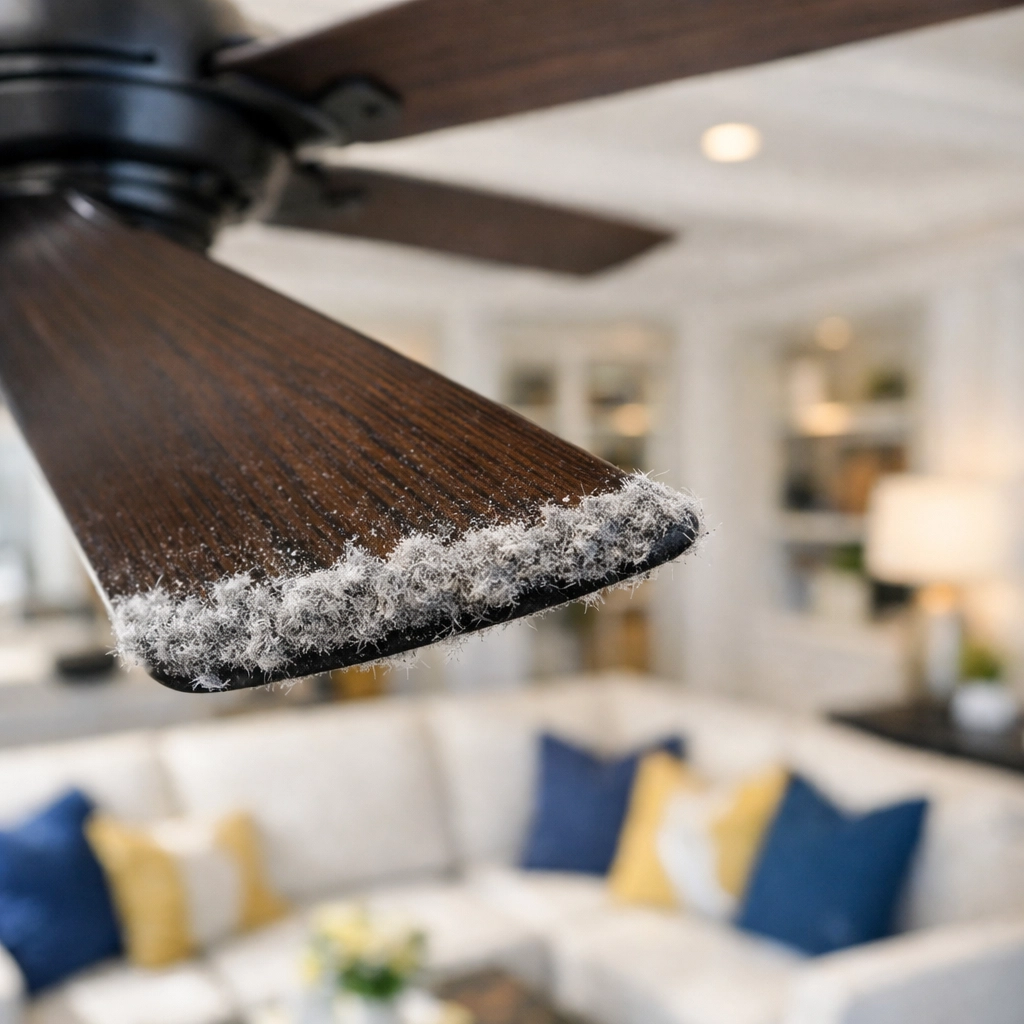
We’ve all been there. You look up at your ceiling fan, expecting to see a sleek, rotating cooling machine, but instead, you see a science experiment. Thick, grey layers of "ceiling moss" (okay, it’s just dust, but it looks like moss) are clinging to the edges of the blades. You know it needs to be cleaned, but the thought of standing on a chair with a damp rag while dust bunnies rain down onto your bed or rug is enough to make you turn the light off and walk away.
At The Cleaning Ninjas Inc, we believe cleaning shouldn’t involve a secondary cleanup mission. That’s why the Pillowcase Method is one of our favorite "Ninja Tips." It is, quite simply, the most efficient way to clean a ceiling fan without turning your living room into a construction zone.
If you’re ready to reclaim your air quality and keep your floors pristine, here is everything you need to know about mastering this speed-cleaning hack.
Why Ceiling Fans Are Dust Magnets
Before we dive into the "how," let’s talk about the "why." Why do ceiling fans get so incredibly dirty? It seems counterintuitive, they are constantly moving, so shouldn't the wind blow the dust off?
Actually, it’s the opposite. As the fan blades cut through the air, they experience friction. This friction creates a static electrical charge on the surface of the blades. Dust particles, which are also floating around with their own charges, are literally sucked onto the blades like a magnet. Once the first layer of dust settles, it creates a textured surface that makes it even easier for more dust, pet dander, and kitchen grease (if the fan is near a stove) to latch on.
Over time, this buildup can actually throw the fan out of balance, causing that annoying wobbling sound, and it definitely circulates allergens every time you flip the switch.
The Problem with Traditional Cleaning
Most people tackle fan blades with a handheld duster or a damp microfiber cloth. While these tools work, they have a major flaw: gravity.
When you swipe a duster across a blade that hasn't been touched in three months, about 40% of that dust sticks to the duster, and the other 60% takes a leisurely flight down onto your duvet cover, your pillow, or your freshly vacuumed floor. You end up having to vacuum or change the sheets immediately afterward.
The Pillowcase Method solves this by creating a "containment zone." All the debris stays inside the case, and your floor stays spotless.
What You’ll Need
One of the best parts about this method is that you likely already have everything you need in your linen closet.
- An old pillowcase: It doesn’t have to be fancy. In fact, a slightly textured cotton case works better than a slippery silk one.
- A sturdy step stool or ladder: Safety first! Never stand on a rolling office chair or a wobbly end table.
- A spray bottle (optional): A light mix of water and a drop of dish soap or a dedicated all-purpose cleaner.
- A "Ninja" attitude: We’re going for speed and precision here!
The Step-by-Step Ninja Method
1. Power Down
This might seem obvious, but make sure the fan is completely off. Not just on a low setting, totally off. If the fan is controlled by a remote, keep the remote in your pocket so no one accidentally turns it on while you’re up there. If you want to be extra safe, you can even flip the wall switch to the "off" position.
2. Position Your Ladder
Place your ladder to the side of the fan, not directly under it. You want to be able to reach the blades comfortably without overextending your arms. Overreaching is the leading cause of ladder mishaps. Once you're up there, give the fan a little nudge to bring the first blade toward you.
3. Prepare the Pillowcase
If the dust looks particularly thick or greasy, you can lightly mist the inside of the pillowcase with your cleaning solution. Don't soak it; you just want a little moisture to help grab the stubborn particles. If it's just standard dry dust, a dry pillowcase works perfectly.
4. The "Sleeve" Move
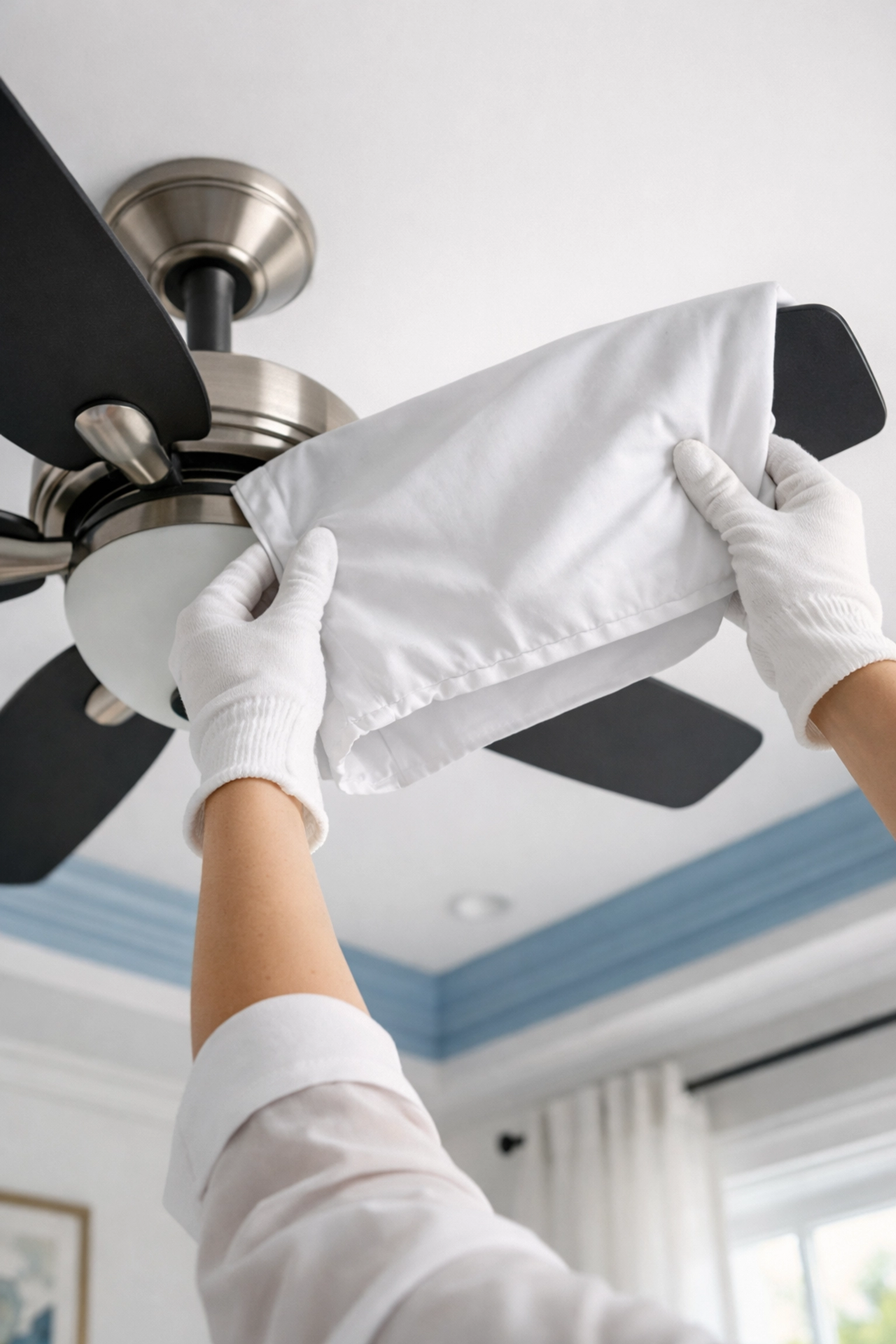
Take the pillowcase and slide it over the fan blade, just like you’re putting a case on a pillow. Slide it all the way to the base of the motor.
5. The Wipe and Slide
Place your hands on the top and bottom of the blade (with the pillowcase fabric between your hands and the blade). Press down firmly but gently, you don't want to bend the blade brackets. Now, pull the pillowcase back toward you.
As you pull, the top fabric of the pillowcase wipes the top of the blade, and the bottom fabric wipes the bottom. All the dust, hair, and debris are trapped inside the "bag" of the pillowcase.
6. Rotate and Repeat
Rotate the fan to the next blade and repeat the process. Because the dust is trapped at the bottom of the pillowcase, you don't have to worry about it falling out as you move from blade to blade.
Cleaning the "Hub" and Motor
While you’re up there, don't forget the motor housing and the light fixture. The pillowcase can be used to wipe the exterior of the motor housing as well. For the nooks and crannies where the blades meet the motor, you can use a small corner of the pillowcase or a quick swipe with a dry microfiber cloth.
If your fan has a light kit with glass globes, this is a great time to give those a quick wipe too. If they are really grimy, you might need to pop them off and wash them in the sink with warm soapy water, but for a "speed-clean," a quick exterior wipe usually does the trick.
Post-Cleaning Cleanup
Once you’ve finished all the blades, carefully climb down. Take the pillowcase outside and turn it inside out to shake the big clumps of dust into the trash can. Then, simply toss the pillowcase into the washing machine.
Congratulations! You just cleaned your ceiling fan in under five minutes, and you don’t have to vacuum the floor.
Pro Ninja Tips for a Better Clean
To take your fan cleaning to the next level, keep these professional tips in mind:
- The Fabric Softener Hack: Some cleaning experts swear by wiping the blades with a used dryer sheet or a cloth dampened with a tiny bit of liquid fabric softener after cleaning. The theory is that this reduces the static charge on the blades, meaning dust won't be as attracted to them in the future. It’s like a "force field" for your fan!
- Check the Direction: While you’re up there, check the direction the fan is spinning. In the summer, you want the blades to spin counter-clockwise to push cool air down. In the winter, they should spin clockwise to pull cool air up and push warm air (which rises) back down into the room. Most fans have a small toggle switch on the side of the motor to change the direction.
- Don't Forget the Top: Most people only see the bottom of the blades, but the top is where the real dust "carpeting" happens. The pillowcase method ensures the top gets cleaned every single time.
- Timing is Everything: We recommend doing this once every three months, or once a month if you have shedding pets or live in a high-dust area. If you make it part of your "Laundry Day" routine, it becomes a habit rather than a chore.

Why Clean Fans Matter
Air quality is a huge part of home wellness. When a fan is covered in dust, it acts as an allergen distributor. Every time it turns on, it flings microscopic particles of skin cells, dust mites, and pet dander into the air you breathe. For people with asthma or seasonal allergies, a dirty ceiling fan can be a major trigger.
Beyond health, a clean fan simply runs better. Dust adds weight and creates drag, which makes the motor work harder. Keeping the blades clean extends the life of the fan and ensures you’re getting the most airflow for your energy bill.
When to Call the Professionals
We know that life gets busy. Sometimes, the "Ninja Tips" are great for a quick fix, but your home needs a deeper, more comprehensive level of care. Whether you have vaulted ceilings that require a 15-foot ladder or you simply don't have the time to tackle every fan and baseboard in the house, The Cleaning Ninjas Inc is here to help.
Our team is trained in the art of efficiency and detail. We don't just "wipe things down"; we ensure your home is a sanctuary. From top-to-bottom deep cleans to regular maintenance, we bring the "Ninja" spirit to every job. You can learn more about what we do on our services page.
If you’re curious about the people behind the masks (well, the metaphorical masks!), feel free to check out about us. We are a team of dedicated professionals who love making homes sparkle so you can spend your time doing what you actually enjoy.
Final Thoughts
Cleaning the ceiling fan doesn't have to be the chore you avoid for six months. With the Pillowcase Method, it’s fast, it’s clean, and it’s oddly satisfying to see all that dust trapped safely inside the fabric. Give it a try this weekend: your lungs (and your floors) will thank you!
Stay tuned for more "Ninja Tips" to help you master your home maintenance one room at a time. Happy cleaning!