Let’s be honest for a second: nobody actually wants to clean their blinds. It is easily one of the most tedious, repetitive, and frustrating chores in the entire house. You start with high ambitions, wiping down one slat at a time, but by the third window, your back hurts, your fingers are dusty, and you realize you still have twelve more windows to go. It’s usually at this point that most people decide their blinds are “clean enough” and move on to something: anything: else.
At The Cleaning Ninjas Inc, we believe that cleaning shouldn't feel like a workout or a punishment. We’re all about efficiency and "work smarter, not harder" hacks. That’s why we’re sharing one of our favorite industry secrets: The Sock-on-Hand Trick. This isn't just a quirky DIY tip; it’s a genuine game-changer that can cut your blind-cleaning time by up to 75%. If you’re tired of struggling with feather dusters that just move the dirt around or individual wipes that take forever, it’s time to learn the way of the Ninja.
Why Blinds Are Such a Pain
Before we dive into the "how-to," let’s talk about the "why." Why do blinds get so dirty, and why are they so hard to clean?
Blinds are essentially giant dust magnets. Whether they are made of wood, faux wood, aluminum, or plastic, they sit horizontally (usually), which provides the perfect landing strip for dust, pet hair, skin cells, and pollen. Because we often open and close them, that dust gets agitated and settles into the nicks and crannies of the strings and hardware.
Standard dusting tools often fail here. A traditional feather duster might look fancy, but it mostly just knocks the dust off the slat and into the air, where it eventually settles right back down or, worse, ends up in your lungs. Microfiber cloths are better, but trying to grip a thin slat with a flat cloth is awkward and leads to missed spots on the underside.
This is where the human hand: and a humble sock: comes in.
The Secret Weapon: The "Ninja" Tool Kit
To pull off this trick, you don't need to go out and buy an expensive "blind cleaning wand" from a specialty store. In fact, those plastic gadgets often break or don't fit the specific width of your slats. Instead, you likely already have everything you need in your laundry room and kitchen.
What you’ll need:
- A pair of old, clean socks: Ideally, use socks with some texture. Chenille socks or old athletic socks with a looped "terry" interior work best because they grab onto the dust rather than just pushing it.
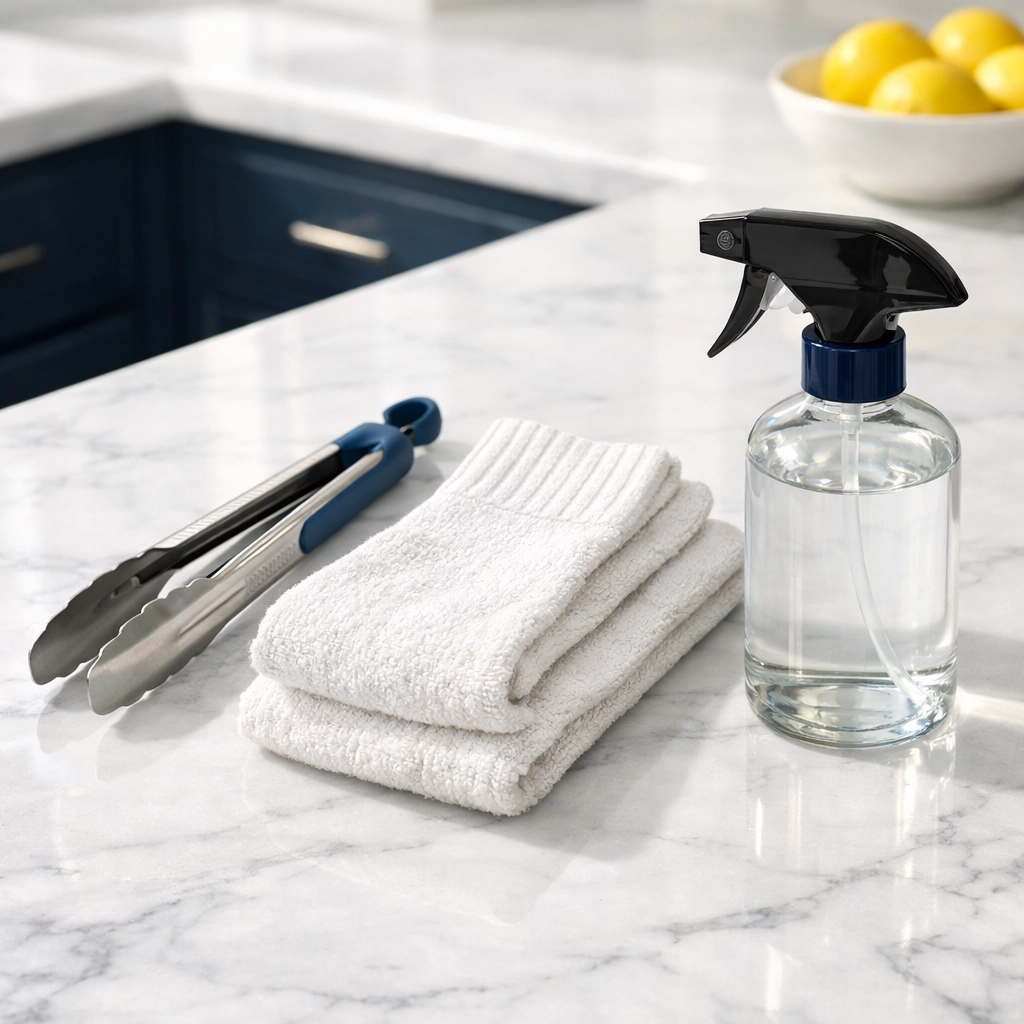
- Kitchen Tongs: This is the secret upgrade. While you can use just your hand, using tongs allows you to clean both sides of a slat simultaneously with perfect pressure.
- A simple cleaning solution: For most blinds, a mix of 50% water and 50% white vinegar works wonders. If your blinds are extra greasy (like in a kitchen), add a single drop of dawn dish soap.
- Rubber bands (optional): To secure the socks to the tongs.
Step-by-Step: The Sock-on-Tongs Method
If you want to move at Ninja speed, the tongs-and-sock combo is the way to go. Here is exactly how to set it up and execute the perfect clean.
1. Prep Your "Sleeves"
Take your two socks and slide one over each arm of the kitchen tongs. You want them to be snug. If the socks are too long or loose, use a rubber band at the base of the tongs to keep them from sliding off while you work.
2. Dampen (Don't Soak)
Spritz the socks with your cleaning solution. You don't want them dripping wet: excess moisture can warp real wood blinds or leave streaks on aluminum ones. You just want them "tacky" enough to trap the dust.
3. The "Clamping" Technique
Open the tongs and slide them over a single slat. One sock-covered arm should be on top of the slat, and the other should be underneath. Squeeze the tongs gently. You are now making 100% contact with both sides of the slat at the same time.
4. The Slide
Starting from one side of the blind, slide the tongs all the way across to the other side. In one fluid motion, you have cleaned the top and the bottom. Move down to the next slat and repeat.
The "Manual" Sock-on-Hand Variation
If you don't have tongs handy or if you prefer a more "tactile" approach, you can simply put the sock over your hand like a puppet.
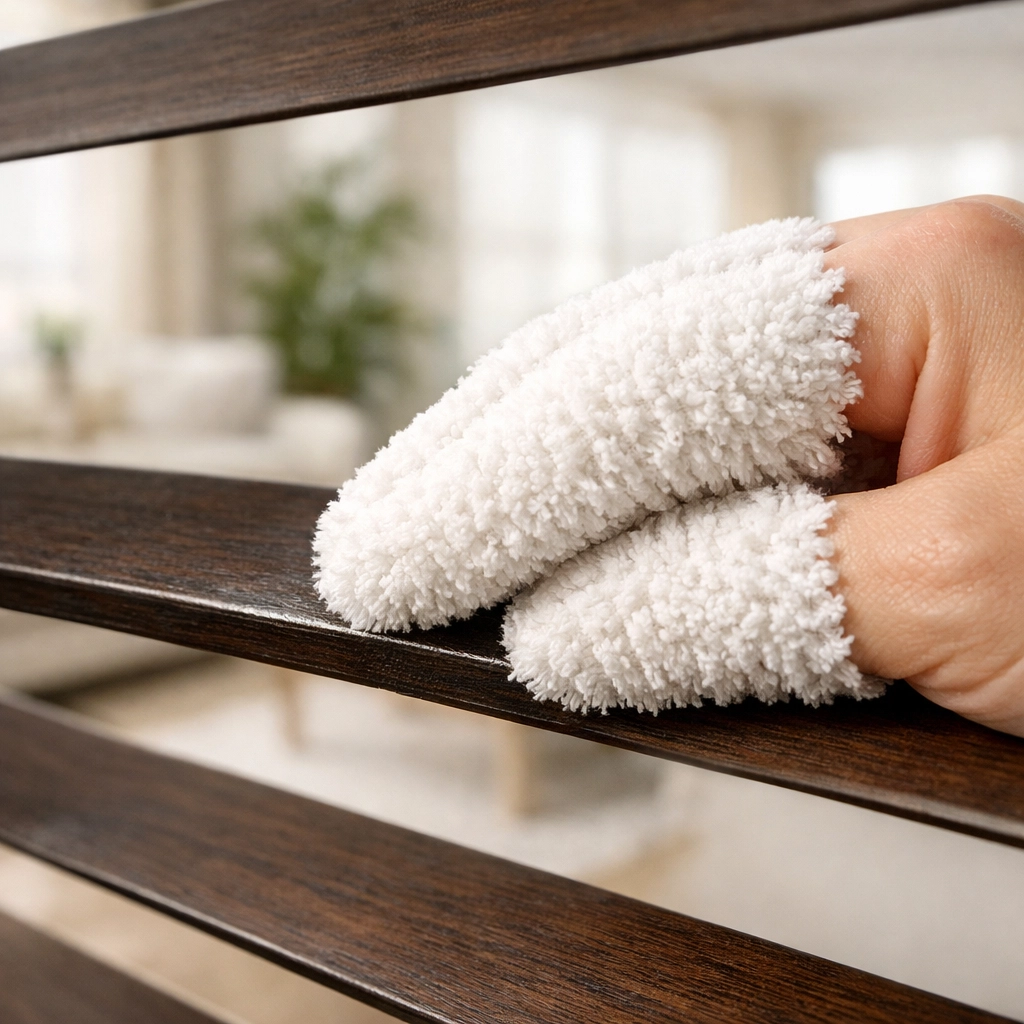
This version is actually superior for vertical blinds or for blinds with very small, delicate slats. With the sock on your hand, you can use your thumb and index finger to "pinch" the slat. This gives you incredible control and allows you to feel exactly where the dust is. It’s also great for getting into the corners of the window frame where tongs might be too bulky to reach.
Choosing the Right Sock Material
Not all socks are created equal when it comes to cleaning. If you have a drawer of "mismatched" socks (we all do), here is how to pick the best one for the job:
- Cotton Athletic Socks: These are the "all-rounders." They are absorbent and have enough texture to scrub away light grime.
- Microfiber Socks: If you have these, use them! Microfiber is designed to lift and trap dust at a microscopic level. These are the best for households with allergy sufferers.
- Chenille or "Fuzzy" Socks: These are incredible for heavy dust. The long fibers reach into the textured grain of faux-wood blinds easily.
- Avoid Thin Dress Socks: They don't have enough "bite" to grab the dust and will likely just smear it around.
Pro-Tips for Different Blind Types
While the sock trick works on almost everything, a true Cleaning Ninja knows that different materials require a slightly different touch.
Real Wood Blinds:
Wood is porous. Never use a lot of water. Stick to a very lightly dampened sock or even a dry one if you’re just doing a weekly maintenance dust. If the wood looks dull, you can put a tiny drop of wood polish on the sock to bring back the shine while you dust.
Faux Wood & Plastic:
These are the most durable. You can be a bit more generous with your cleaning solution here. These are also prone to static, which attracts dust faster. To combat this, you can actually wipe them down with a used dryer sheet after you finish the sock trick to neutralize the static charge.
Aluminum Blinds:
Be careful not to squeeze the tongs too hard! Aluminum slats are thin and can bend or crease if you’re too aggressive. Use a light touch and let the cleaning solution do the work.

Why This Method Beats the Competition
You might be wondering, "Is this really better than a vacuum attachment?" In our experience at The Cleaning Ninjas Inc, the answer is a resounding yes.
Vacuum attachments often have stiff bristles that can scratch delicate finishes. Moreover, the suction is rarely uniform across the width of the slat, meaning you have to go over the same spot multiple times. The sock trick provides physical agitation: the "scrubbing" action: that a vacuum simply can't match.
It’s also much quieter. If you’re trying to tidy up while the kids are napping or while you’re listening to a podcast, the silent "swipe" of a sock is much more pleasant than the roar of a vacuum motor.
When to Call in the Professionals
We love sharing these cleaning tips because we know how satisfying it is to get a win in your daily chores. However, we also know that life gets busy. Sometimes, the blinds aren't just dusty: they’re caked in years of grime, or perhaps you have a whole office building's worth of windows to deal with.
When the DIY hacks aren't enough, or when you’d rather spend your weekend doing anything other than wearing socks on your hands, that’s where we come in. Whether it's a deep spring clean or regular maintenance, our team brings the "Ninja" level of detail to every corner of your home. You can learn more about what we do on our Services page or meet the team behind the masks on our About Us page.
Final Thoughts: Making it a Habit
The best way to keep your blinds clean isn't a massive deep clean once a year; it’s a quick "sock swipe" once a month. Because the sock-on-hand trick is so fast, you can realistically do a room in about five minutes.
Next time you’re folding laundry and you find that one sock whose partner has gone missing in the dryer dimension, don’t throw it away. Keep it in your cleaning caddy. Your blinds: and your indoor air quality: will thank you for it.
Happy cleaning, and remember: stay stealthy, stay clean!