Let’s talk about that funky smell in your kitchen. No, it’s not the leftovers you forgot in the back of the fridge (though you should probably check on those). It’s that neon-yellow-and-green plastic sponge sitting on the edge of your sink. It’s damp, it’s harborer of approximately a billion bacteria, and it’s basically a tiny plastic brick that will outlive your great-grandchildren in a landfill.
At The Cleaning Ninjas Inc, we’re all about efficiency, but we’re also about keeping things green. If you’ve been looking for a way to level up your home’s sustainability without sacrificing your "ninja-level" clean, it’s time to ditch the polyurethane and embrace the world of compostable cleaning tools. Specifically, we’re talking about the dynamic duo: Bamboo and Loofah.
The Plastic Problem Under Your Sink
Most conventional sponges are made from polyurethane, a petroleum-based plastic. Every time you scrub a dish, tiny particles, microplastics, break off and wash down the drain, eventually finding their way into our oceans and food chain. Not exactly the "fresh" feeling you want when you’re doing the dishes, right?
Furthermore, these synthetic sponges are designed to be disposable. Because they trap grease and food particles so easily, they become breeding grounds for germs within a week or two. You throw it away, buy a new one, and the cycle of waste continues. If you’re following our Cleaning Tips, you know we prefer strategies that are better for your home and the planet.
Enter the Bamboo Ninja: Why Bamboo?
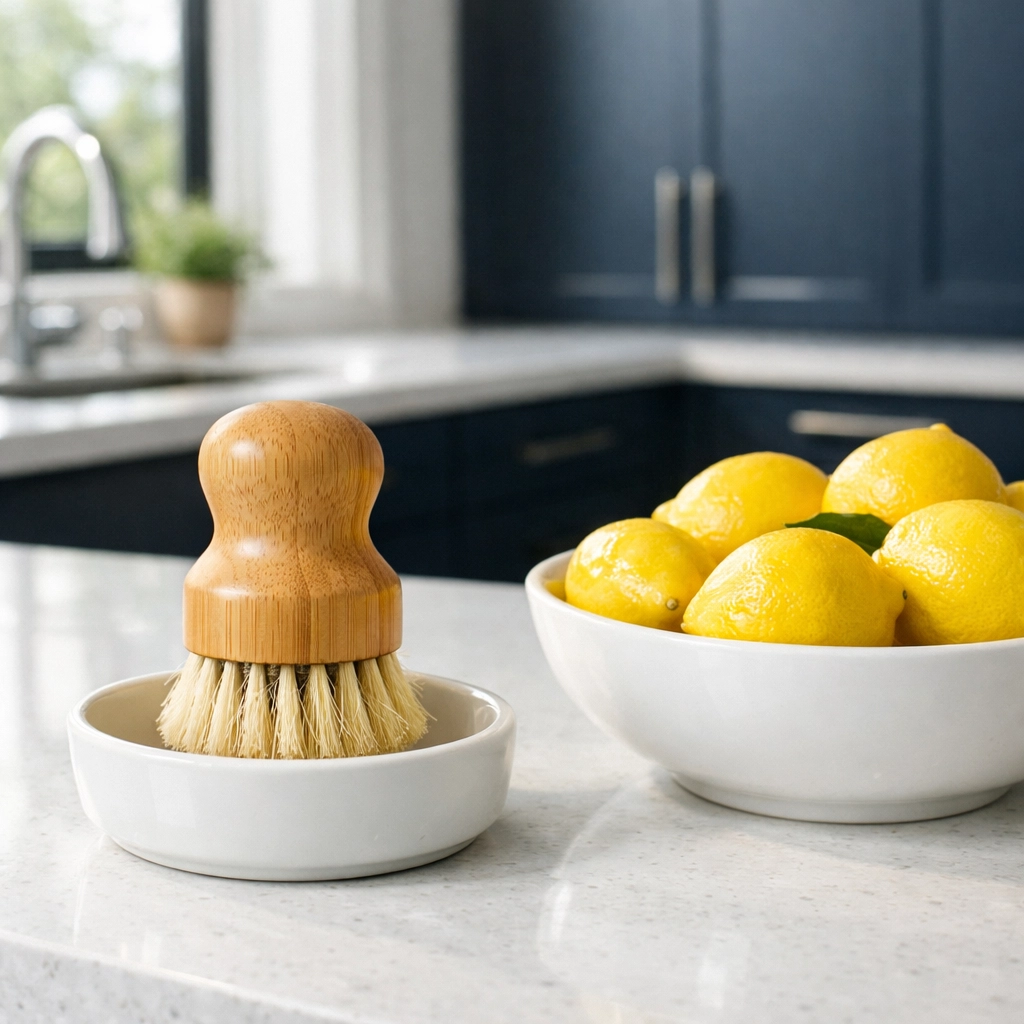
Bamboo is the ultimate "ninja" plant. It grows incredibly fast (some species up to three feet in a single day!), requires no pesticides, and uses very little water. When it’s turned into a cleaning tool, it’s durable, naturally antimicrobial, and aesthetically pleasing. Let’s be honest: a bamboo dish brush looks way cooler on your counter than a mangled piece of plastic foam.
Bamboo sponges usually come in two forms: bamboo fiber cloths wrapped around a natural core, or bamboo-handled brushes with natural bristles.
The Benefits of Bamboo Brushes:
- Ergonomics: The handles are sturdy and provide a much better grip for those stubborn lasagna pans.
- Replaceable Heads: Many bamboo brushes allow you to swap out just the bristle head, meaning you keep the handle for years.
- Compostability: When the bristles are worn out (if they are made of natural fibers like sisal or coconut), the whole head can go straight into your compost bin.
The Loofah Legend: It’s a Vegetable, Not a Sea Creature!
One of the biggest misconceptions in the cleaning world is that loofahs come from the ocean. While sea sponges are a thing, the "loofah" you use for scrubbing is actually a dried-out gourd! Yes, you are essentially cleaning your dinner plates with a cousin of the cucumber.
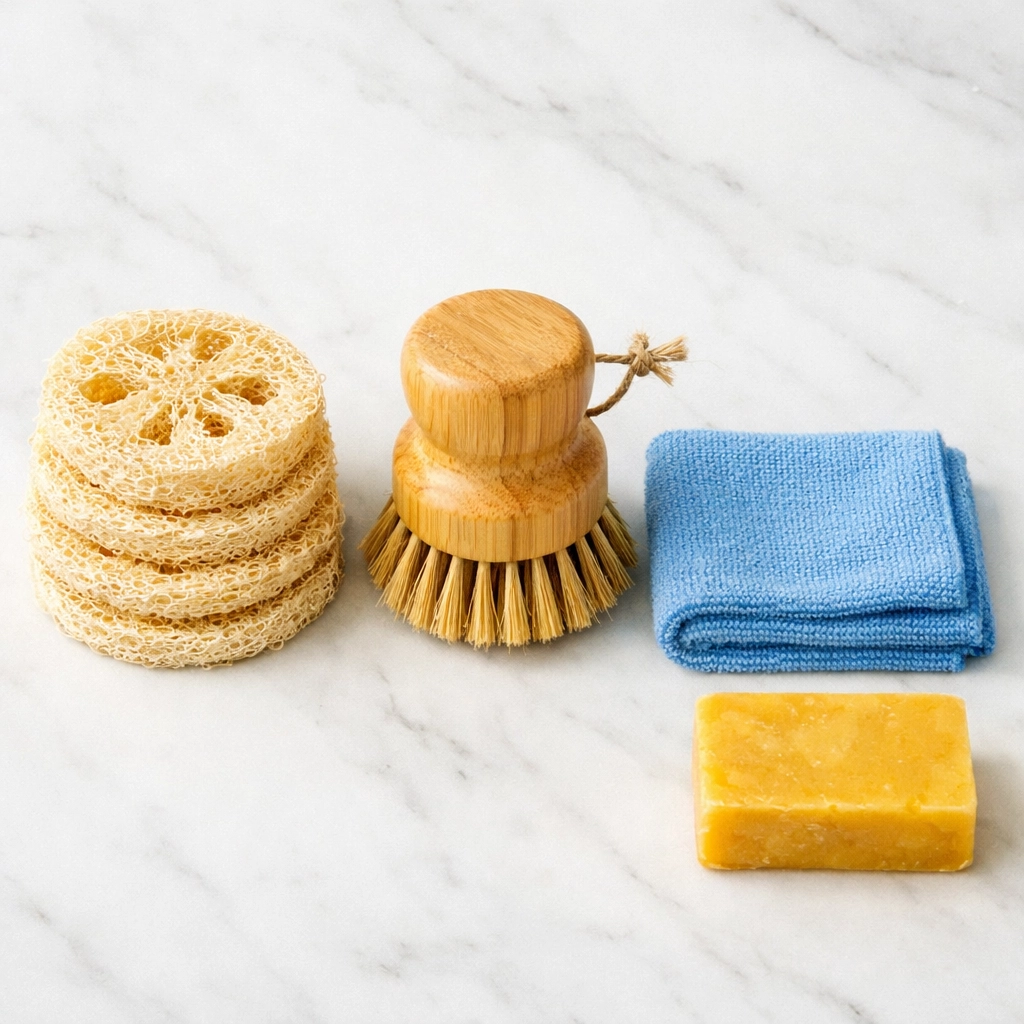
Loofah sponges are the MVPs of the compostable cleaning world. When dry, they are stiff and scratchy: perfect for dried-on food. When wet, they soften up just enough to be flexible while maintaining a powerful scrubbing texture.
Why We Love Loofahs at The Cleaning Ninjas Inc:
- Zero Plastic: 100% plant fiber. No microplastics, no petroleum.
- Deep Scrubbing: They are surprisingly effective at removing stuck-on grime without scratching your non-stick pans (though always test a small area first!).
- Aerated Design: Because loofahs have a very "loopy," open structure, they dry out much faster than synthetic sponges. This means they don't get that "death smell" nearly as quickly.
How to Make the Switch Without Losing Your Mind
We get it. Change is hard. If you’ve been using the same brand of plastic sponge since the 90s, switching to a dried vegetable might feel weird. Here is our Ninja-approved strategy for transitioning to a sustainable sink:
- Don’t Trash What You Have: Sustainability isn't about throwing away perfectly good tools to buy "green" ones. Use up your current stash of plastic sponges first.
- Start with the Brush: Grab a bamboo dish brush for your heavy-duty scrubbing. It’s an easy win and feels more "substantial" than a sponge.
- The Loofah Test: Buy a pack of flat, dehydrated loofah slices. They usually come flat as a pancake and expand when you dip them in water. It’s a fun science experiment and a great space-saver in your pantry.
- Pair with Green Cleaners: If you’re going green with the tools, go green with the soap! We often recommend DIY solutions or eco-certified soaps to our clients at The Cleaning Ninjas Inc.
Maintenance: Keeping Your Compostables Fresh
Because bamboo and loofah are natural materials, they do require a tiny bit more care than plastic. If you leave a bamboo brush sitting in a puddle of water, it will eventually mold.
- Dry Them Out: Always store your bamboo brushes bristles-down (or hanging) so water doesn't sit on the wood. For loofahs, give them a good squeeze and let them hang-dry or sit on a slotted soap dish.
- The Boiling Water Trick: Once a week, you can sanitize your loofah by soaking it in boiling water for a few minutes or tossing it in the top rack of the dishwasher.
- Sunlight is Magic: If your loofah starts to look a little dingy, let it dry in direct sunlight. The UV rays act as a natural bleach and sanitizer.
The "Full Circle" Moment: Composting Your Tools
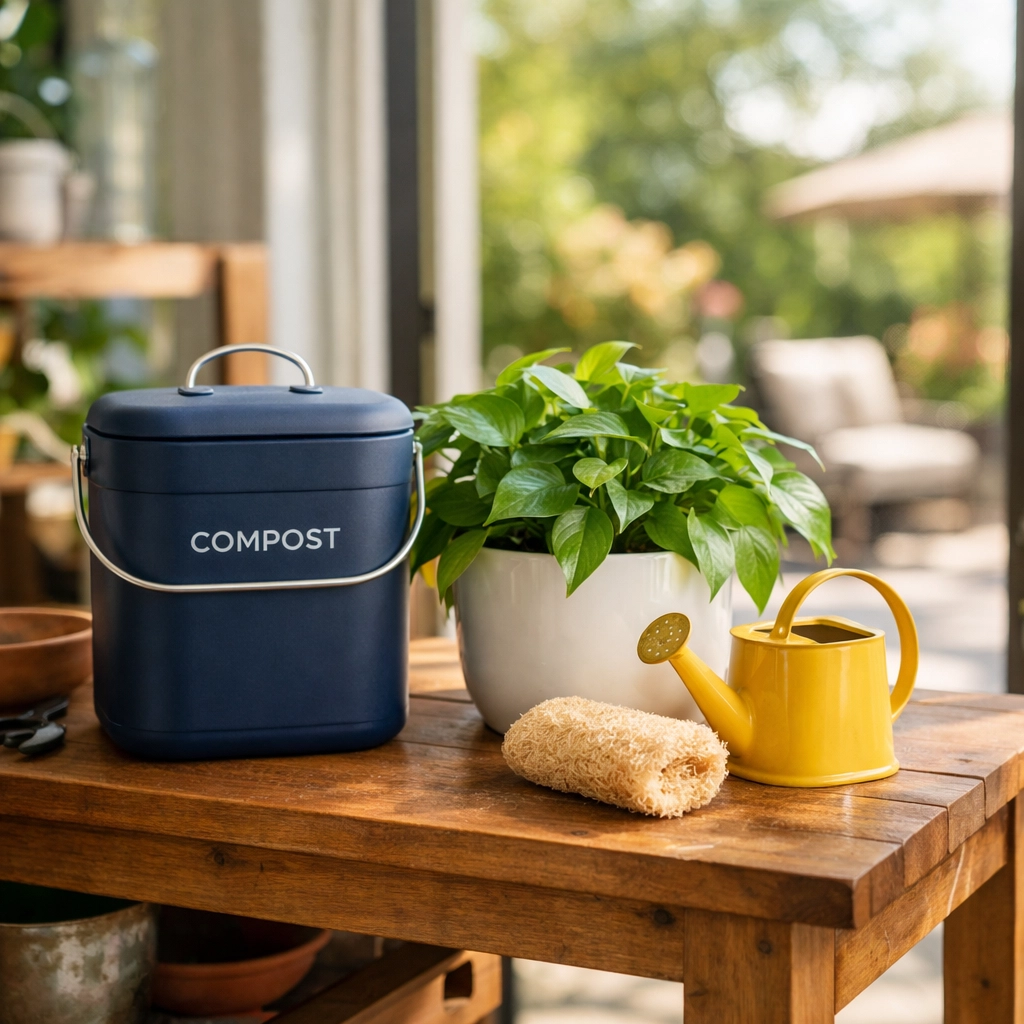
This is the most satisfying part of the process. When your loofah has finally seen better days and is starting to fall apart, you don't put it in the trash. You take a pair of scissors, snip it into smaller pieces, and bury it in your backyard compost or drop it in your green waste bin.
Within a few months, that sponge will have returned to the earth, providing nutrients for new plants to grow. It’s a closed-loop system that would make any ninja proud. If you want to see how we incorporate these high-level strategies into our professional work, check out our services.
Beyond the Sink: Other Sustainable Ninja Tools
While bamboo and loofah are the stars of the dish-washing show, there are plenty of other eco-friendly swaps you can make:
- Walnut Scrubber Pads: Made from crushed walnut shells, these are a great alternative to steel wool for tough jobs.
- Coconut Fiber Brushes: Excellent for scrubbing root vegetables or even cleaning the bathtub.
- Microfiber (The Reusable King): While not compostable, high-quality microfiber cloths can be washed hundreds of times, replacing thousands of single-use paper towels. Check out our thoughts on this in the rest of our blog.
Final Thoughts: Tiny Changes, Big Impact
You don't have to change your entire life overnight to be a sustainability ninja. Switching to a bamboo brush or a loofah sponge is a small, inexpensive change that eliminates a significant amount of plastic waste over a year. Plus, it just feels better. There’s a certain Zen-like quality to cleaning with natural materials that you just don't get with neon-colored foam.
At The Cleaning Ninjas Inc, we believe that a clean home shouldn't come at the cost of a dirty planet. Whether you're a DIY enthusiast or you're looking for professional help to keep your space pristine, making the move toward compostable tools is a step in the right direction.
Ready to take your home's cleanliness to the next level? Explore our services and let us show you how the pros do it: with speed, precision, and a whole lot of heart! And if you just want more tips on how to handle the "uncleanables" in your house, keep an eye on our Cleaning Tips section.
Now, go forth and scrub with the power of plants! Your sink: and the Earth( will thank you.) 🥷✨