Ever feel like you’re starring in a low-budget remake of Groundhog Day, but instead of Bill Murray and a woodchuck, it’s just you and a persistent layer of dust? You spend your entire Saturday morning scrubbing, polishing, and sweating, only to wake up on Monday morning wondering if a localized dust storm hit your living room while you slept.
It’s exhausting. It’s frustrating. And frankly, it’s a little rude of your house to act this way after all you’ve done for it.
At The Cleaning Ninjas Inc, we see this all the time. People often think they aren't cleaning hard enough or often enough, but the truth is usually much simpler: you might be falling victim to some very common, very sneaky habits that are actually making your home get dirtier, faster.
Professional cleaners don't have magic wands (though we wish we did, the logistics would be much easier). What we do have is a set of "Ninja" protocols that avoid recontaminating surfaces and prevent the dreaded "dirt-attracting residue." If you want your home to stay sparkling for more than twenty minutes, it’s time to stop cleaning harder and start cleaning smarter.
Here are the five common habits the pros avoid at all costs, and how you can break them today.
1. The "One Bottle to Rule Them All" Fallacy
We get the appeal. You see a spray bottle labeled "All-Purpose" and think, "Perfect! One bottle, one cloth, and I’m a cleaning machine." It’s convenient, it saves space under the sink, and it feels efficient.
But here’s the cold, hard truth: "All-Purpose" is more of a marketing suggestion than a scientific reality. Your home is made of a dozen different materials, granite, stainless steel, finished wood, glass, ceramic, and acrylic, and they all have different chemical needs.
When you use a heavy-duty all-purpose cleaner on a delicate wood surface or a polished stone countertop, one of two things happens: you either damage the finish over time, or you leave behind a microscopic layer of sticky residue. That residue is the ultimate villain. It acts like a magnet for every piece of pet dander, lint, and dust floating in the air. Within hours, your "clean" surface looks dull and feels tacky.
The Pro Move: Categorize your surfaces. Use a dedicated glass cleaner for mirrors to avoid streaks, a pH-neutral cleaner for stone, and a specialized wood polish for your furniture. By using the right chemistry, you ensure the surface is actually stripped of grime rather than just being coated in a new layer of chemical film.
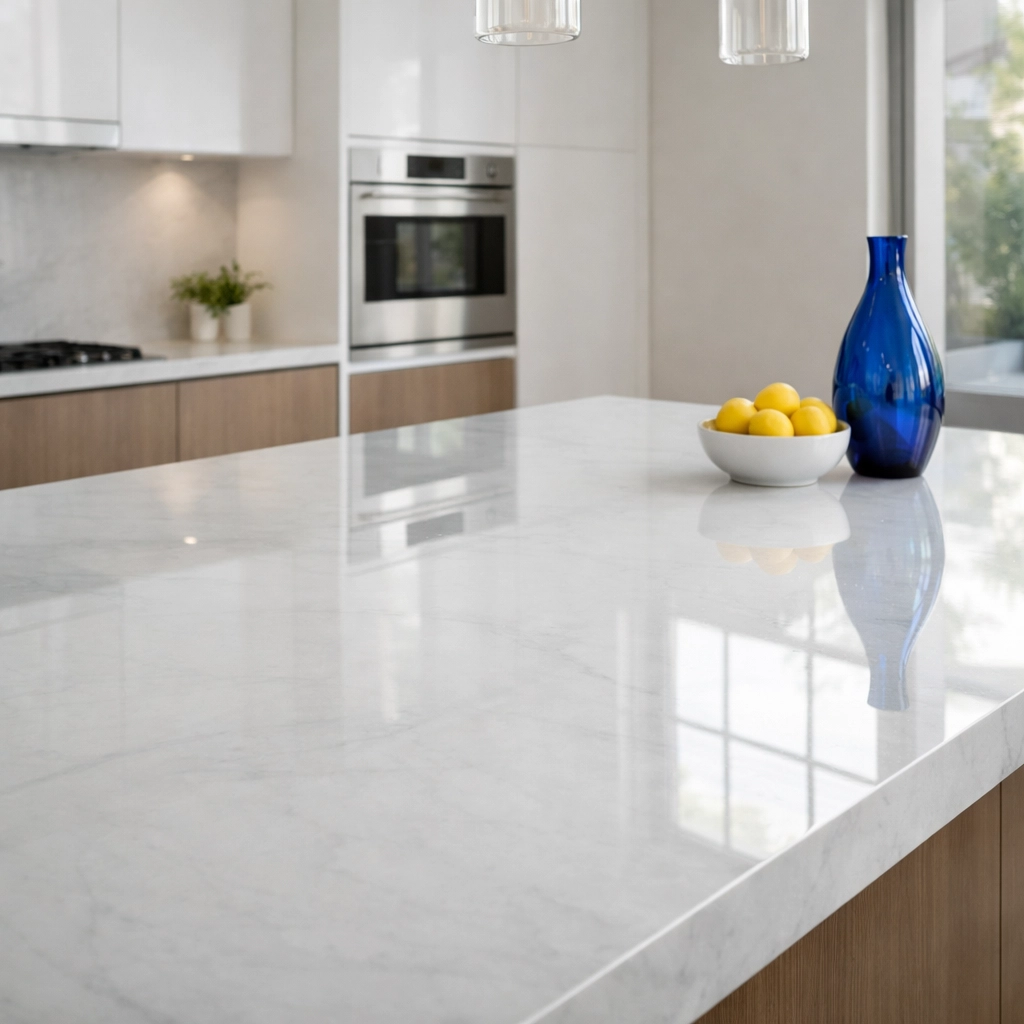
(Image suggestion: A bright, airy kitchen with white marble countertops and yellow accents, looking impeccably clean and streak-free.)
2. Fighting Gravity (Cleaning in the Wrong Order)
If you find yourself vacuuming your floors and then dusting your ceiling fans or bookshelves, we need to have a serious talk. You are essentially doing the work twice, and nobody has time for that.
Gravity is the one constant in the cleaning world. When you dust a picture frame or wipe down a countertop, a significant percentage of those particles don't end up on your cloth, they end up on the floor. If you’ve already cleaned the floor, you’ve just re-dirtied your most labor-intensive surface.
Most homeowners clean "as they see it," jumping from a coffee table to a rug to a window. This scattered approach leaves pockets of dust that eventually settle back onto the areas you just finished.
The Pro Move: Follow the Ninja Order of Operations: High-to-Low and Left-to-Right. Start at the highest point in the room (crown molding, tops of cabinets, or light fixtures) and work your way down. This way, any debris that falls is caught as you move to the next level. By the time you reach the floors, you are truly removing the final layer of dirt from the entire room. Check out our services to see how we apply these systematic approaches to every home we visit.
3. The "More is Better" Fallacy
In many areas of life, more is better. More coffee? Yes. More vacation days? Absolutely. More cleaning product? Hard no.
One of the biggest mistakes we see is the over-application of cleaning solutions. Whether it’s pouring a double dose of floor cleaner into the mop bucket or spraying so much window cleaner that it’s literally dripping down the glass, "extra" product is your enemy.
When you use too much cleaner, it becomes nearly impossible to rinse or wipe it all away. This results in a thick, soapy buildup. Have you ever walked across a freshly mopped floor and felt your socks "stick" slightly? Or noticed that your kitchen table feels a bit gummy? That’s excess product. Not only does it look bad, but it also traps dirt. Every footstep you take on a sticky floor leaves a permanent "print" of grime that wouldn't have stuck if the floor were properly rinsed.
The Pro Move: Less is more. Follow the dilution instructions on the bottle to the letter. Professionals often use concentrated formulas and dilute them precisely because we know that the right balance of water and chemical is what actually lifts the dirt. If a surface feels sticky after cleaning, go over it one more time with a damp microfiber cloth and plain water to "strip" the excess soap.
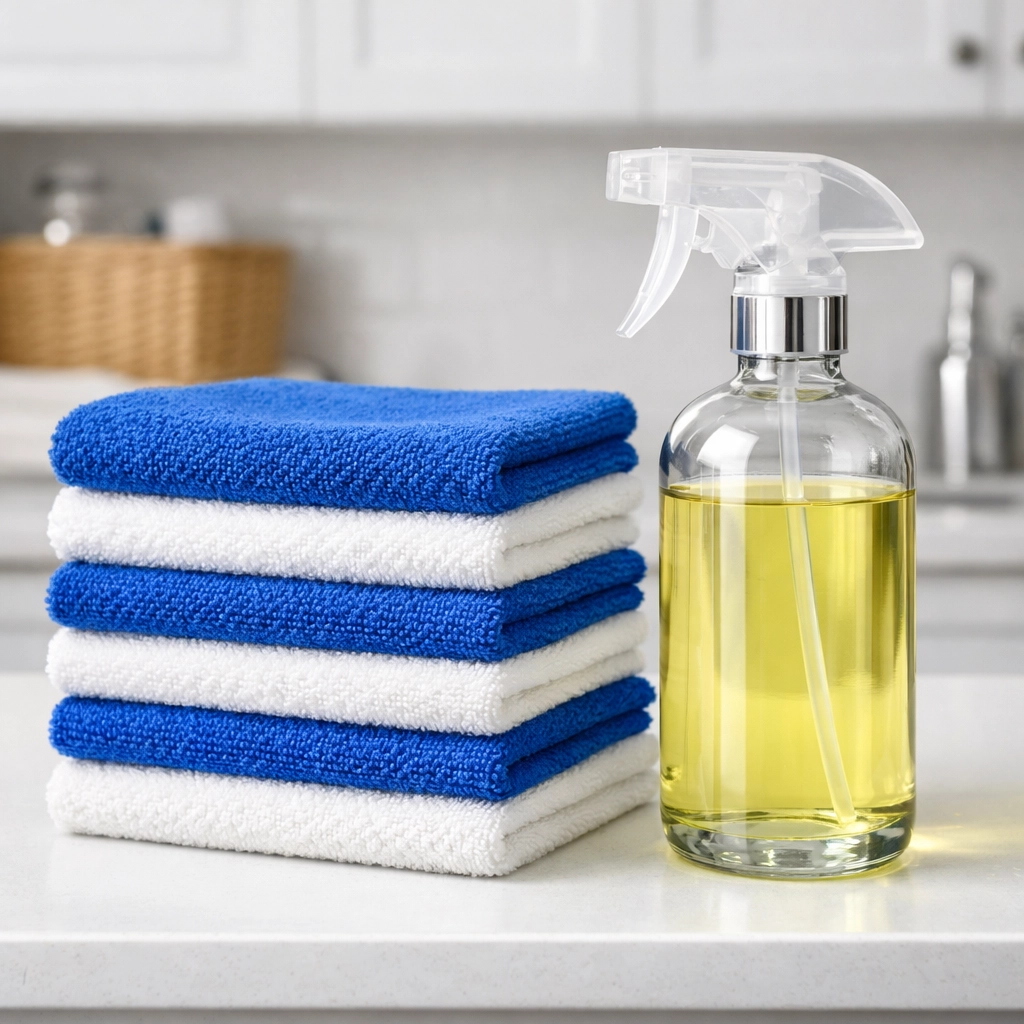
(Image suggestion: A professional-looking utility area with organized blue and white microfiber cloths and clearly labeled spray bottles.)
4. Using Dirty Tools (The "Moving the Dirt Around" Strategy)
This is perhaps the most common habit that keeps houses from staying clean. Think about your kitchen sponge. When was the last time you replaced it? Or your vacuum filter, when was the last time it saw the light of day?
Cleaning with dirty tools is like trying to take a shower with muddy water. It’s counterproductive. A saturated microfiber cloth can’t pick up any more dust; it just pushes it into the corners. A vacuum with a clogged filter or a full bag doesn't actually "suck", it just blows microscopic dust out the exhaust and back into your air.
The most offensive culprit, however, is the mop. Using the same bucket of water for the whole house means that by the time you get to the third room, you’re basically painting your floors with a thin layer of gray, dirty water.
The Pro Move: Treat your tools like the professional equipment they are.
- Microfiber is King: Switch to microfiber cloths and change them frequently during a cleaning session. Once a cloth looks grey, it’s done. Toss it in the laundry (but never use fabric softener, it ruins the "grip" of the fibers!).
- Vacuum Maintenance: Empty the canister after every use and wash or replace filters every few months.
- The Two-Bucket Method: If you’re mopping, use one bucket for your cleaning solution and one for rinsing your dirty mop. This ensures that only clean water ever touches your floors.
5. The "Speed Demon" Approach (Ignoring Dwell Time)
We get it. Nobody wants to spend their afternoon staring at a toilet bowl. We want to spray, wipe, and get back to Netflix. However, chemistry takes time.
Most household disinfectants and cleaners require something called "dwell time." This is the amount of time the product needs to sit on a surface, undisturbed, to actually break down oils, dissolve mineral deposits, or, most importantly, kill bacteria and viruses.
If you spray a disinfectant and immediately wipe it away, you might have moved the dirt around, but you almost certainly haven't killed the germs. Furthermore, rushing the process means you have to use more "elbow grease" (physical scrubbing) because you didn't let the chemicals do the heavy lifting for you.
The Pro Move: Spray and walk away. When you enter a room to clean it, start by spraying down the "wet" surfaces, the sink, the shower, the stovetop. Let them sit for 5 to 10 minutes while you do the "dry" tasks like dusting or tidying. By the time you come back to the surfaces you sprayed, the grime will have softened, making the actual cleaning twice as fast and ten times more effective.
(Image suggestion: A bright, modern bathroom with white tiling and yellow decorative towels, looking fresh and professionally sanitized.)
Why the "Ninja" Way Works
The secret to a home that stays clean isn't a secret at all, it’s discipline and systemization. When you avoid these five habits, you stop the cycle of "fake cleaning" where you’re just shifting dust from the shelf to the floor, or coating your counters in sticky, dust-attracting soap.
Maintaining a home can feel like a full-time job because, well, for us, it is! If you find that despite your best efforts, you just can't keep up with the chaos, don't sweat it. That’s what we’re here for. At The Cleaning Ninjas Inc, we live for the details and the "high-to-low" systems that keep your home fresher for longer.
By breaking these five habits, you’ll notice that the time between your "deep cleans" starts to get longer. Your surfaces will stay shinier, your air will feel clearer, and you might actually get to enjoy your Saturday for once.
Now, go toss that old kitchen sponge in the trash. You deserve better than that.

(Image suggestion: A wide shot of a beautifully staged living room with blue accent pillows and plenty of natural light, showcasing a "Ninja-clean" environment.)