Living in Massachusetts means dealing with a beautiful but floor-fearing variety of seasons. Between the salt and slush of a Nor’easter, the muddy "fifth season" in early spring, and the high-pollen summers, our carpets take a serious beating. If you’re like most Bay Staters, you want a clean home, but you’re also increasingly conscious of the chemicals being sprayed around your living room: especially if you have kids crawling on the floor or pets who think the rug is their personal daybed.
Switching to eco-friendly carpet cleaning isn't just a trend; it’s a smarter way to maintain your home. Traditional carpet shampoos often rely on harsh synthetic fragrances and volatile organic compounds (VOCs) that can linger in your indoor air long after the "clean" smell fades. By leaning into natural, plant-based methods, you can refresh your home while keeping your family safe.
Why Green Cleaning Matters in the Bay State
Our homes in Massachusetts are often sealed tight for six months of the year to keep out the New England chill. This means whatever chemicals we use to clean our carpets stay trapped inside. Poor indoor air quality is a real concern, and carpets act like giant filters, trapping dust, pet dander, and chemical residues.
When you choose eco-friendly methods, you’re reducing the "chemical load" in your house. Furthermore, our proximity to the coast and our beautiful local waterways means that whatever we pour down the drain eventually impacts our local ecosystem. Using biodegradable ingredients ensures that your cleaning routine doesn’t come at the cost of the environment.
The Magic of the Eco-Pantry
You don’t need a specialized chemical lab to get your carpets looking new. In fact, some of the most effective cleaners are sitting in your kitchen right now. Here are the heavy hitters of the eco-friendly cleaning world:
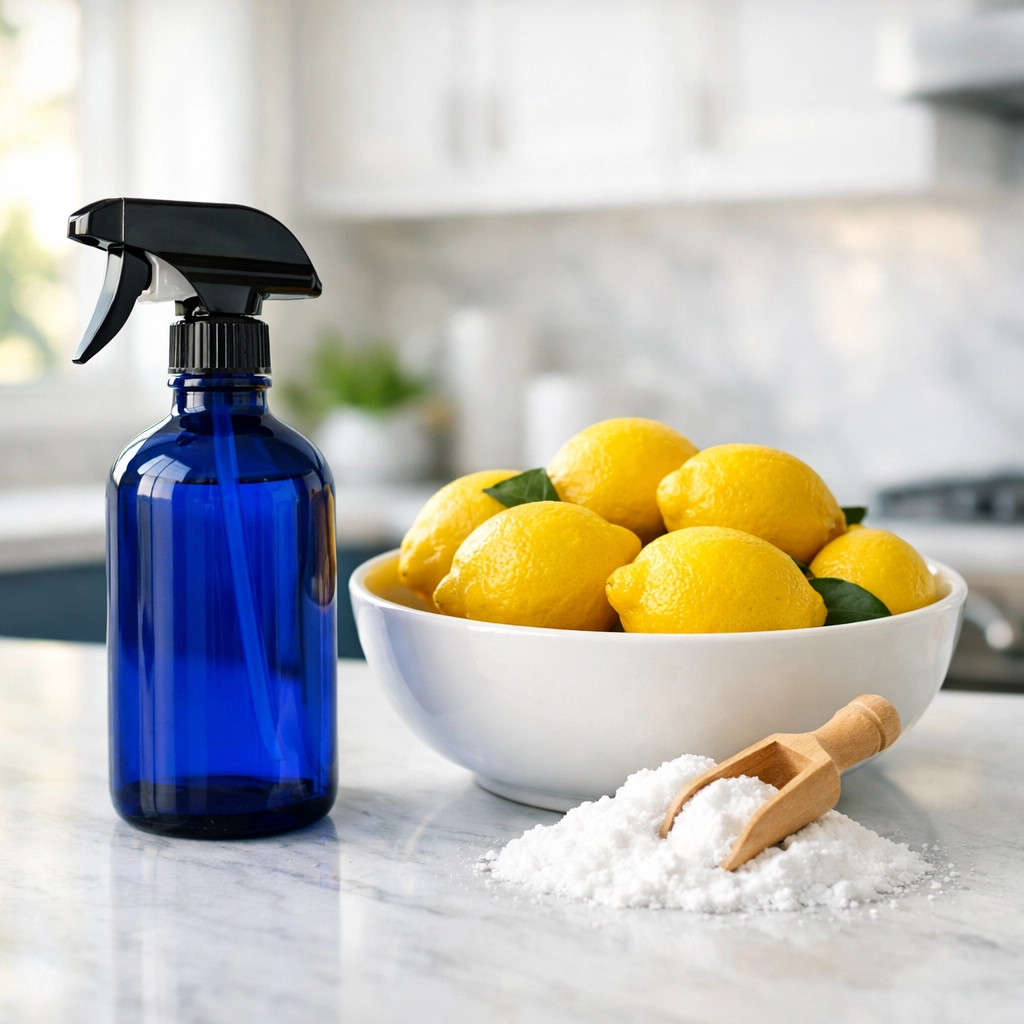
- White Vinegar: This is the MVP. Its mild acidity helps break down alkaline stains (like salt from the driveway) and acts as a natural deodorizer.
- Baking Soda: Perfect for absorbing odors and lifting oily residues.
- Liquid Castile Soap: A plant-based, biodegradable soap (like Dr. Bronner’s) that provides the "suds" without the toxins.
- Lemon Juice: A natural bleaching agent that works wonders on light-colored carpets for organic stains.
Dealing with the "Massachusetts Salt" Problem
One of the biggest challenges for MA homeowners is the white, crusty residue left behind by road salt and ice melt. If left untreated, these salt crystals can actually abrade and damage carpet fibers.
The best eco-friendly fix for salt is a simple vinegar solution. Mix one part white vinegar with one part warm water. Spray the salt-stained area lightly and let it sit for a few minutes. The vinegar neutralizes the alkalinity of the salt, making it easy to blot away with a clean, white cloth. This is a essential part of any cleaning service in Massachusetts routine during the winter months.
The Power of the HEPA Vacuum
Before you even think about moisture, you have to talk about dry soil. About 80% of the "dirt" in your carpet is actually dry particles like sand, dust, and skin cells. If you add liquid to a carpet that hasn't been thoroughly vacuumed, you’re just making mud.
Invest in a vacuum with a HEPA (High-Efficiency Particulate Air) filter. These filters trap 99.97% of dust, pollen, and mold particles. For those of us in the Worcester or Leominster areas dealing with high seasonal allergies, frequent vacuuming with a HEPA filter is the single best way to keep your home clean and healthy. We recommend a slow, deliberate pace: going over each section of the rug at least twice in different directions.
A Step-by-Step Guide to Refreshing Your Rugs
If your carpet is looking a little dull and needs a full refresh, follow this eco-friendly protocol:
1. The Pre-Treat
Start by identifying any specific spots or stains. For general food or dirt stains, mix 1 teaspoon of castile soap with 1 cup of warm water. Spray it on the spot and gently blot. Never rub. Rubbing pushes the stain deeper into the fibers and can fray the carpet.
2. The Deodorizing Power-Up
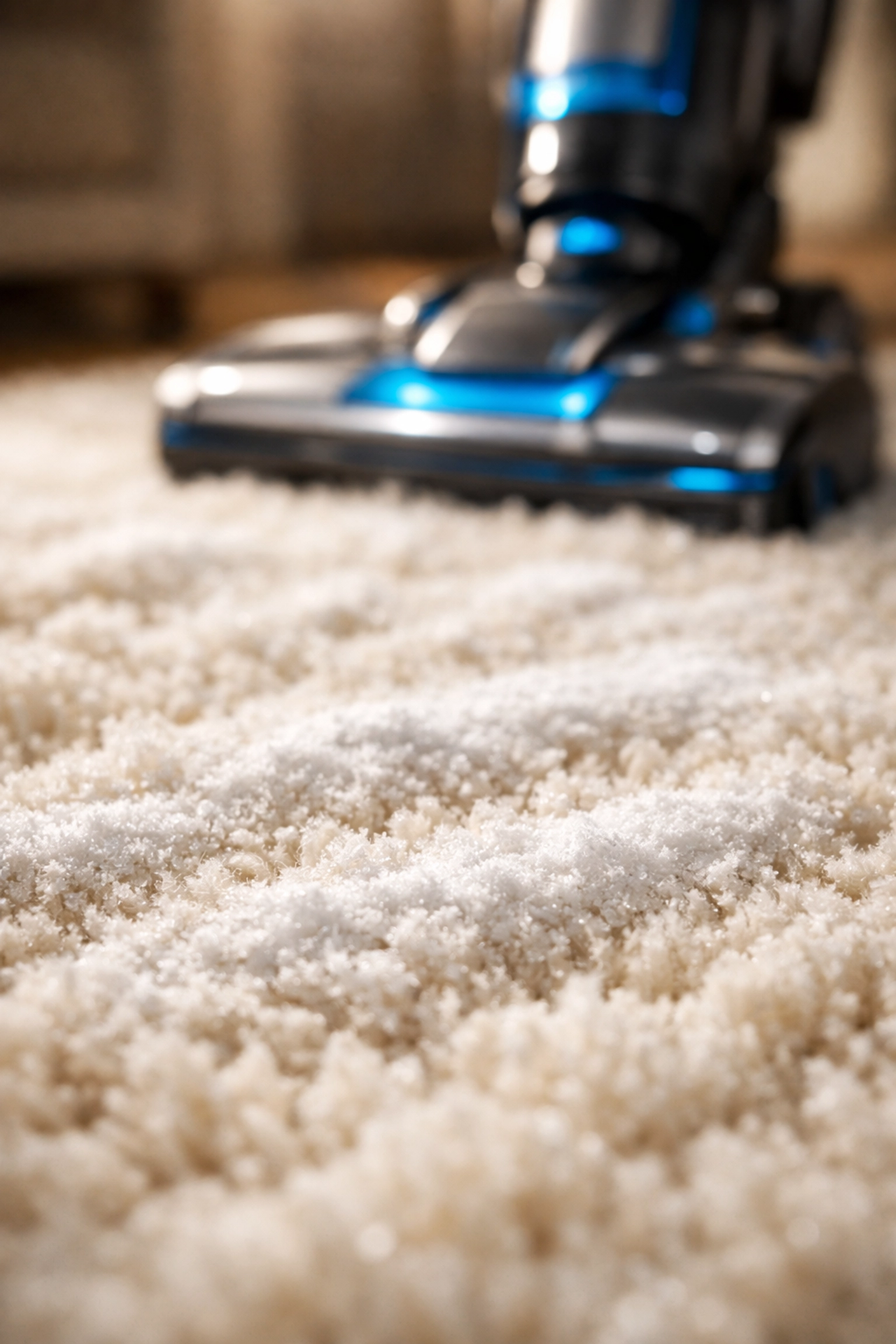
Sprinkle a generous amount of baking soda over the entire carpet. If you want a light scent, you can mix in a few drops of essential oils (like lavender or lemon) into the baking soda before sprinkling. Let it sit for at least 30 minutes: or overnight if you have deep-seated pet odors.
3. The Deep Vacuum
Vacuum up the baking soda thoroughly. Take your time here. The baking soda has now bound to the odors and oils, and removing it takes the smell with it.
4. The Low-Moisture Steam
If you have a home steam cleaner, skip the chemical detergents. Fill the tank with plain hot water and a half-cup of white vinegar. The steam provides the heat necessary to kill bacteria and loosen dirt, while the vinegar helps the carpet stay soft and residue-free.
Low-Moisture is the Key
One of the biggest mistakes people make with DIY carpet cleaning is over-wetting the carpet. In our humid Massachusetts summers, a soaking wet carpet can take days to dry, which is an invitation for mold and mildew to move in.
Always use a low-moisture approach. Use fans or a dehumidifier to speed up the drying process. A dry carpet is a happy carpet. This is especially important if you are doing post-construction cleaning after a renovation, where dust levels are high and you want to ensure the final finish is pristine.
Maintaining the Glow
Once your carpets are refreshed, the goal is to keep them that way. Implementing a "no-shoes" policy is the most effective eco-friendly move you can make. By leaving shoes at the door, you prevent the pesticides, oils, and Massachusetts mud from ever entering your living space.
Additionally, consistency is your best friend. A weekly house cleaning schedule prevents dirt from becoming "embedded." Once dirt is ground into the bottom of the carpet pile, it acts like sandpaper, wearing down the fibers every time you walk on it. Regular maintenance keeps the fibers standing tall and looking bright.
Eco-Friendly Spot Removal Cheatsheet
Keep these "recipes" handy for when life happens:
- Pet Accidents: Blot up as much as possible. Mix equal parts water and vinegar with a dash of baking soda. This neutralizes the ammonia in the urine.
- Coffee/Tea: Mix 1 tablespoon of liquid dish soap, 1 tablespoon of white vinegar, and 2 cups of warm water. Blot from the outside in.
- Mud: Let it dry completely! Once dry, vacuum up the clumps. Then, use a tiny bit of soapy water to blot the remaining pigment.
- Grease: Sprinkle cornstarch or baking soda on the spot. Let it sit for 6 hours to absorb the oil, then vacuum.
The Long-Term Benefits
Choosing green methods for your Massachusetts home isn't just about aesthetics. It's about longevity. Harsh chemicals can actually strip the protective coatings off carpet fibers, causing them to soil faster in the future. Natural methods are gentler, helping your carpet last years longer.
Plus, there’s a peace of mind that comes with knowing your home is truly clean: not just "chemically scented." When you step onto a freshly cleaned rug that was treated with nothing but steam, vinegar, and a bit of Ninja-level effort, you can breathe easy.
If you find that your busy Massachusetts lifestyle doesn't leave much room for deep-cleaning carpets and scrubbing baseboards, you're not alone. Many families find that a weekly vs. bi-weekly house cleaning service is the perfect solution to keep the home environment healthy without spending every weekend with a vacuum in hand.

Final Thoughts for MA Homeowners
Whether you're in a historic home in Concord or a modern apartment in Boston, your carpets are a major investment. Treating them with eco-friendly care ensures they remain a comfortable, safe place for your family to gather. Next time you see a stain or notice a bit of "winter funk" in your rugs, reach for the vinegar and baking soda first. Your carpets (and the planet) will thank you.
For more tips on keeping your home in top shape, check out our cleaning tips section or learn more about us and how we help Massachusetts families stay clean and green!