Let’s be real for a second: dusting is probably the most thankless chore in existence. You spend an hour wiping down the bookshelves, only to turn around and see a fresh layer of grey fuzz settling back down like it never left. It’s frustrating, it’s tedious, and if you’re using the wrong tools, you’re basically just taking the dust for a walk around your living room instead of actually getting rid of it.
Here at The Cleaning Ninjas Inc, we’re all about efficiency and stealth. But lately, we’ve been leaning hard into our "Green Ninja" persona. We want a home that isn't just clean, but healthy and sustainable too. That’s why today we’re talking about the ultimate weapon in the eco-friendly arsenal: the humble microfiber cloth.
If you’re still reaching for a roll of paper towels or one of those old-school feather dusters, it’s time for an upgrade. Switching to microfiber isn't just a win for your surfaces; it’s a massive win for the planet. Let’s dive into why this tiny piece of tech is a total game-changer for your cleaning routine.
The Science of the "Static Snap"
You might be wondering, "Penny, it’s just a cloth. What’s the big deal?"
Well, it’s all in the name. "Micro" means small, and these fibers are incredibly tiny, think 1/100th the diameter of a human hair. But the real magic happens in how those fibers are shaped. Most cheap rags are made of rounded fibers that just push dirt around. High-quality microfiber is "split," creating a hook-like structure that creates a massive amount of surface area.
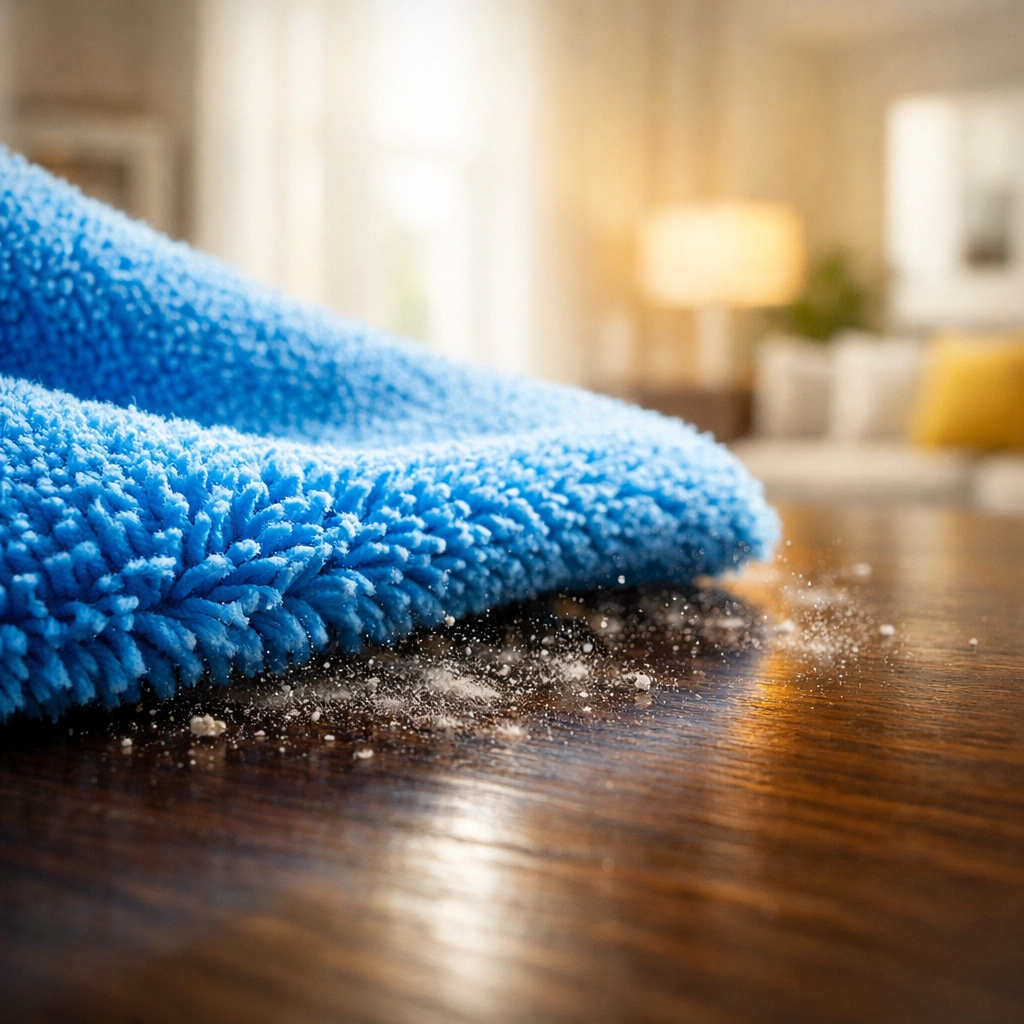
When you run a microfiber cloth across a dusty table, it generates a tiny bit of static electricity. This isn't the kind of static that shocks your cat; it’s an electrostatic charge that acts like a magnet. Instead of pushing the dust into the air (where you’ll just breathe it in later), the cloth grabs the dust and locks it deep inside the fibers.
This is why we love it at The Cleaning Ninjas Inc. It’s about working smarter, not harder. When you use microfiber, you aren't just cleaning; you’re removing allergens from your environment.
Why the Green Ninja Chooses Microfiber
If you’re trying to live a more minimalist, eco-friendly lifestyle, your cleaning cabinet is a great place to start. Traditional dusting methods usually involve one of two things: disposable wipes or chemical sprays. Both have a pretty heavy environmental footprint.
1. Goodbye, Disposables
Think about how many paper towels or disposable duster refills you go through in a year. It adds up to a mountain of waste in the landfill. A single, high-quality microfiber cloth can be washed and reused hundreds of times. Some experts say one cloth can replace up to 100 rolls of paper towels over its lifetime. That is a lot of trees saved and a lot of money kept in your pocket.
2. Ditching the Chemicals
Most people think they need a lemon-scented spray to get a surface clean. In reality, most of those sprays just leave behind a waxy residue that actually attracts more dust over time. Because microfiber is so effective at grabbing particles mechanically, you often don't need any cleaning solution at all.
For 90% of your dusting needs, a dry microfiber cloth is all you need. For the other 10% (like sticky fingerprints on the coffee table), a tiny bit of plain water does the trick. By cutting out the aerosols and synthetic fragrances, you’re keeping the air in your home much cleaner for your family and pets. You can learn more about our commitment to healthy homes on our About Us page.
The Master Ninja Dusting Technique
To get the most out of your microfiber, you can't just scrunch it up into a ball and start scrubbing. There’s an art to it! Here is the official Green Ninja method:
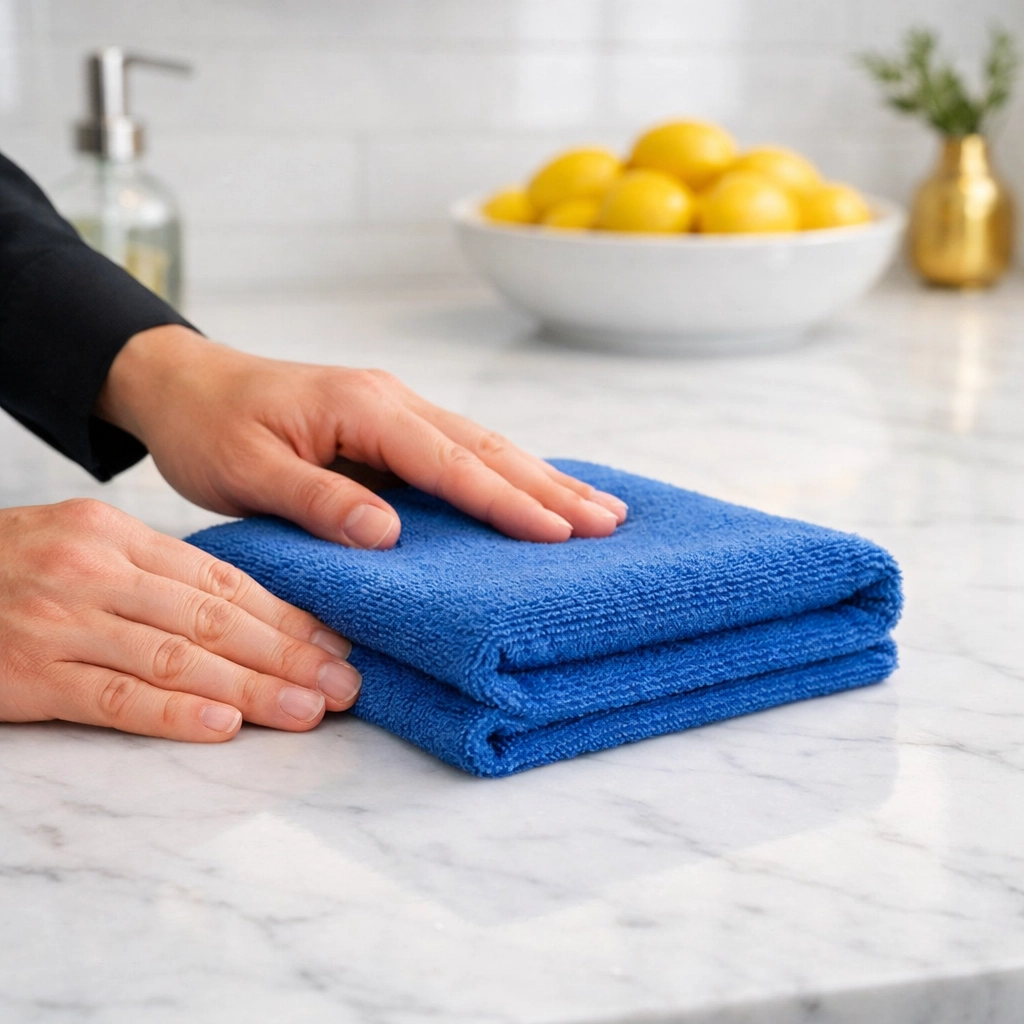
The Fold Method: Fold your microfiber cloth in half, and then in half again. This gives you eight fresh, flat cleaning surfaces. Once one side gets dirty, flip to a new side. This prevents you from redepositing dirt onto clean surfaces and ensures you’re using the electrostatic charge to its full potential.
Top to Bottom: Always start at the highest point in the room (like ceiling fans or the tops of bookshelves) and work your way down. Even though microfiber traps most of the dust, some will inevitably fall. If you start at the top, you’ll catch those stragglers as you move toward the floor.
Dry vs. Damp: Use a dry cloth for light dusting on electronics, picture frames, and knick-knacks. If you’re dealing with a "heavy" dust layer or a surface that needs a bit of polishing, lightly mist the cloth with water. Never soak it: microfiber works best when it's just barely damp.
Dusting Different Surfaces Like a Pro
Microfiber is incredibly versatile, but different areas of your home require a slightly different touch.
Electronics and Screens
Your TV and laptop screens are magnets for dust because of their own static charge. Using a standard cloth can actually scratch these delicate surfaces. A clean, dry microfiber cloth is the safest way to clear away dust and fingerprints without needing any harsh alcohol-based cleaners.
Baseboards and Blinds
These are the places where dust goes to hide. For baseboards, a damp microfiber cloth wrapped around a mop head can save your back. For blinds, try the "pinch" method: wrap a cloth around your fingers and slide them across each slat. You’ll be shocked at how much gunk comes off in one pass.
Glass and Mirrors
Forget the blue window cleaner. Use a damp microfiber cloth to wipe the surface, then immediately follow up with a dry "glass-weave" microfiber cloth. It leaves a streak-free shine that looks like a professional did it. If you’d rather have us handle the deep cleaning details, check out our services to see how we can help.
The Green Ninja’s Guide to Microfiber Care
To keep your cloths working like a charm, you have to treat them right. If you wash them incorrectly, the fibers can "clog" or melt, and they’ll lose their magnetic dusting powers.
- Skip the Fabric Softener: This is the most important rule! Fabric softener and dryer sheets coat the fibers in a waxy layer. This effectively "shuts off" the electrostatic charge and makes the cloth useless for trapping dust.
- Wash with Like Materials: Try to wash your microfiber cloths in their own load. If you wash them with cotton towels, the microfiber will do its job and grab all the lint from the cotton, leaving your "clean" cloths covered in fuzz.
- Watch the Heat: Microfiber is essentially a type of plastic (polyester and polyamide). High heat can melt the tiny hooks. Wash in cool or warm water and tumble dry on low: or better yet, air dry them.
- The Microplastic Factor: As the research mentioned, synthetic fibers can shed microplastics in the wash. To be a true Green Ninja, consider using a laundry bag designed to catch these fibers (like a Guppyfriend) or installing a filter on your washing machine. It’s an extra step that makes a huge difference for our oceans.
Is It Really Worth the Switch?
Transitioning to a microfiber-based cleaning routine might feel like a small change, but the impact is massive. You’re reducing chemical exposure in your home, cutting down on waste, and: most importantly: getting a cleaner home in less time.
At The Cleaning Ninjas Inc, we believe that a clean home shouldn't come at the cost of the environment. Using the right tools is the first step toward a more sustainable lifestyle. It’s about being mindful of the products we bring into our spaces and how we dispose of them.
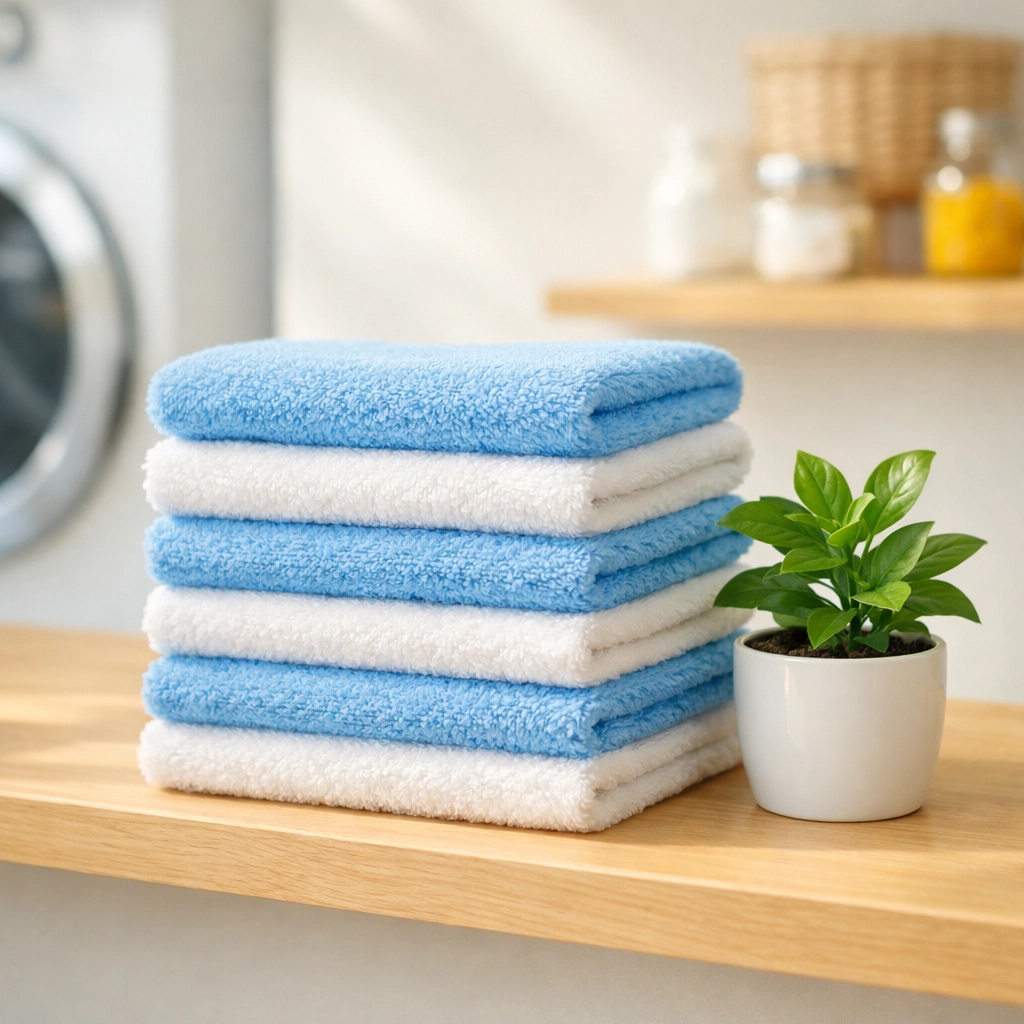
Dusting doesn't have to be a chore you dread. With a couple of good microfiber cloths and the right technique, you can sweep through your home like a ninja: silent, efficient, and leaving nothing but a fresh, clean space behind.
Ready to level up your home’s cleanliness without the stress? Whether you need a one-time deep clean or regular maintenance, we’ve got your back. Explore our services and let us bring the Green Ninja magic to your doorstep!