So, the construction crew has finally packed up their tools, the dust is (mostly) settled, and you’re standing there staring at your brand-new marble countertops or floors. It’s a vibe, right? There is absolutely nothing like the cool, sleek elegance of fresh marble to make a home feel like a luxury spa. But if you’re like most homeowners, that initial "wow" is quickly followed by a tiny bit of "oh no, how do I not ruin this?"
At The Cleaning Ninjas Inc, we’ve seen it all. We know that marble is as sensitive as it is beautiful. Especially when it’s brand new and coming off a post-construction phase, it needs a specific kind of TLC to ensure it stays looking like a masterpiece for decades rather than weeks.
If you’re wondering how to handle your new stone without accidentally etching it or dulling that shine, you’re in the right place. Let’s dive into the Ninja-approved way to treat brand-new marble surfaces.
The Post-Construction Reality Check
Before we even talk about polishing, we have to talk about the mess. Construction is a gritty business. Even if your contractors were super careful, there is a very high chance that your new marble is covered in a fine layer of drywall dust, silica, or sawdust.
Here’s the thing: that dust is abrasive. If you grab a dry rag and start scrubbing away, you’re essentially using sandpaper on your brand-new stone. Marble is much softer than granite or quartz, meaning it scratches if you look at it too hard.
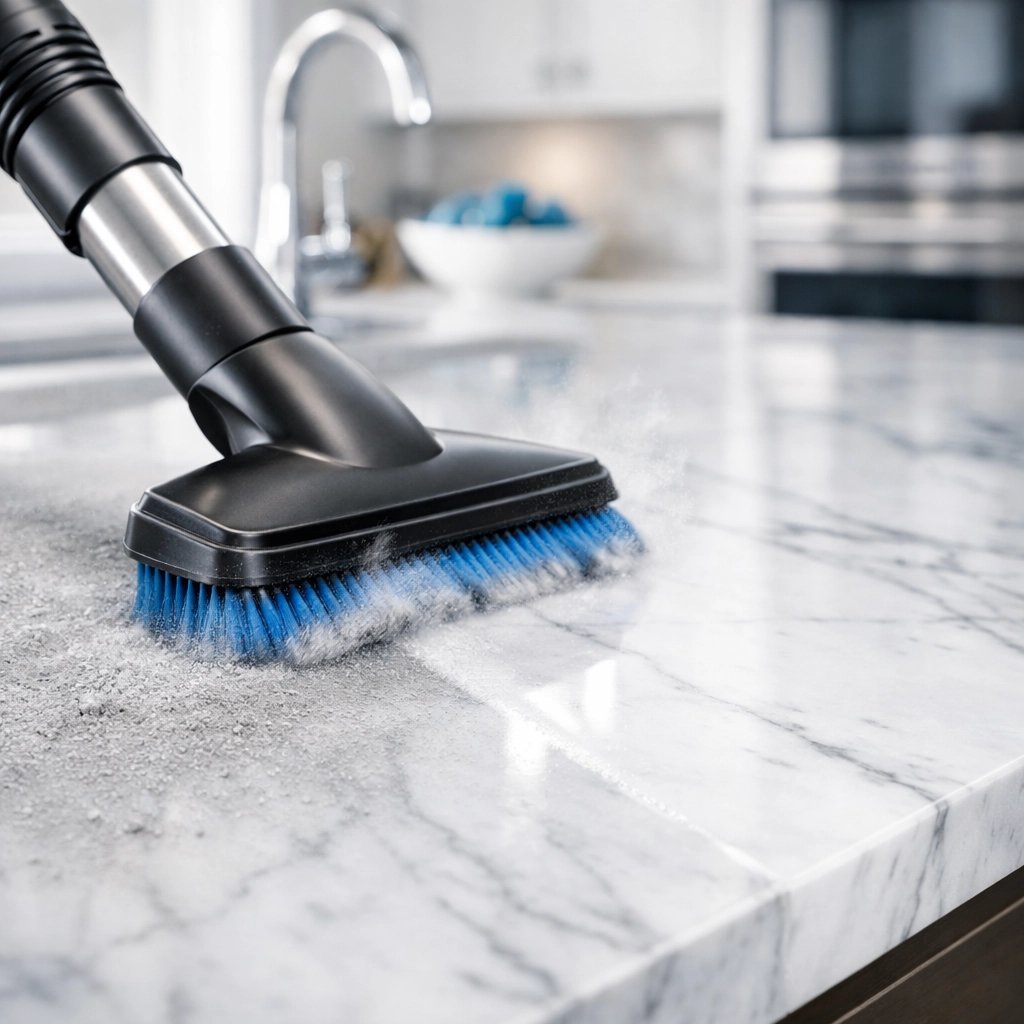
The first step in any post-construction cleaning is to remove that grit without dragging it across the surface. We recommend using a high-quality vacuum with a soft brush attachment to lift the dust off first. Don't press down, let the suction do the work. If it's a floor, a microfiber dust mop used very gently is your best friend.
Step 1: Confirm the Seal
Most installers will seal the marble once it’s in place, but you should never just assume it’s been done (or done well). Marble is a porous rock. Think of it like a very hard sponge; it has tiny "pores" that love to soak up liquids. If you spill red wine or coffee on unsealed marble, that liquid goes into the stone, not just on it.
How do you check? The "Water Drop Test" is a classic Ninja trick. Put a few drops of water on various spots on your marble and wait about 10 to 15 minutes. If the water beads up and stays there, you’re golden. If it disappears and leaves a dark spot, your marble is thirsty and needs to be sealed.
Sealing doesn’t make marble "bulletproof," but it gives you a crucial window of time to wipe up spills before they become permanent residents of your countertop.
Step 2: The pH-Neutral Golden Rule
This is the most important rule of marble ownership: pH-neutral only.
Marble is made of calcium carbonate. This chemical compound reacts instantly with anything acidic. When an acid touches marble, it actually dissolves a tiny layer of the stone. This creates a dull, matte spot known as an "etch." It looks like a water stain that won't wipe away, and it’s a total bummer on a shiny new surface.
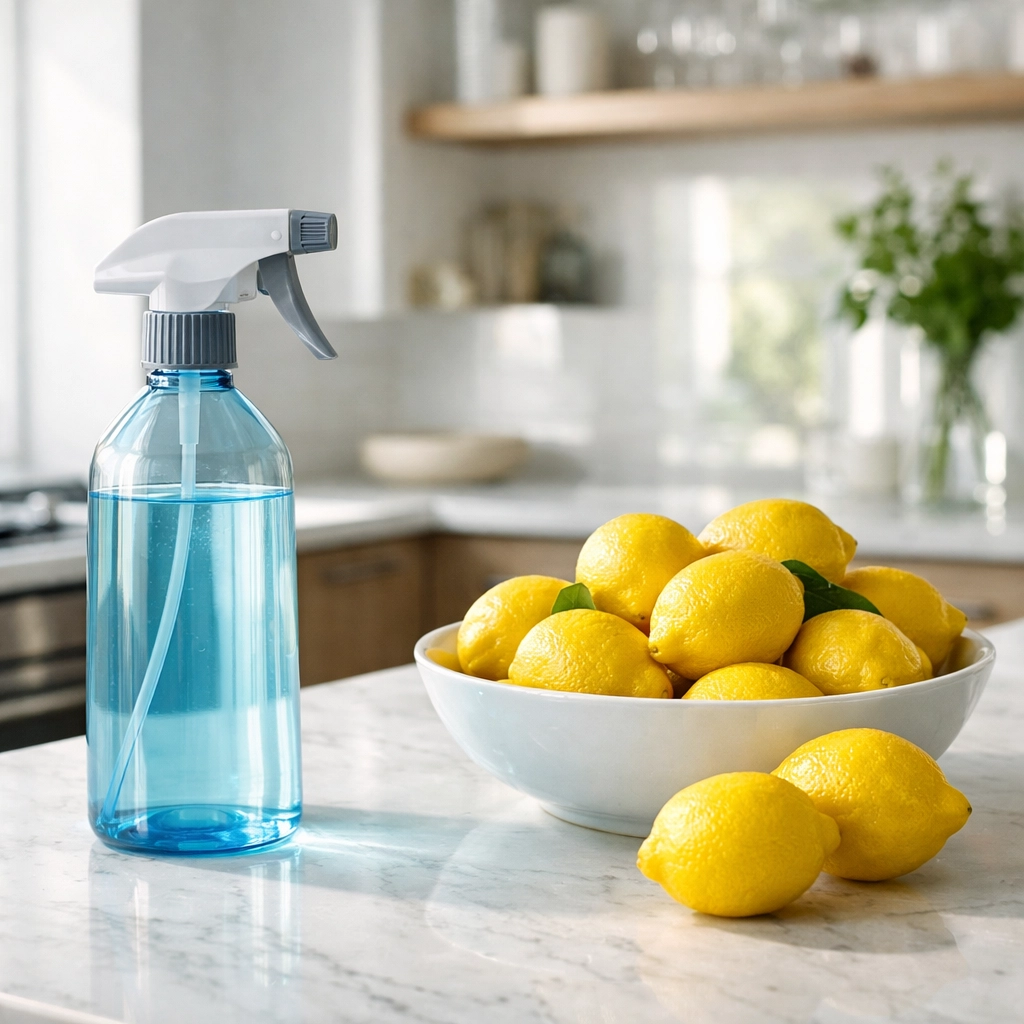
A lot of common household cleaners are marble-killers. You need to banish these from your marble-adjacent cabinets immediately:
- Vinegar (The ultimate enemy of marble!)
- Lemon juice or anything citrus-based
- Bleach
- Generic "all-purpose" sprays (unless they specifically say marble-safe)
- Windex (the ammonia is a no-go)
Instead, look for green cleaning products that are specifically labeled as pH-neutral. These cleaners are gentle on the environment and, more importantly, gentle on your stone. A simple mixture of warm water and a tiny drop of pH-neutral dish soap works wonders for daily wipes.
Step 3: Use the Right Tools
The "how" is just as important as the "what." You could have the world’s best pH-neutral cleaner, but if you’re applying it with a scratchy green scouring pad, you’re going to have a bad time.
Always use:
- Microfiber cloths: They are soft, effective at grabbing dust, and won't scratch.
- Soft sponges: For stuck-on messes, use the soft side only.
- Chamois or dry microfiber: To buff the surface dry.
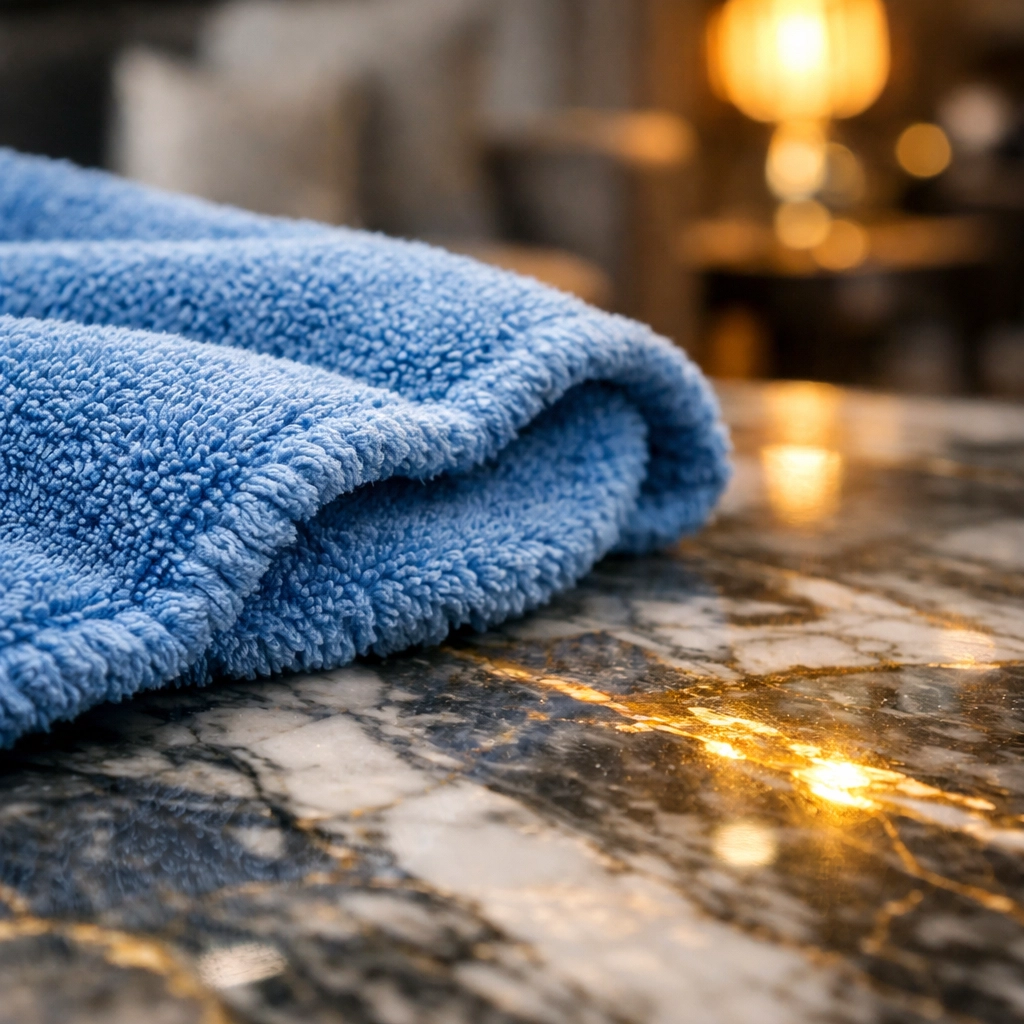
Wait, why dry it? Marble is prone to water spots, especially if you have hard water. Leaving a wet surface to air-dry can leave behind mineral deposits that make your brand-new marble look cloudy. After you clean, take thirty seconds to buff it dry with a fresh cloth. It makes a huge difference in the shine!
The Daily Ninja Routine
Living with marble doesn’t have to be stressful. It’s all about building a few quick habits.
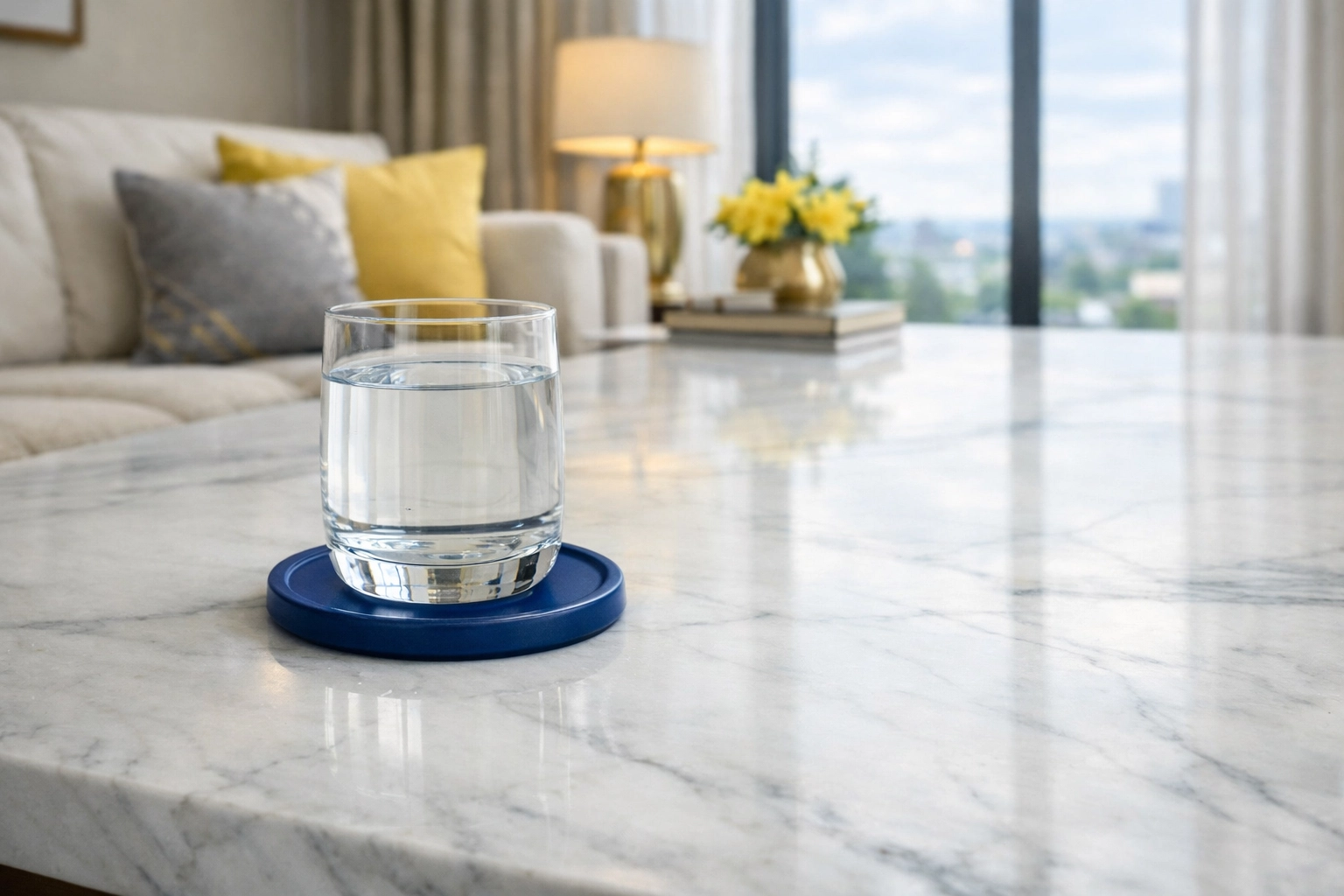
- Coasters are non-negotiable: Even a glass of water can leave a ring if the bottom is wet. Make sure everyone in the house knows that coasters are the law of the land.
- Cutting boards are a must: Never, ever cut directly on your marble. Not only will you dull your knives, but you’ll also leave permanent score marks in the stone. Plus, those acidic tomatoes? They’ll etch the stone while you’re dicing.
- Blot, don't wipe: If you spill something (especially something acidic like wine or orange juice), blot it up immediately with a paper towel. Wiping tends to spread the liquid around, increasing the surface area of potential damage. Blot it, then clean with your pH-neutral spray.
Why Green Cleaning Matters for Marble
At The Cleaning Ninjas Inc, we’re big fans of green cleaning. When it comes to marble, eco-friendly cleaners are often the safest bet. Many "heavy-duty" traditional cleaners rely on harsh chemicals to strip away dirt, but those same chemicals can strip away your marble's sealer or even damage the stone itself.
Natural, plant-based cleaners designed for stone provide a effective clean without the risk of chemical burns on your beautiful new investment. If you want to learn more about our approach to keeping homes sparkling and safe, check out our about us page.
Dealing with the "First Scratch" Heartbreak
It’s going to happen. Eventually, someone will slide a ceramic mug too hard, or a guest will drop a lemon wedge. When that first scratch or etch appears, take a deep breath. It’s okay!
Marble is a natural material. In Europe, people have been using marble for centuries, and they embrace the "patina": the tiny signs of use that tell the story of a home. However, if it really bugs you, many etches and light scratches can be polished out by a professional stone restorer.
For brand-new marble, the best defense is a good offense: clean regularly, keep it dry, and stick to the right products.

Need a Hand?
If you’ve just finished a major renovation and the thought of cleaning all that marble (and everything else!) feels overwhelming, we’ve got your back. Handling post-construction cleaning is one of our specialties. We know exactly which products to use to protect your new finishes while getting rid of that stubborn construction dust.
Whether you need a one-time deep clean to kick off your life in your new space or regular maintenance to keep those counters gleaming, The Cleaning Ninjas Inc is here to help. You can explore all our cleaning tips on our blog or head over to our services page to see how we can make your home shine.
Enjoy your new marble: you’ve earned it! Just remember: stay neutral, stay soft, and keep it dry. You’ve got this!