You finally did it. The plastic sheets are down, the contractors have loaded up their trucks, and your home renovation is officially complete. You’re standing there, ready to enjoy your brand-new kitchen or that sleek master bathroom, but there’s one giant, powdery obstacle standing in your way: the "ghost dust."
If you’ve ever survived a home project, you know exactly what I’m talking about. Construction residue is a different beast entirely. It’s not just your run-of-the-mill household dust; it’s a fine, invasive film of drywall particles, sawdust, and masonry grit that seems to settle on every single surface: even inside your closed kitchen cabinets. You wipe it down, walk away, and ten minutes later, it’s back. It feels like a losing battle.
But here’s the good news: we’ve got a secret weapon. At The Cleaning Ninjas Inc, we’ve tackled more post-construction messes than we can count, and there is one tool that reigns supreme above all others. Forget the old cotton rags and the fancy chemical sprays for a second. We’re talking about the magic of microfiber.
In this guide, we’re going to dive deep into why microfiber is the undisputed champion of post-construction cleaning, how it works its "ninja magic" on microscopic particles, and how you can use it to finally reclaim your home from the dust.
The Science of the "Trap": Why Cotton Fails Where Microfiber Wins
To understand why microfiber is so effective, we have to look at it under a metaphorical microscope. Most of us grew up using old cotton T-shirts or towels to clean. While cotton is great for soaking up a spilled glass of water, it’s actually pretty terrible at picking up fine dust.
Cotton fibers are organic and relatively large. When you look at them closely, they are round and smooth. When you swipe a cotton rag across a dusty countertop, the fibers act like a tiny snowplow. They push the dust forward, piling it up until the pile gets too big and spills over the sides of the rag, or worse, the fine particles get launched back into the air to settle somewhere else.
Microfiber is different. It’s a synthetic material (usually a blend of polyester and polyamide) that is "split" during the manufacturing process. This splitting creates millions of tiny hooks and loops. If you were to look at a single strand of microfiber, it would look like a multi-pointed star.
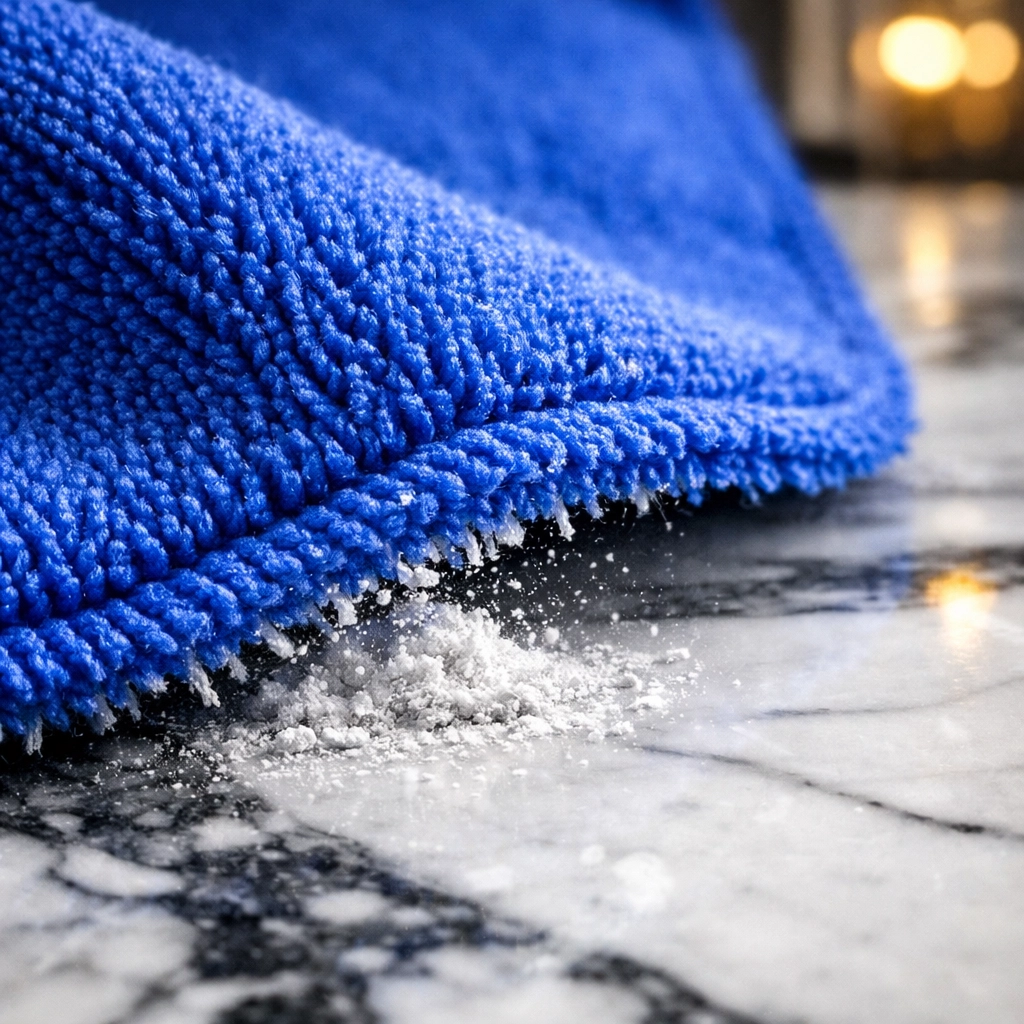
When you use a microfiber cloth on construction residue, those tiny hooks act like a magnet. Instead of pushing the dust, the fibers reach out and grab the microscopic particles, locking them deep within the cloth. This is crucial when dealing with post-construction cleaning because the particles are often so small (we’re talking microns) that they can bypass standard filters and larger fabric weaves.
The Ghost of Drywall Past: Dealing with Construction-Specific Dust
Why is construction residue so much harder to clean than normal dust? It’s all about the composition. Normal household dust is mostly skin cells and fabric fibers. Construction dust is often made of:
- Silica and Masonry: Found in concrete, brick, and mortar. This stuff is heavy and abrasive.
- Drywall Dust: This is the ultimate "ghost." It is incredibly fine and becomes airborne at the slightest breeze.
- Sawdust: While larger than drywall dust, it often contains resins and glues that can make it slightly "sticky" on certain surfaces.
When these particles sit on your new hardwood floors or marble countertops, using the wrong cleaning tool can actually cause damage. Since construction dust is often abrasive, pushing it around with a flat cotton cloth can lead to micro-scratches on delicate finishes. Because microfiber lifts and traps the particles away from the surface, it’s much safer for your high-end materials.
If you’re feeling overwhelmed by the sheer volume of dust left behind, don't worry: you aren't alone. You can always check out our blog for more deep-dive stories on how we handle these massive projects.
Ninja Technique: How to Use Microfiber for Best Results
Buying the cloths is only half the battle. To truly master the post-construction cleanup, you need to use the right technique. Here is our "Ninja-approved" method for clearing the air:
1. The Lightly Damp Approach
Research shows that using a microfiber cloth bone-dry is good, but using it lightly dampened is a game-changer. When the fibers are slightly wet, the surface tension of the water helps pull the dust into the "channels" of the cloth even more effectively.
However, "damp" is the keyword here. If the cloth is dripping wet, you’ll just create a muddy slurry of drywall dust that streaks across your walls. Use a spray bottle to lightly mist the cloth before you start.
2. The "S" Pattern
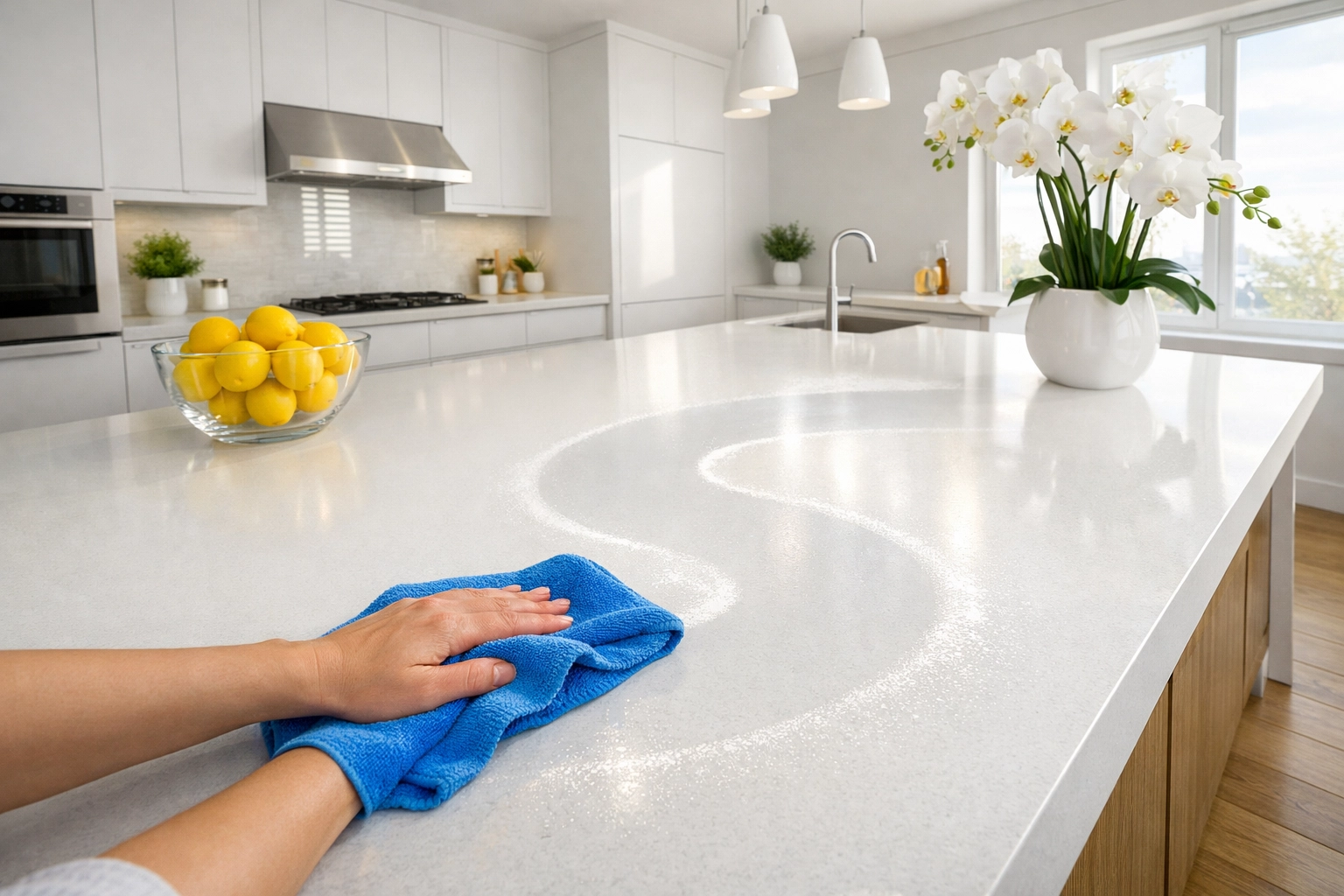
Don’t scrub in circles! Scrubbing in circles just moves the dust back over the area you just cleaned. Instead, use a "folded" cloth and wipe in a steady "S" pattern. This ensures that the leading edge of the cloth is always hitting "new" dust, and you aren’t depositing old dust back onto the clean surface.
3. The Eight-Sided Fold
Take your microfiber cloth and fold it in half, then in half again. This gives you eight clean "faces" to work with. Once one side is saturated with dust, flip it. Once that side is dirty, refold it. This prevents you from just moving dirt from the living room to the kitchen.
4. Top-to-Bottom, Always
Construction dust obeys the laws of gravity. If you clean your floors first and then wipe down the ceiling fans, you’re going to have to do the floors all over again. Start with the highest points: crown molding, tops of cabinets, and light fixtures: and work your way down to the baseboards and floors.
For more professional strategies, you can take a look at our our services page to see how we structure a full-home post-construction attack.
Eco-Friendly Cleaning: Good for You and the Planet
One of the reasons we love microfiber at The Cleaning Ninjas Inc is that it aligns with our commitment to eco-friendly cleaning.
Because microfiber is so mechanically efficient at grabbing dust and bacteria, you often don't need harsh chemical cleaners to get the job done. For most post-construction surfaces, a damp microfiber cloth and perhaps a bit of mild, pH-neutral detergent are all you need.
By skipping the heavy-duty aerosol sprays and bleach-based cleaners, you’re keeping the air quality in your newly renovated home much safer. This is especially important after construction when your HVAC system might already be struggling with dust. Reducing chemical VOCs (Volatile Organic Compounds) is a huge win for your family’s health.
If you want to learn more about our philosophy on healthy homes, feel free to read more about us.
Maintaining Your Microfiber: Don't Kill the Magic
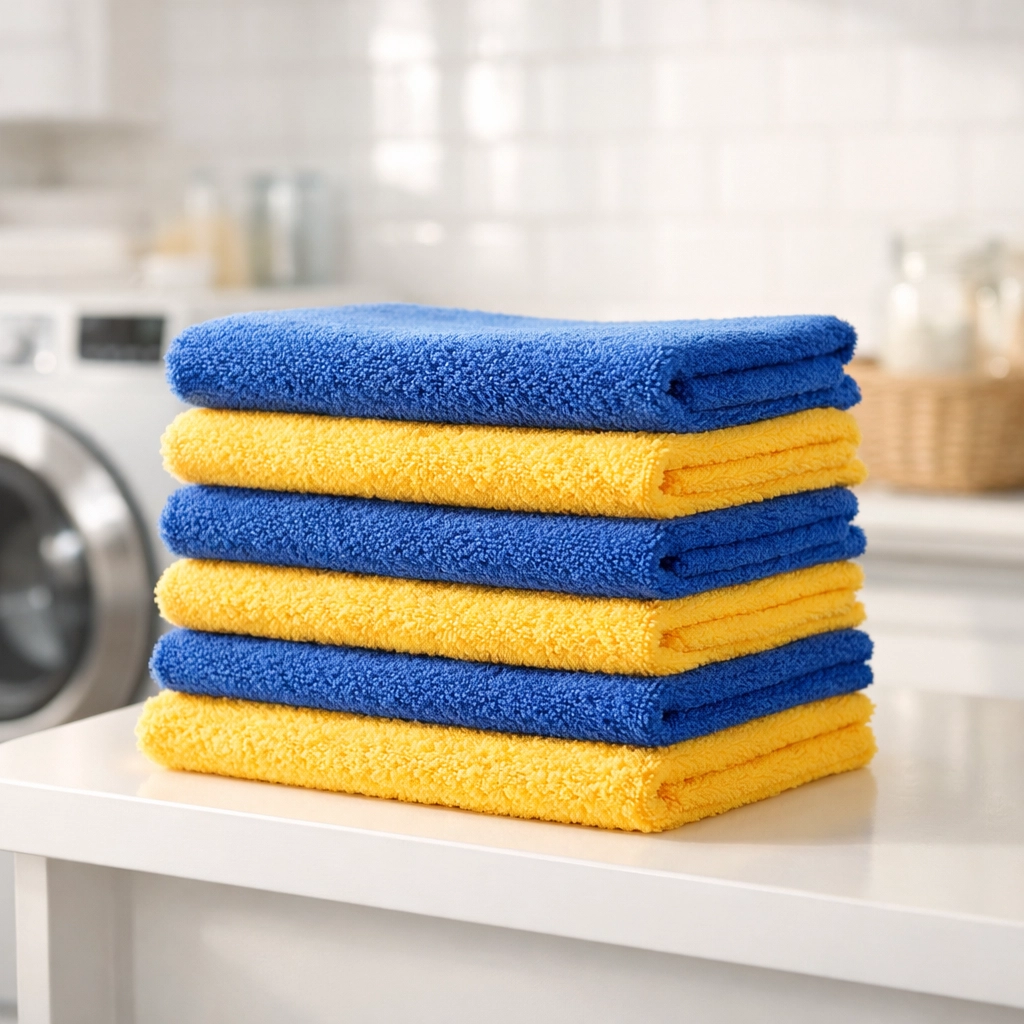
A high-quality microfiber cloth can last for hundreds of washings, but you have to treat it right. If you wash it like a regular towel, you will ruin those "magic hooks" that trap the dust.
The Golden Rules of Microfiber Care:
- No Fabric Softener: This is the big one. Fabric softener works by coating fibers in a thin layer of wax to make them feel soft. This wax will clog the split fibers of your microfiber, rendering them useless for trapping dust.
- No High Heat: Microfiber is essentially plastic (polyester). High heat in the dryer can actually melt the tiny tips of the fibers. Always tumble dry on low or, better yet, hang them to dry.
- Wash Separately: If you wash your microfiber with cotton towels, the microfiber will do its job: it will "grab" all the lint from the cotton towels. You’ll end up with "fuzzy" microfiber cloths that leave lint everywhere.
- Cool or Warm Water: Use a gentle, fragrance-free detergent. This keeps the fibers clean without leaving behind residues that interfere with their "magnetic" properties.
When the Dust is Too Much: Calling in the Ninjas
We get it. Sometimes a renovation is so big that even a mountain of microfiber cloths feels like it isn't enough. There’s no shame in needing a hand, especially when it comes to the deep, industrial-level cleaning required after a major build.
Whether it’s a single-room update or a full-scale home construction, the goal is to get you back into your space so you can actually enjoy the investment you just made. If you’re in Massachusetts and looking for a team that treats your home with the stealth and precision of a ninja, check out our cleaning service in Massachusetts.
We specialize in high-detail cleaning, ensuring that even the microscopic dust hidden in the hinges of your new cabinets is gone for good. You can find more cleaning tips on our site to keep your home shining long after we've left.
Final Thoughts
Post-construction cleaning is a marathon, not a sprint. It takes patience and the right tools. By switching from traditional cotton to high-quality microfiber, you’re not just cleaning faster: you’re cleaning smarter. You’re protecting your new surfaces, improving your indoor air quality, and using an eco-friendly method that actually works.
So, grab a stack of cloths, get them slightly damp, and start that "S" pattern. Before you know it, the "ghost dust" will be a thing of the past, and you can finally put your feet up and enjoy your beautiful new space. Happy cleaning!