You’ve finally done it. The plastic sheets have been pulled down, the contractors have packed up their saws, and your home renovation is officially complete. You’re standing there, ready to enjoy your brand-new kitchen or that primary suite addition you’ve been dreaming about for months. But then you see it. It’s on the windowsills. It’s on the ceiling fans. It’s even somehow inside the kitchen cabinets that were supposed to be sealed shut.
We’re talking about construction dust.
If you’ve ever gone through a remodel, you know this isn't your average "I haven't dusted in a week" kind of debris. This stuff is persistent, microscopic, and seemingly everywhere. Naturally, your first instinct is to grab the vacuum and start sucking it all up. But before you reach for that trusty household upright or even a standard shop-vac, we need to have a serious talk about why you might be making the problem worse: and why HEPA vacuums are the undisputed royalty of the post-construction cleaning world.
The Problem with Standard Vacuums
Most people assume that a vacuum is a vacuum. If it has suction, it’s doing the job, right? Unfortunately, when it comes to post-construction debris, that logic is actually a recipe for a dusty disaster.
Standard household vacuums are designed to pick up hair, crumbs, and visible dirt. They have filters, sure, but those filters are often relatively "loose" in terms of what they let through. When you try to vacuum up drywall dust or fine sawdust with a standard machine, something frustrating happens: the vacuum sucks the dust in through the nozzle, but because the particles are so incredibly tiny, they pass right through the filter and shoot straight back out of the exhaust.
Think of it like trying to catch sand with a chain-link fence. The "fence" (the filter) is there, but the "sand" (the construction dust) is way too small to be stopped by it. Instead of cleaning your home, you’re essentially turned your vacuum into a motorized dust-spreader, blowing microscopic particles into the air where they’ll hang for hours before settling back down on everything you just cleaned.

What Makes HEPA Different?
At The Cleaning Ninjas Inc, we don’t settle for "good enough." That’s why we rely on HEPA technology. HEPA stands for High-Efficiency Particulate Air. To be officially certified as a HEPA filter, it must be able to trap 99.97% of all particles that are 0.3 microns or larger.
To put that in perspective:
- A human hair is about 50 to 70 microns wide.
- The human eye can generally only see things larger than 40 microns.
- Construction dust, particularly from drywall and silica, can be as small as 0.1 to 3 microns.
When we say HEPA vacuums are "royalty," we mean they are the only tools capable of actually trapping the invisible enemies that construction leaves behind. Instead of cycling dust back into your living room, a HEPA vacuum locks it inside the machine for good.
Why Fine Dust is a Health Hazard
It’s not just about aesthetics. While a thin layer of white dust on your TV is annoying, the real reason we obsess over HEPA filtration is your health.
Construction dust isn't just "dirt." It’s often composed of materials that can be quite hazardous if inhaled. Drywall compounds contain gypsum and sometimes silica. Wood dust from certain hardwoods can be an irritant or even a carcinogen. If you’re renovating an older home, there’s always the risk of disturbing lead-based paint dust or asbestos fibers.
When these particles stay airborne (thanks to improper vacuuming), they can aggravate asthma, cause respiratory issues, and leave your family feeling like they’re living in a construction zone long after the workers are gone. HEPA vacuums are actually certified to meet strict OSHA (Occupational Safety and Health Administration) silica standards and CDC infection control guidelines. This is why hospitals and schools use them: and why we believe your home deserves that same level of protection.
Protecting Your Brand New Surfaces
Beyond the health aspect, using the right vacuum is about protecting the investment you just made in your home. Have you ever noticed how construction dust feels "gritty"? That’s because it’s abrasive.
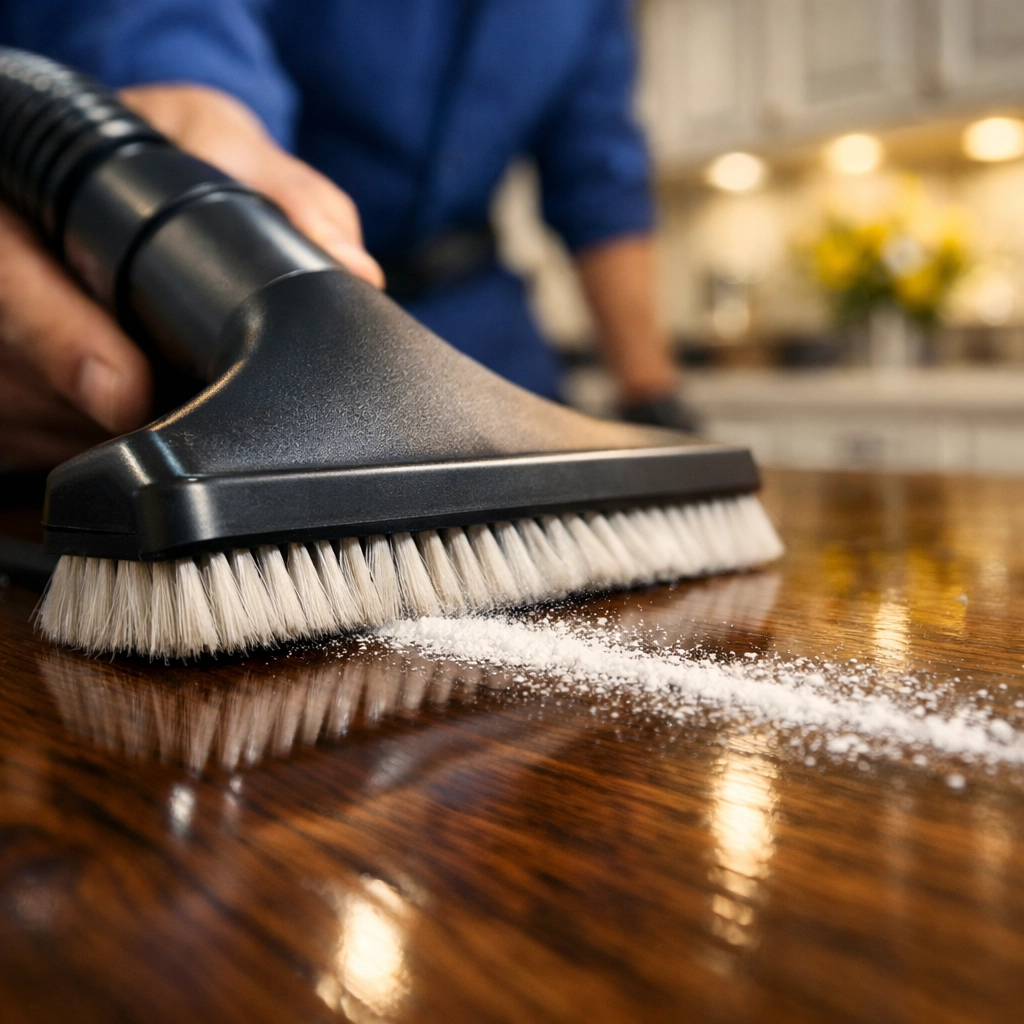
If you use an improper vacuum head or try to sweep fine dust across your brand-new hardwood floors, those tiny particles can act like sandpaper, leaving microscopic scratches in the finish. A professional-grade HEPA vacuum, used with the correct soft-bristle attachments, lifts the dust away without dragging it across the surface. It’s the gentlest, most effective way to ensure your new floors and fixtures stay looking new.
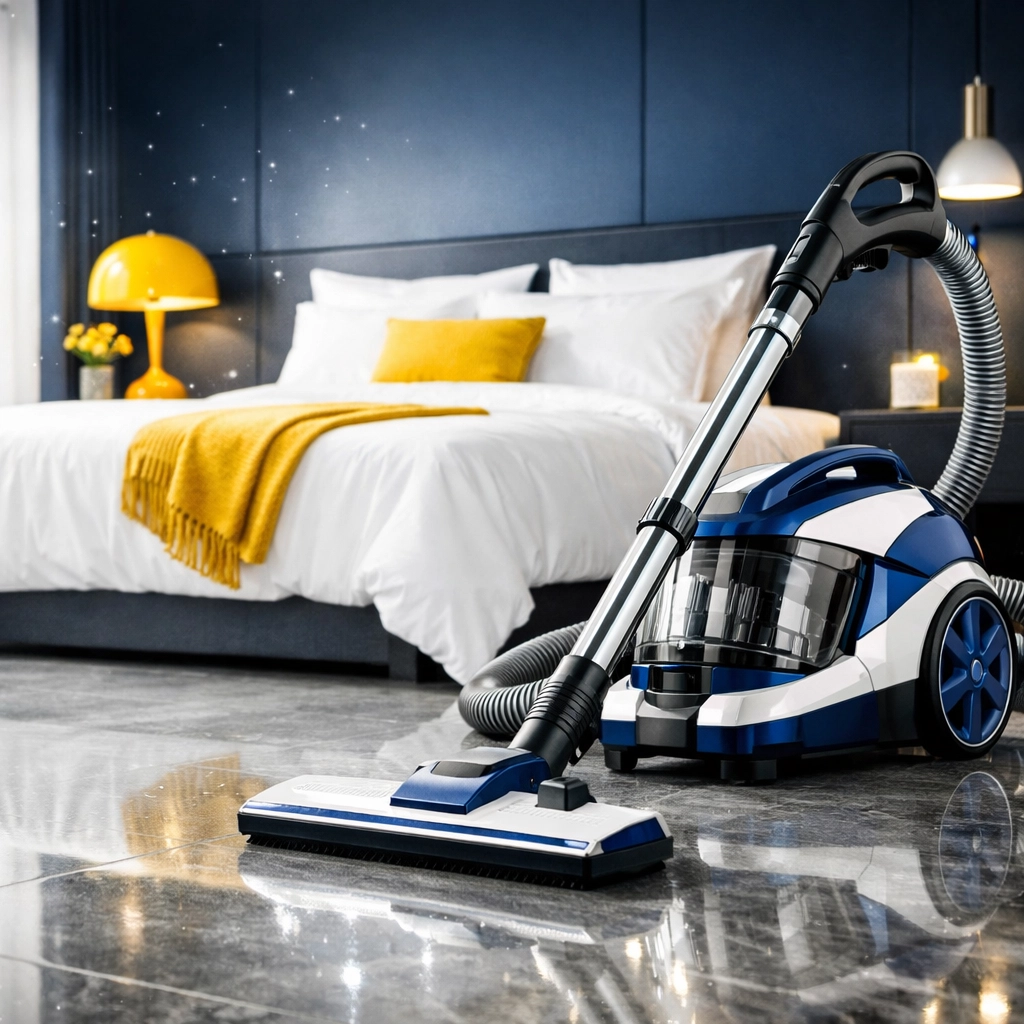
The Cleaning Ninjas Protocol: Vacuum, Wipe, Repeat
So, how do the pros do it? When we tackle a post-construction job, we don't just walk in and start vacuuming once. It’s a multi-stage process that ensures the air is as clean as the surfaces.
- Top-Down HEPA Vacuuming: We start high. Dust travels down. We use HEPA vacuums on ceiling fans, molding, light fixtures, and even the tops of the walls. Getting those fine particles out of the air and off the high surfaces is the first step.
- Ducts and Registers: Construction dust loves to hide in your HVAC vents. We use our specialized equipment to clear out the registers so that the first time you turn on your AC, you don’t get a face full of drywall powder.
- The Wet Wipe: After the initial HEPA pass, we follow up with specialized damp cloths. Why? Because even the best vacuum in the world can leave a tiny bit of static-charged dust behind. The damp wipe "grabs" the remaining film.
- The Final Pass: Once the air has had time to settle, we perform a final floor-to-ceiling check and a secondary HEPA vacuuming of the floors to catch anything that floated down during the process.
Can You DIY This?
We get asked a lot if homeowners can just rent a HEPA vacuum and do the cleaning themselves. You certainly can! However, there are a few things to keep in mind.
First, a "HEPA-ready" vacuum is not the same as a "HEPA-certified" vacuum. Many shop-vacs sold at big-box stores say "HEPA" on the box, but they often have leaks in the casing or around the filter seal that allow fine dust to escape. A true professional HEPA vacuum is a sealed system.
Second, the cost of renting the equipment, buying the specialized filters (which clog quickly with construction dust and need to be replaced often), and the sheer amount of time it takes to do a thorough top-to-bottom clean usually adds up quickly.
That’s where we come in. Our team is trained in these specific "ninja" techniques to move through a post-construction site efficiently and effectively. We bring the heavy-duty, certified gear so you don’t have to worry about whether your vacuum is actually helping or just making a mess.
Breathing Easy in Your New Space
At the end of the day, your home renovation should be a source of joy, not a source of sneezing fits. Choosing to prioritize HEPA filtration during your post-construction clean-up is the difference between a home that looks clean and a home that is clean.
If you’re nearing the end of a project and the dust is starting to pile up, don’t stress. Let the experts handle the heavy lifting (and the microscopic sucking). You’ve spent months dealing with the noise and chaos of construction: you deserve to move into a space that is truly move-in ready.
Want to learn more about how we can help you cross the finish line of your renovation? Check out our About Us page to see the faces behind the masks, or get in touch for a custom quote on your post-construction needs.
Stay clean, stay healthy, and enjoy your new space!