Ever looked at your bathroom or kitchen faucet after a long day and wondered why it looks like it’s been through a salt storm? Those crusty, white, chalky circles surrounding your handles and spout are the bane of every homeowner's existence. They make even the cleanest sink look a little bit "blah." Here at The Cleaning Ninjas Inc, we see these stubborn spots every single day. They aren't just dirt; they are the calling card of hard water.
In this guide, we’re going to show you exactly how to tackle these spots like a pro. We’re going to share our favorite "ninja moves" using stuff you probably already have in your pantry. No more scrubbing until your arm falls off: just smart, efficient cleaning that leaves your fixtures sparkling.
What Exactly Are Those Spots?
Before we dive into the "how," let’s talk about the "why." Hard water is simply water that has a high mineral content, specifically calcium and magnesium. When water splashes onto your faucet and evaporates, it leaves those minerals behind. Over time, these minerals bond to the surface of your metal fixtures, creating a hard, crusty layer known as limescale or hard water deposits.
If left alone, these deposits can actually etch into some finishes or clog up the aerator (the little screen at the tip of the faucet), leading to low water pressure. That’s why we always recommend staying on top of it. Plus, who doesn’t love a mirror-like finish on their chrome?
The Ninja’s Secret Weapon: The Vinegar Wrap
If you ask any of our team members at The Cleaning Ninjas Inc about their favorite DIY cleaning solution, "vinegar" is the answer 99% of the time. It’s acidic, which makes it the perfect natural enemy of alkaline mineral deposits.
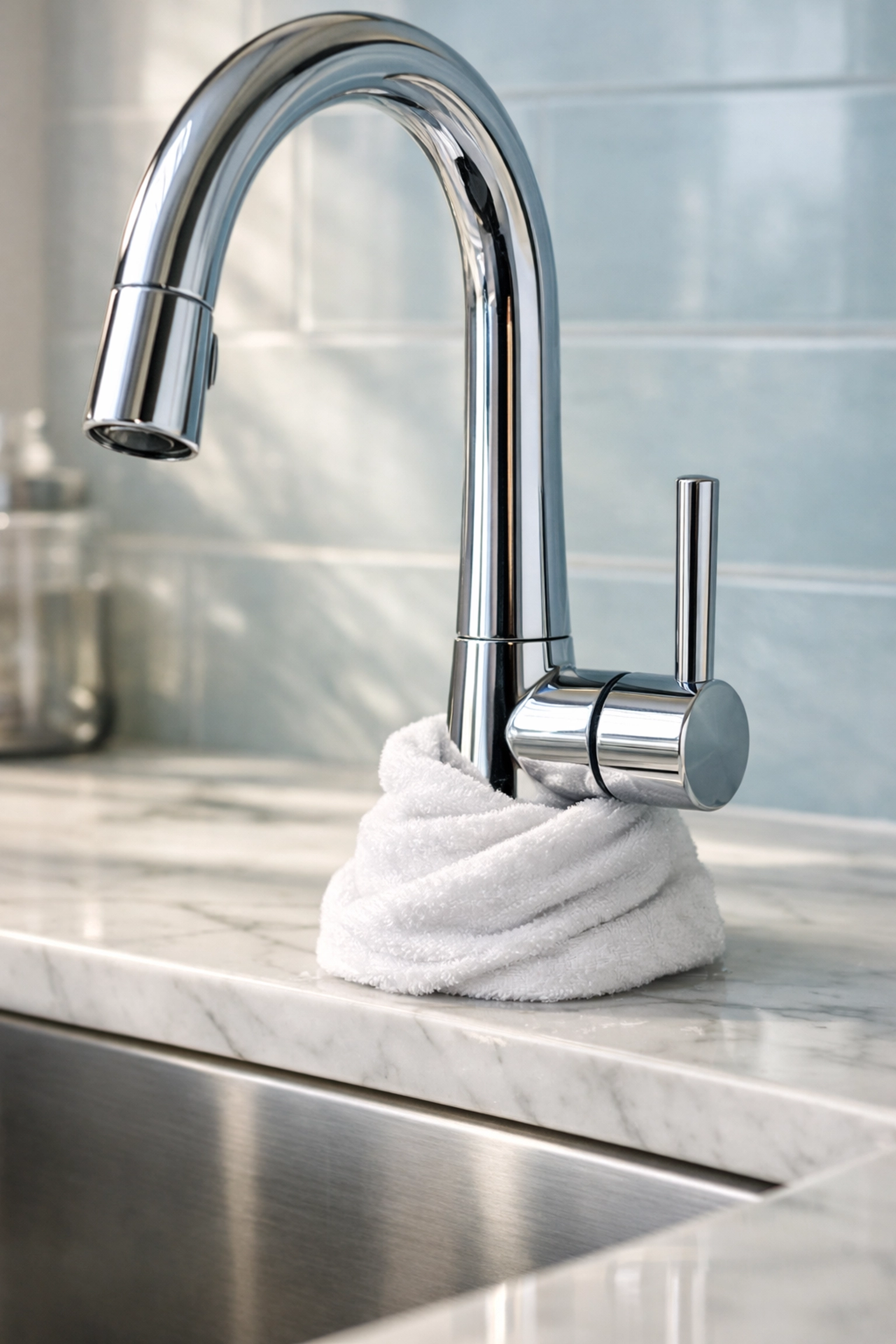
The most effective way to use it isn't just spraying and wiping. You need dwell time. Here is the "Vinegar Wrap" method:
- Gather Your Gear: You’ll need white distilled vinegar, a few paper towels (or an old rag), and a couple of rubber bands.
- Soak the Towels: Saturate your paper towels or rags in the vinegar. You want them dripping but manageable.
- The Wrap: Wrap the vinegar-soaked towels tightly around the base of the faucet, the handles, and the neck. If the towels keep slipping, use the rubber bands to secure them in place.
- Wait it Out: Let the vinegar do the heavy lifting. Leave it for at least 15 to 30 minutes. For really heavy buildup, you can leave it for an hour.
- The Reveal: Remove the towels. You should see the white crusties looking softened or even dissolved.
- Wipe and Dry: Use a clean, dry microfiber cloth to buff the surface. Drying it is the most important part: if you leave it wet, new spots will just form!
For the Stubborn Stuff: The Baking Soda Power Paste
Sometimes, vinegar alone isn’t enough, especially if the hard water has been building up for months (or years!). When you need a bit of gentle abrasion to break through the "crust," it’s time to bring in the baking soda.
Baking soda is a mild alkali, but when mixed with vinegar, it creates a fizzy reaction that helps lift debris. More importantly, as a paste, it stays exactly where you put it.
How to make and use the paste:
- Mix one part baking soda with two parts vinegar to create a thick paste. It will fizz at first, so wait for the bubbles to die down slightly.
- Apply the paste directly to the hard water stains.
- Let it sit for about 30 minutes.
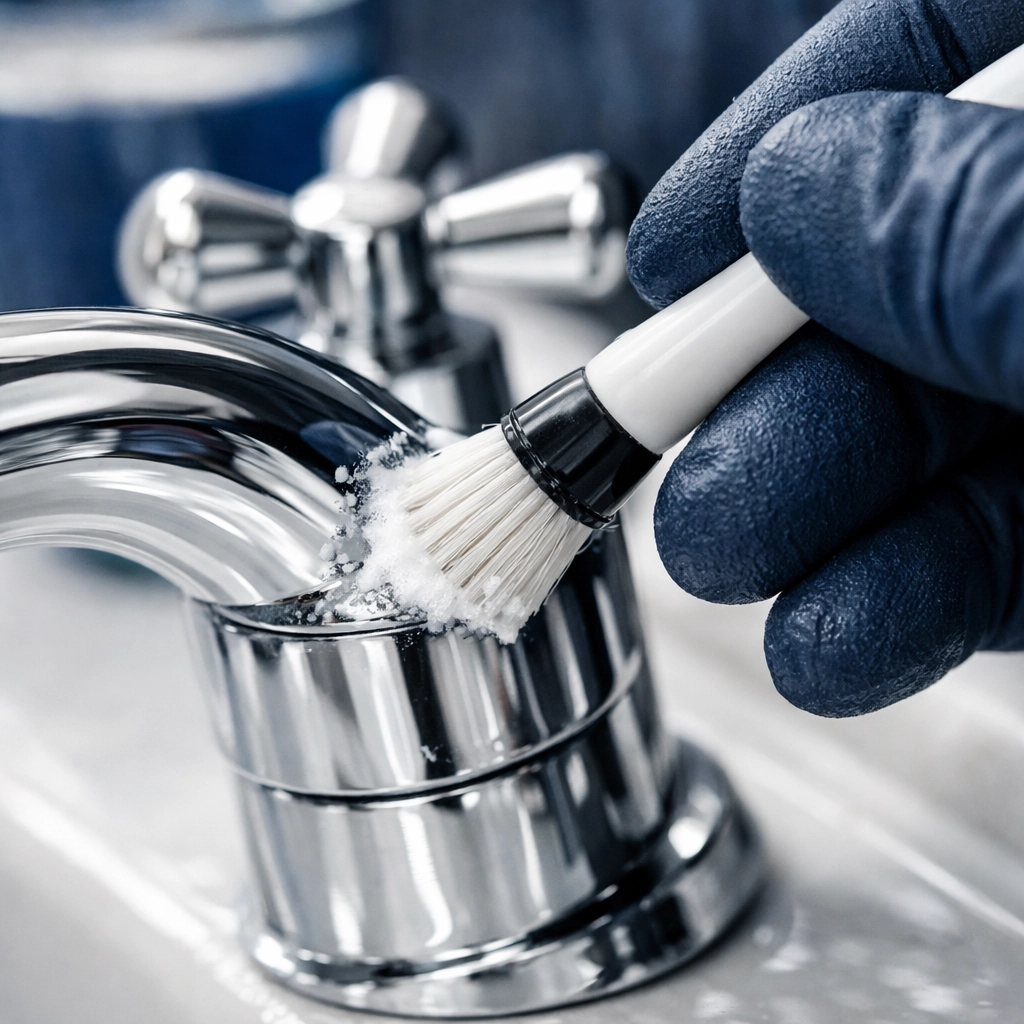
- Use an old toothbrush (a ninja’s favorite detail tool!) to gently scrub the areas around the base of the faucet and the joints of the handles.
- Rinse with cold water and, you guessed it, buff dry with a soft cloth.
The "I Forgot My Cleaning Supplies" Hack: Toothpaste
Believe it or not, your toothpaste can do more than just keep your smile bright. Most toothpastes contain mild abrasives and fluoride that are surprisingly effective at breaking down mineral spots on smooth surfaces like faucets, mirrors, and porcelain.
Simply apply a small amount of non-gel fluoride toothpaste to the spots. Let it sit for 5 to 10 minutes. Use a damp cloth or a toothbrush to scrub the area for about a minute, then rinse it off. It’s a great quick-fix for when you’re tidying up the guest bathroom right before company arrives.
Dealing with the Aerator (The Hidden Clog)
Is your water coming out at a weird angle? Or has the pressure dropped significantly? Your aerator is likely clogged with hard water minerals. The aerator is the small mesh screen at the very tip of your faucet.
The Ninja Fix:
- Unscrew the Aerator: Usually, you can do this by hand. If it’s stuck, use a pair of pliers, but wrap a cloth around the faucet first so you don't scratch the finish!
- Soak: Drop the aerator into a small cup of white vinegar.
- Wait: Let it soak for at least an hour.
- Brush: Use a toothbrush to scrub away any loosened grit from the mesh.
- Reinstall: Screw it back on and enjoy that perfect water flow.
A Word of Caution: Know Your Finishes
We love DIY solutions, but we also love your home. Not every faucet finish plays nice with acids like vinegar.
- Chrome and Stainless Steel: Generally very durable and handle vinegar well.
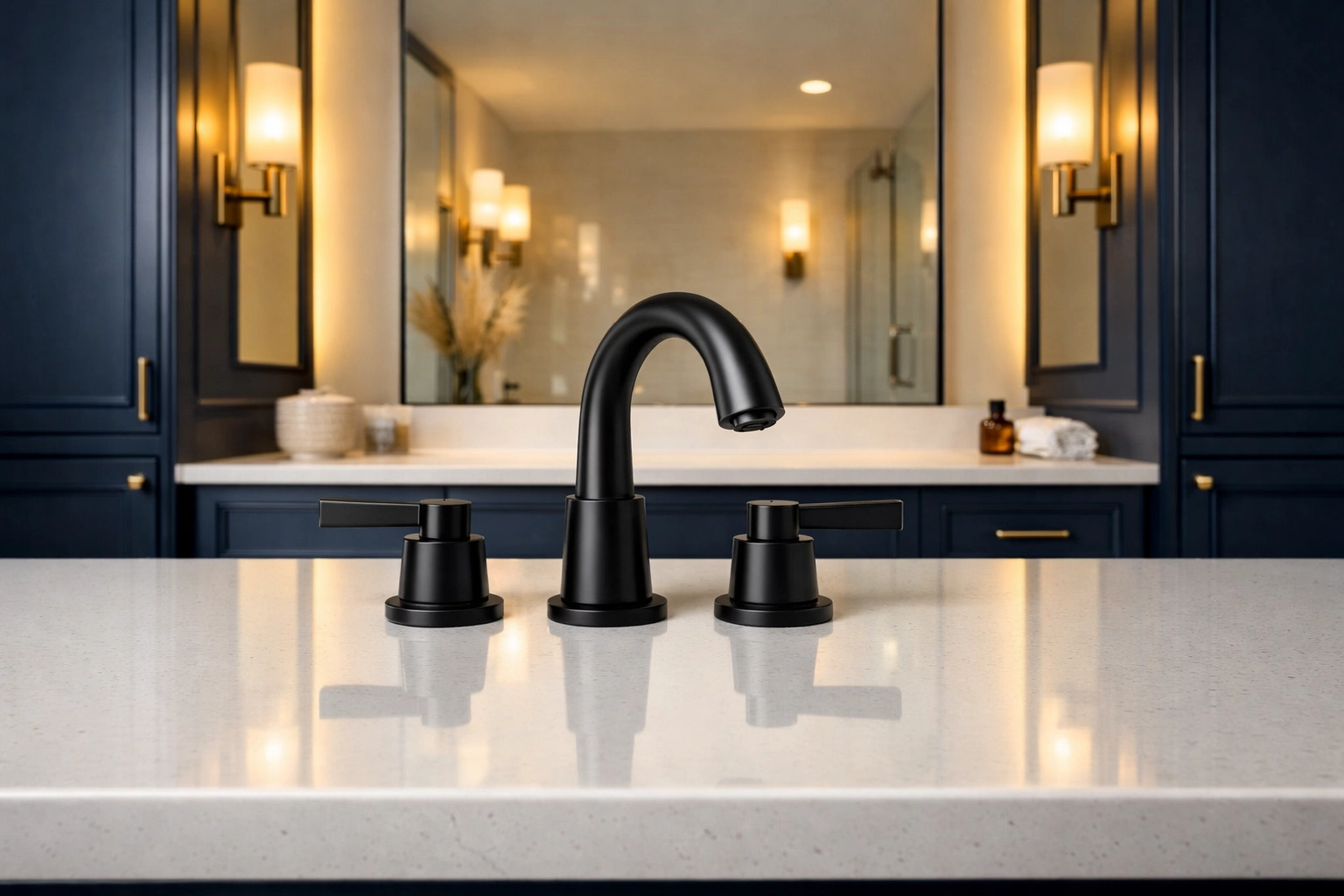
- Matte Black and Oil-Rubbed Bronze: Be very careful! These finishes are often "living finishes" or have delicate coatings. Long exposure to acid can actually strip the color or leave permanent streaks. For these, we recommend using only a very diluted vinegar solution (50/50 with water) and never letting it sit for more than a few minutes.
- Gold and Brass: These can also be sensitive. Always test a small, inconspicuous spot on the back of the faucet before wrapping the whole thing in vinegar.
If you’re ever unsure, check out our services to see how we handle professional-grade cleaning for specialty finishes. Our team is trained to know exactly which product fits which surface.
When to Bring in the Big Guns: Commercial Cleaners
If you’ve tried the vinegar and the baking soda and those white spots are still mocking you, it might be time for a commercial calcium, lime, and rust remover (like CLR). These are much stronger acids and should be used with caution.
- Dilution is Key: Mix one part CLR with eight parts water.
- Application: Apply it to the affected areas using a sponge.
- Timing: Do not let it sit for long! 10 to 15 minutes is usually the maximum.
- Rinse Thoroughly: You must rinse the area extremely well with cold water to ensure no acid remains on the metal, as it can cause damage over time.
The Ultimate Ninja Move: Prevention
The best way to "clean" hard water spots is to never let them form in the first place. We know, we know: who has time for that? But it’s actually simpler than you think.
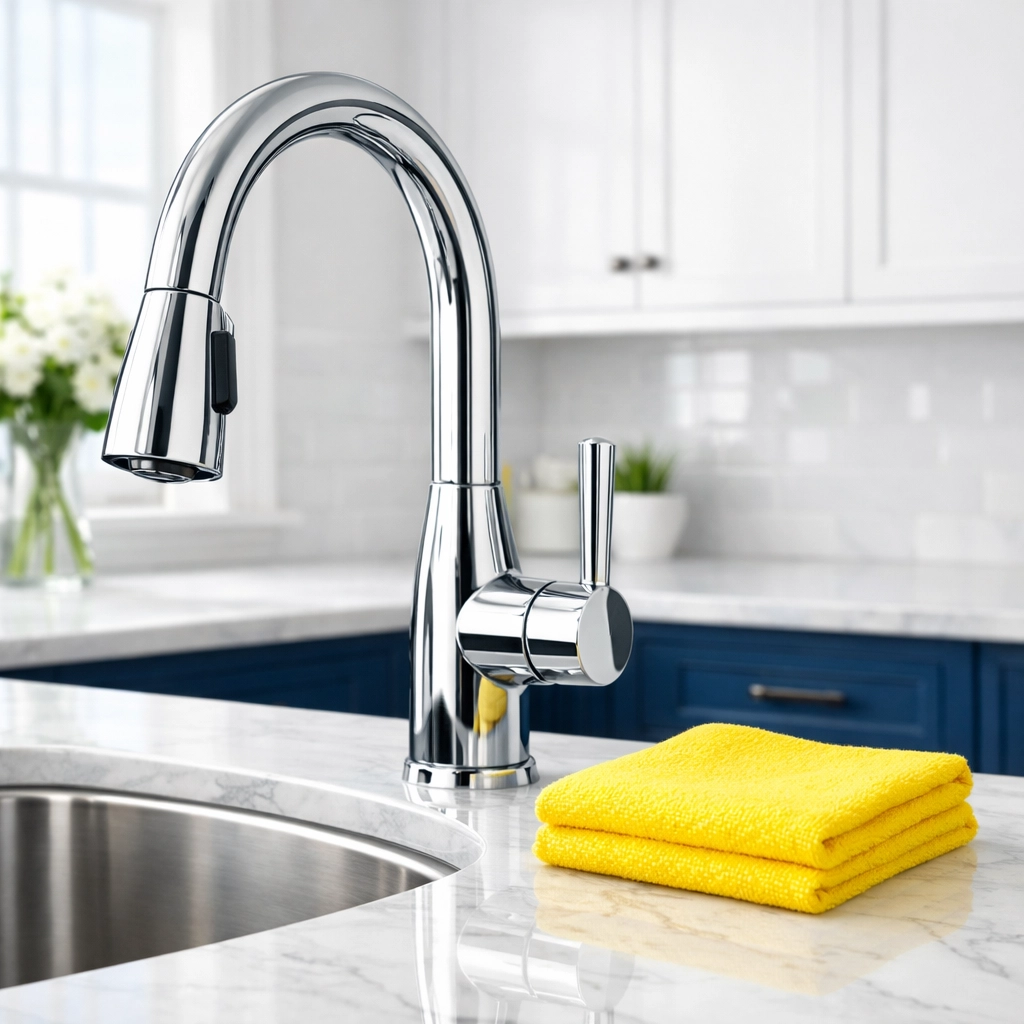
The "Blot" Habit: Keep a small microfiber cloth tucked near your sink or in the vanity drawer. After you’re done using the sink for the morning, give the faucet a quick 5-second wipe. If there’s no standing water left to evaporate, there are no minerals left to build up.
It sounds like a chore, but once you get into the habit, you’ll realize your faucets stay shiny for weeks instead of days.
Why Clean Faucets Matter
It might seem like a small detail, but clean, shiny fixtures change the entire "vibe" of a room. It signals that the home is well-maintained and cared for. Beyond aesthetics, keeping your faucets clear of mineral buildup extends the life of your plumbing fixtures. Those minerals can eventually corrode the seals inside your faucet, leading to leaks that are much more expensive to fix than a bottle of vinegar!
Let The Cleaning Ninjas Handle the Grime
We get it: life is busy. Between work, family, and trying to find a moment to relax, scrubbing the limescale off your bathroom taps probably isn't at the top of your "fun things to do" list. That’s why we’re here!
At The Cleaning Ninjas Inc, we pride ourselves on being detail-oriented. We don't just "wipe down" a bathroom; we look for those hard water spots, we clear the aerators, and we make sure your chrome shines like it did the day it was installed.
If you want to learn more about the people behind the masks, check out our About Us page. We’re a team of professionals dedicated to giving you your time back by taking the "deep clean" off your plate.
Whether it’s a one-time deep clean to get those faucets back to baseline or a recurring service to keep them sparkling year-round, we’ve got you covered. Until next time, keep those sinks dry and your spirits high!