When you think about the dirtiest places in your kitchen, your mind probably goes straight to the trash can, the kitchen sink, or maybe that mysterious sticky spot behind the fridge. But there is a silent, wooden Trojan horse sitting right on your countertop that most people completely overlook: the knife block.
At The Cleaning Ninjas Inc, we see it all the time. You spend hours prepping a healthy meal, slicing fresh veggies and high-quality proteins with your favorite chef’s knife, only to slide that blade back into a dark, narrow slot filled with a decade's worth of crumbs, dust bunnies, and potentially even mold. It’s like taking a shower and then putting on dirty socks.
Keeping your kitchen sanitary isn't just about wiping down the counters; it’s about the details. If you’re already committed to a weekly house cleaning routine, adding the knife block to your monthly rotation is a total pro move. Let’s dive into the ninja tactics you need to keep your blade armory as clean as a whistle.
The Hidden Danger in the Slots
Why is the knife block such a germ magnet? It’s a combination of design and habit. Knife blocks are designed with deep, dark, and narrow slots: the perfect environment for bacteria to throw a party. If a knife is even slightly damp when you put it away, you’re introducing moisture into an unventilated wooden space. Wood is porous, meaning it holds onto that moisture, leading to mold growth and even rust on your expensive blades.
Furthermore, gravity is a constant force. Every time you chop bread or prep food nearby, tiny crumbs and particles find their way into those slots. Over time, these particles accumulate at the bottom, creating a "sludge" that you definitely don't want touching your steak knife.
Phase 1: The Great Evacuation
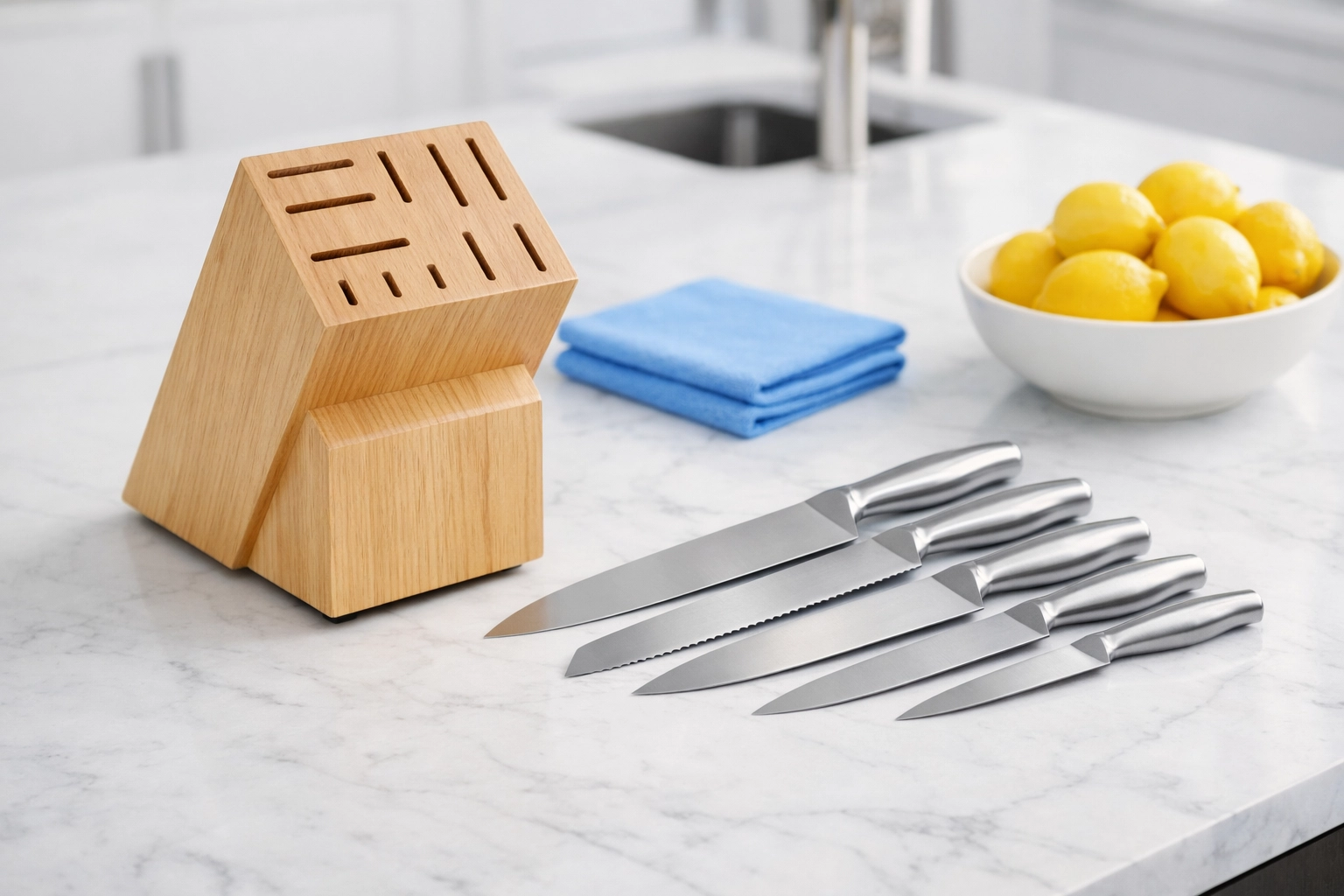
Before we get to the scrubbing, we have to clear the deck. Step one is to remove every single knife from the block. This is a great time to inspect your blades, too. Are they dull? Do they have spots of rust? Set them aside safely: don't just pile them on the counter where someone might get a nasty surprise.
Once the block is empty, head over to the sink or, better yet, go outside. Turn the block completely upside down and give it a vigorous shake. You might be surprised (and a little grossed out) by what falls out. Dust, breadcrumbs, and maybe a stray peppercorn or two are common culprits.
Phase 2: Tactical Slot Cleaning
Shaking it out is just the beginning. To really be a cleaning ninja, you need to reach the depths where the debris hides. Since you can’t exactly fit your hand inside a knife slot, you need specialized tools.
A pipe cleaner or a very small, thin bottle brush (the kind used for reusable straws) is your best friend here. Insert the brush into each slot and give it a good wiggle. This dislodges any stubborn particles stuck to the interior walls. If you don't have a brush, a long wooden skewer wrapped in a thin microfiber cloth can work in a pinch. The goal is to ensure the "battleground" is clear of all loose debris before we introduce liquids.
Phase 3: The Suds and Scrub
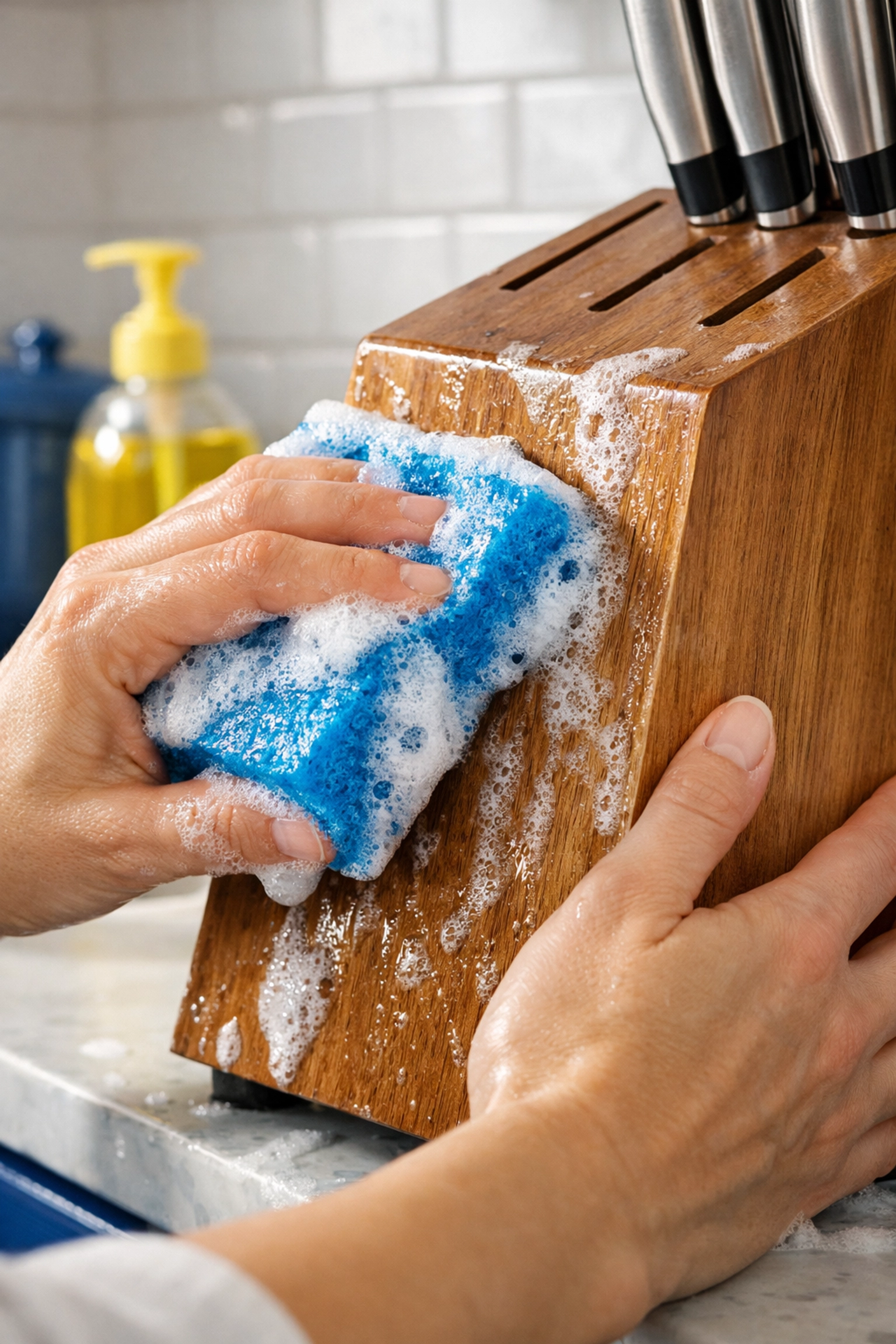
Now that the dry debris is gone, it’s time for the wash. Use warm water and a mild dish soap. Wet a cloth or sponge and wipe down the exterior of the block.
Pro Tip: Never, ever submerge a wooden knife block in water. Wood behaves like a sponge; if it gets waterlogged, it can warp, crack, or: worst of all: take days to dry, which invites more mold.
For the interior slots, dip your small brush or pipe cleaner into the soapy water (squeeze out the excess so it's just damp) and run it through the slots. This helps break up any oils or sticky residues that have built up over time.
Phase 4: Disinfection Strike
Cleaning is great, but sanitizing is better. To kill off any lingering bacteria or mold spores, you have two main options: white vinegar or a very diluted bleach solution.
If you prefer the natural route, mix a 1:1 solution of white vinegar and water. Use your pipe cleaner to apply this inside the slots. Vinegar is fantastic for killing most household molds and it's completely food-safe.
If you’re dealing with a block that hasn't been cleaned in years, or you see visible black spots (mold), you might want to bring out the heavy hitters. Mix one tablespoon of bleach with four cups of water. Use this sparingly on wooden blocks. If your knife block is plastic, stick to the vinegar or soapy water, as bleach can sometimes be corrosive to certain plastics.
Phase 5: The Strategic Dry (The Most Important Step!)
If you take away only one thing from this guide, let it be this: Moisture is the enemy. If you put your knives back into a damp block, you’ve just wasted all your hard work.
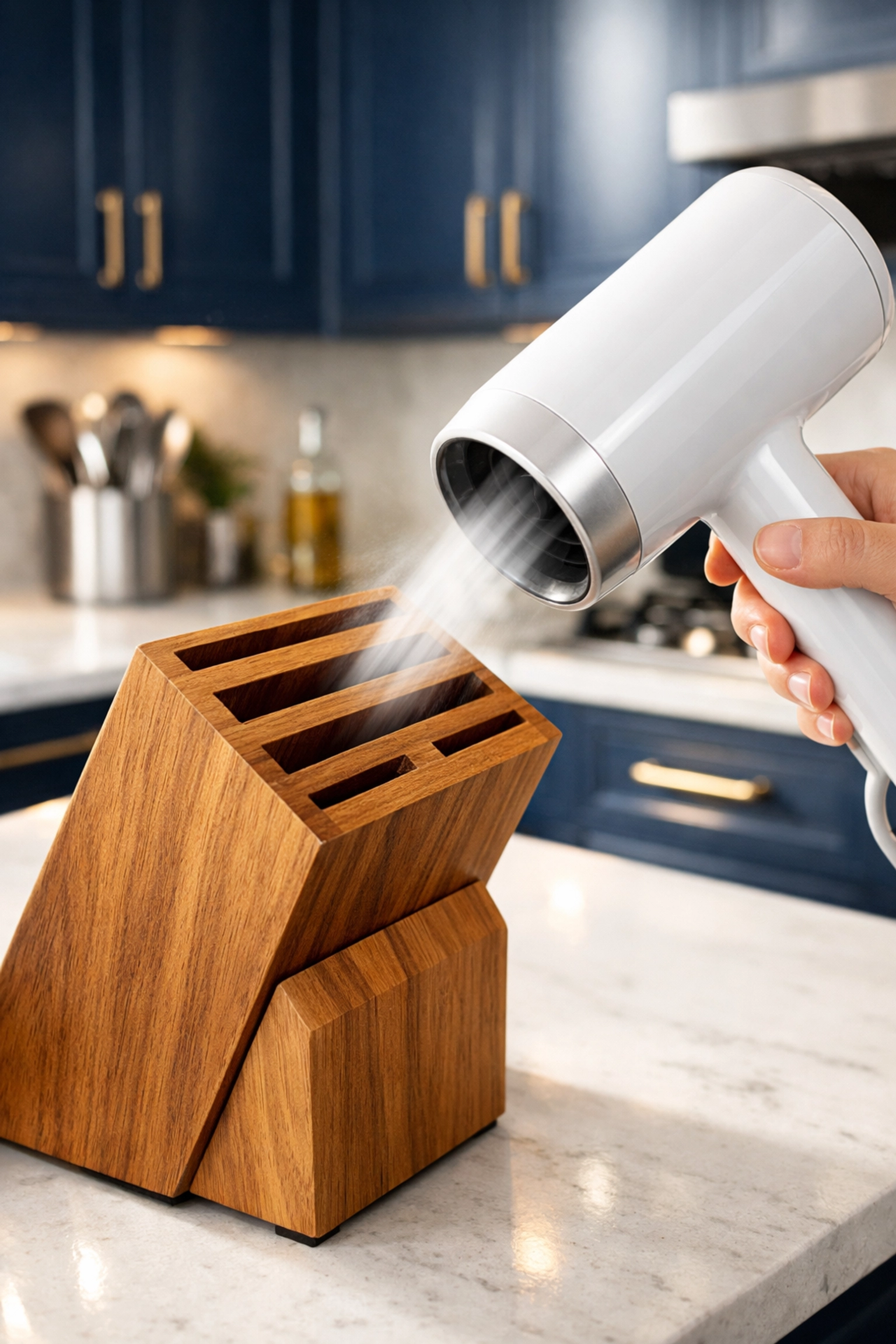
After cleaning and sanitizing, wipe the exterior dry with a clean towel. But what about those deep slots? This is where the ninja secrets come in. You can let the block air dry upside down on a rack overnight, but if you want to be thorough, grab your hairdryer. Set it to a cool or low-heat setting and blast air directly into the slots for a few minutes. This ensures that every nook and cranny is bone-dry before the knives return home.
Prevention Tactics for the Modern Kitchen
Now that your block is pristine, how do you keep it that way?
- Bone-Dry Knives: Never put a wet knife back in the block. Even a few drops of water can start the mold cycle. Hand-dry your knives with a towel immediately after washing.
- Strategic Placement: Move your knife block away from the sink and the stove. Splashes from the sink introduce moisture, and grease from the stove makes the block sticky, which attracts more dust.
- Regular Maintenance: Incorporate this into your bi weekly house cleaning or monthly deep clean schedule.
Why Frequency Matters
Keeping a home sanitary is all about the "compounding effect" of cleaning. When you stay on top of small tasks like the knife block, the overall bacterial load in your kitchen stays low. This is exactly why many homeowners in the Bay State choose a cleaning service in Massachusetts to handle the heavy lifting.
If you’re juggling work, family, and a social life, finding the time to scrub out knife slots might feel like a low priority. That’s where we come in. Whether you need a weekly house cleaning to keep your air quality high and surfaces sparkling, or a bi weekly house cleaning to keep the chaos at bay, we have a plan that fits.

Beyond the Kitchen
At The Cleaning Ninjas Inc, we don't just stop at the kitchen counter. From professional office cleaning to full residential deep cleans, our goal is to give you back your time while ensuring your environment is safe and healthy. You can learn more about us and our commitment to high-quality service by checking out our full range of services.
Cleaning your knife block might seem like a small detail, but in the world of hygiene, the small details are the ones that matter most. It’s the difference between a kitchen that looks clean and a kitchen that is clean.
So, this weekend, take ten minutes to give your knife block the "Ninja Treatment." Your knives: and your health: will thank you! And if the rest of the house is looking like it needs a visit from a team of cleaning experts, don't hesitate to reach out to The Cleaning Ninjas Inc. We’re here to help you win the battle against dust and grime, one "Ninja Tip" at a time!