There is something undeniably satisfying about peeling a thick, fuzzy layer of lint off your dryer screen. It’s like a tiny, domestic victory. Most of us have been trained since we were teenagers to "clean the lint trap after every load," and while that is a fantastic habit, it’s only the beginning of the story. If you think your dryer maintenance ends with that little mesh screen, your inner cleaning ninja has some serious leveling up to do.
At The Cleaning Ninjas Inc, we’re all about the details that keep your home running smoothly and safely. Dryer safety isn't just about making sure your favorite jeans get dry in one cycle; it’s about fire prevention. According to FEMA, nearly 3,000 home fires are started by clothes dryers every year, and the leading cause is: you guessed it: lint buildup.
In this guide, we’re going deep into the belly of the beast. We’re going beyond the screen to show you how to keep your laundry room safe, efficient, and smelling fresh. Whether you’re handling your own weekly house cleaning or you’ve got a professional crew helping you out, these ninja tips are essential for every homeowner.
The Secret Enemy: Invisible Waxy Buildup
Here is a Ninja Tip that most people completely miss: your lint screen might look clean, but it could actually be suffocating your dryer. If you use dryer sheets or fabric softeners, they leave behind an invisible, waxy residue on the fine mesh of the lint trap. Over time, this film blocks airflow, forcing your dryer to work harder, run hotter, and potentially overheat.
The Ninja Test: Take your lint screen to the sink and run some water over it. If the water pools on top of the mesh instead of flowing straight through, you’ve got a wax problem.
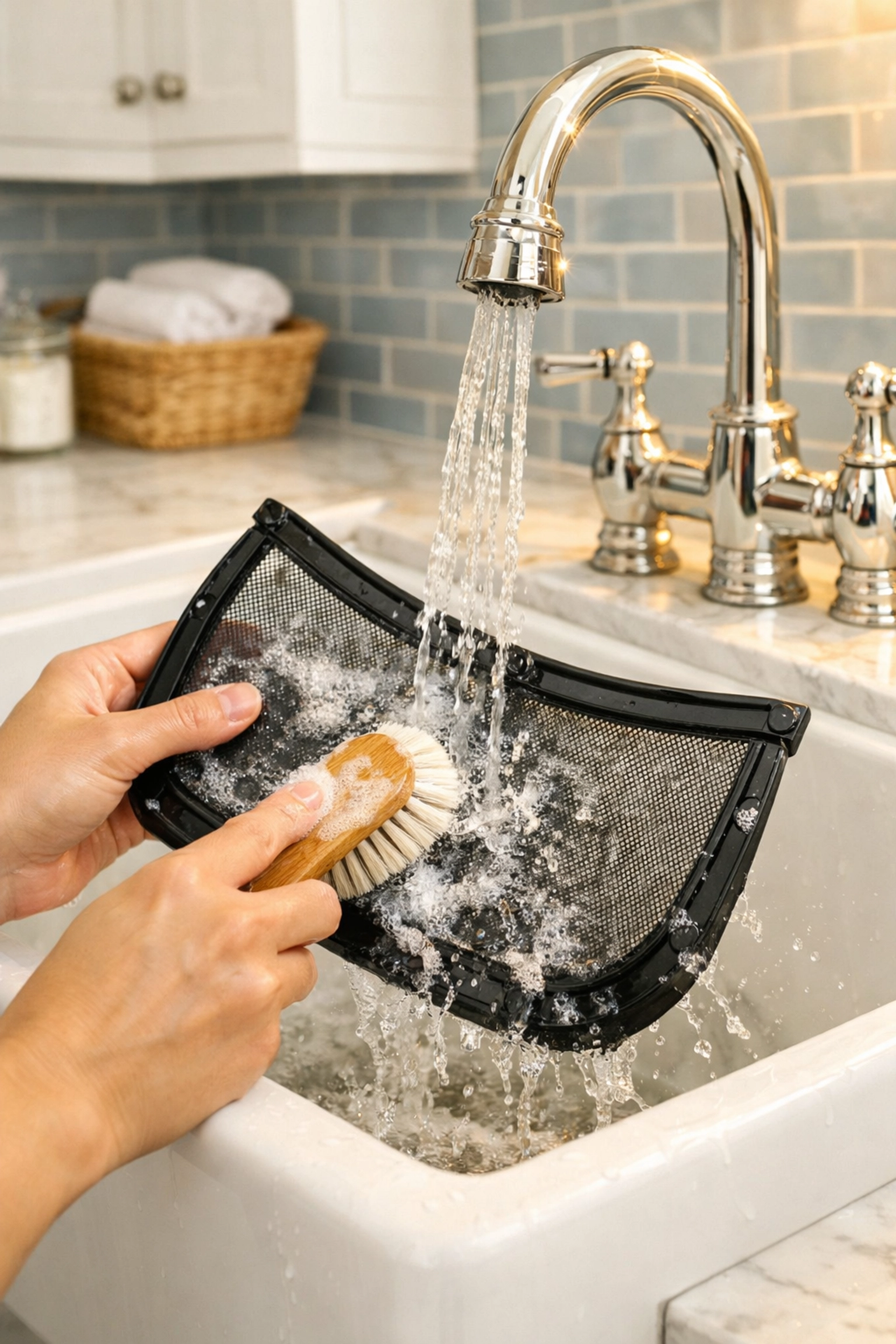
The Fix: Every month or so, give that screen a spa day. Scrub it gently with warm, soapy water and a soft brush (an old toothbrush works wonders). Let it air dry completely before popping it back in. This simple step can extend the life of your heating element and save you a chunk of change on your energy bill.
Diving Into the Lint Trap Housing
Even if you’re a pro at cleaning the screen, some lint always manages to escape into the housing: that narrow slot where the screen sits. Over a few months, this "escaped" lint accumulates at the bottom, creating a thick mat of flammable material right near the heating components.
When you’re doing your weekly house cleaning, take a flashlight and peer down into that slot. You’ll likely see a graveyard of fuzz, lost dimes, and maybe a stray sock.
The Ninja Tool: You don’t need a specialized kit for this. A vacuum with a long, skinny crevice attachment is usually enough. If your vacuum nozzle is too wide, you can tape a piece of flexible plastic tubing or even an empty gift-wrap roll (squashed flat) to the end of the hose to reach deep into the crevice. Sucking out that hidden lint once a month is a total game-changer for dryer efficiency.
The Vent Hose: The Hidden Highway of Fuzz
The silver accordion-style hose behind your dryer is the most common place for major clogs to form. Because this hose is often tucked away in a tight space, it gets kinked or crushed, which creates "pockets" where lint loves to hang out.
To keep things safe, you should be inspecting and cleaning this hose at least once or twice a year. If you find yourself needing bi weekly house cleaning services to keep up with a busy household and a lot of laundry, you might want to check this more often.
The Step-by-Step Ninja Maneuver:
- Unplug the dryer: Safety first! If it’s a gas dryer, be extremely careful not to disturb the gas line.
- Pull the dryer out: Give yourself enough room to work without feeling like you’re in a cave.
- Disconnect the hose: Usually, this just requires a screwdriver to loosen the clamps on both ends.
- Vacuum the hose: Use your vacuum to clear out both ends of the hose. If the hose is long, you can use a dryer vent brush (a long, flexible brush) to push the lint through.
- Vacuum the wall port: Don't forget to suck out the lint from the hole in the wall that leads outside.
If your hose is made of thin plastic or foil, consider upgrading to a rigid or semi-rigid metal duct. These are much more fire-resistant and don't sag or kink as easily, meaning less lint gets trapped in the first place.
The Exterior Vent: Don't Let the Birds In
Your dryer's journey ends outside your house at the vent hood. This is a frequently overlooked area in standard home maintenance. If the exterior flap is stuck open, you’re inviting cold air (and potentially critters like birds or squirrels) into your home. If it’s stuck shut with lint, the hot air has nowhere to go.
During your bi weekly house cleaning routine, take a quick walk around the outside of your house while the dryer is running. You should see the flap moving and feel warm, moist air blowing out. If the air feels weak or the flap isn't moving, you’ve got a blockage.
Keep the area around the exterior vent clear of tall grass, bushes, or snow. A blocked vent is a fast track to an overheated motor. If you’re ever unsure about the state of your vents, it's always a good idea to check out our full list of services to see how a professional deep clean can help.

Monitoring Your Dryer’s "Vital Signs"
Your dryer will usually try to tell you when it’s struggling. As Ninjas, we have to be in tune with our equipment. Here are the red flags that mean it’s time to stop what you’re doing and clean the entire system:
- Longer Drying Times: If a load of towels that used to take 45 minutes now takes 90, your vent is likely clogged.
- The "Hot to the Touch" Test: If the top of the dryer or your clothes feel excessively hot at the end of a cycle, the heat isn't escaping properly.
- A Musty Smell: Moist air trapped in a lint-clogged vent is the perfect breeding ground for odors.
- No Airflow: If you go outside and don't feel a strong breeze coming from the vent, there is a blockage somewhere in the line.
Integrating Dryer Care into Your Routine
We know that life gets busy. Between work, family, and trying to have a social life, remembering to scrub your lint screen with soap and water can feel like one chore too many. That’s why we recommend building these tasks into your existing cleaning schedule.
If you have a weekly house cleaning day, make the "lint slot vacuuming" a part of that rhythm. If you prefer a bi weekly house cleaning schedule, use every other session to check the exterior vent. By making it a habit, it stops being a "project" and just becomes part of how you maintain a safe, happy home.
At The Cleaning Ninjas Inc, we believe that a clean home is a healthy home. From our laundry services to our detailed green cleaning, we focus on the things that matter so you don't have to. You can learn more about our mission and our team on our About Us page.

Bonus Ninja Tip: The Drum Wipe-Down
One last thing before you head back to your laundry pile: the interior drum. Over time, things like gum, crayons (we’ve all been there), or residue from dryer sheets can coat the inside of the drum. This can actually affect the sensors that tell your dryer when the clothes are dry.
Once a month, unplug the dryer and wipe the inside of the drum with a soft cloth dampened with a little bit of mild soap and water (or a 50/50 mix of white vinegar and water for sticky spots). Wipe it again with a plain damp cloth to "rinse," and then let it air dry. It keeps your clothes smelling better and ensures your "auto-dry" setting actually works.
Dryer safety isn't glamorous, but it is one of the most important things you can do for your home’s security. By going beyond the lint trap, you’re not just a homeowner: you’re a safety ninja.
For more tips on keeping your home in tip-top shape, be sure to check out our blog for regular updates and expert advice. Stay safe and keep those towels fluffy!