We’ve all been there. You finish a long day, the house is finally quiet, and you go to grab a clean glass for a glass of water before bed. You open the dishwasher, expecting that "clean" steam, but instead, you’re hit with a scent that can only be described as… swampy. Or maybe it’s a metallic, fishy odor that makes you wonder if your "clean" dishes are actually clean at all.
At The Cleaning Ninjas Inc, we hear about this a lot. The dishwasher is one of the hardest-working appliances in your kitchen, yet it’s often the most neglected when it comes to its own hygiene. It’s a bit ironic, isn’t it? An appliance designed to clean everything else needs a deep clean itself.
The good news is that you don’t need a degree in appliance repair to fix this. With a few "Ninja Tips" and some basic household staples, you can banish those funky smells for good. Let’s dive into how to deodorize your dishwasher and keep your kitchen smelling fresh.
Why Does My Dishwasher Smell?
Before we get to the "how," let’s talk about the "why." If you understand where the smell is coming from, you can prevent it from coming back. Usually, dishwasher odors are caused by a combination of three things:
- Trapped Food Particles: This is the most common culprit. Small bits of pasta, rice, or meat get caught in the filter or the crevices of the machine. Over time, they rot.
- Grease and Soap Scum: If you wash a lot of oily dishes or use too much detergent, a filmy residue can build up on the walls and inside the spray arms. This residue traps bacteria, which creates that musty smell.
- Standing Water: If your dishwasher isn’t draining properly, a small amount of water sits at the bottom of the tub. Stagnant water is a breeding ground for mold and mildew.
Now that we know the enemy, let’s gear up and get to work.
Step 1: The Filter Deep Clean (The #1 Culprit)
If you take only one thing away from this guide, let it be this: Clean your filter. Most modern dishwashers have a manual-clean filter located at the bottom of the tub, under the lower rack. If you haven't cleaned yours in a few months (or ever), prepare yourself: it might be a little gross.
How to do it like a Ninja:
- Remove the Bottom Rack: Pull it all the way out and set it aside so you have plenty of room to move.
- Locate the Filter: It usually looks like a plastic cylinder or a flat mesh plate. Most of them twist out easily.
- The Scrub: Take the filter to your sink. Use warm, soapy water and an old toothbrush (a Ninja's favorite tool) to scrub away any slime or stuck-on food. If it’s really greasy, a little bit of degreasing dish soap works wonders.
- Rinse and Replace: Once it’s sparkling clean and free of debris, lock it back into place.
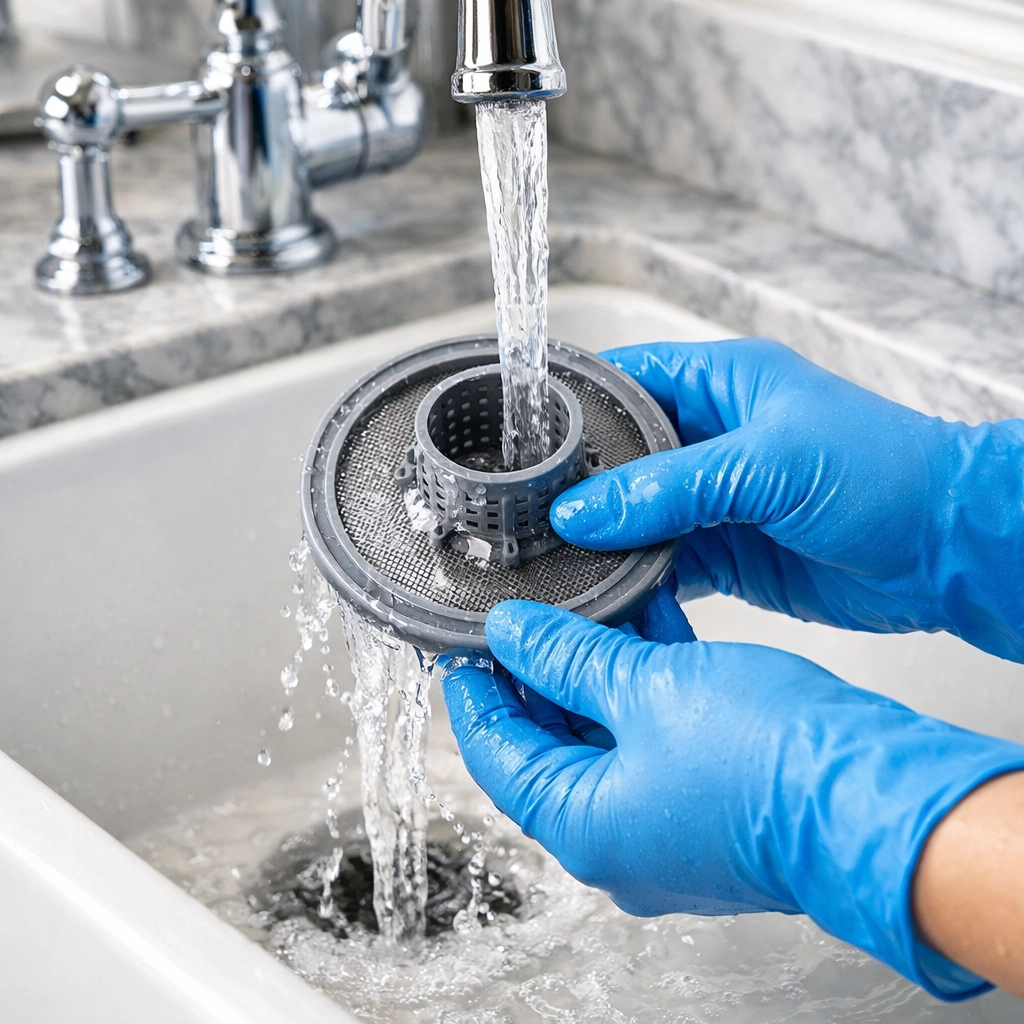
Cleaning the filter is the single most effective way to stop odors instantly. We recommend doing this at least once a month to keep things running smoothly.
Step 2: The Vinegar Rinse (The Magic Eraser)
Once the filter is clean, it’s time to tackle the interior walls and the hidden plumbing. You don’t need harsh chemicals for this; plain old white vinegar is your best friend. Vinegar is an acetic acid, which means it’s a powerhouse at breaking down grease, dissolving hard water deposits, and neutralizing odors.
The Process:
- Ensure the dishwasher is completely empty.
- Fill a dishwasher-safe bowl or a glass measuring cup with about two cups of white distilled vinegar.
- Place the bowl upright on the top rack of the dishwasher. Do not pour the vinegar directly into the bottom of the machine, as it will just drain out during the initial pre-rinse cycle.
- Run a full wash cycle on the hottest water setting. The vinegar will slowly splash out of the bowl during the cycle, coating the interior and cleaning out the drain.
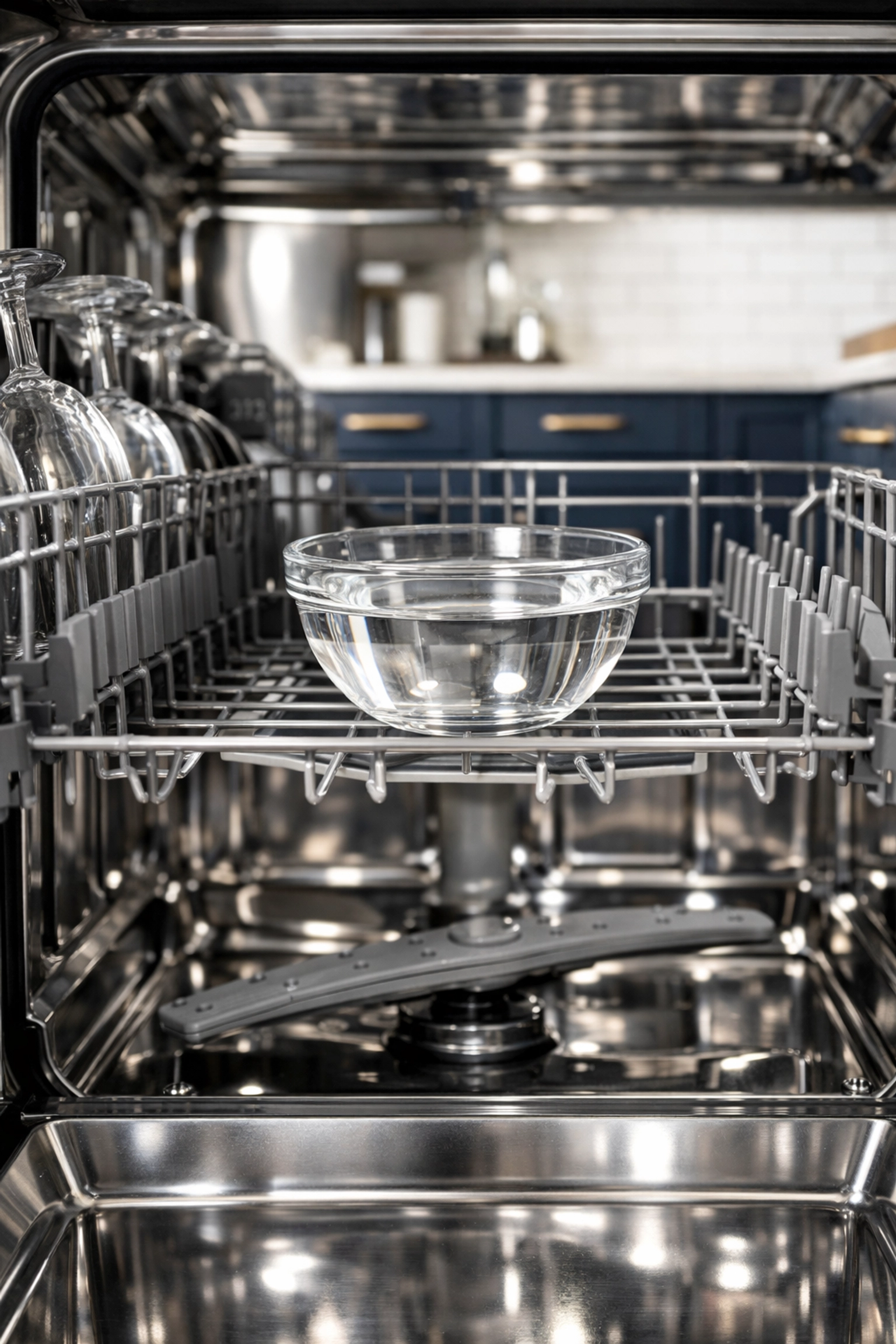
By the time the cycle is done, that funky smell should be replaced by a clean, neutral scent. If you’re worried about the kitchen smelling like a pickle factory, don't be! The vinegar scent dissipates almost immediately once the door is opened and the steam clears.
Step 3: The Baking Soda Boost (Optional)
If your dishwasher was particularly offensive, you can follow the vinegar rinse with a baking soda "freshen-up." While vinegar is great for grease, baking soda is fantastic for absorbing any lingering acidic odors.
Simply sprinkle one cup of baking soda across the bottom of the dishwasher tub and run a short, hot cycle. This will leave the interior looking bright and smelling like absolutely nothing: which is exactly how a clean dishwasher should smell.
Step 4: Don't Forget the Door Seals and Gaskets
Have you ever noticed a black, slimy substance around the edges of your dishwasher door? That’s mold and mildew, and it loves to hide in the rubber gaskets. Because the door seal stays damp and doesn't get reached by the spray arms during a cycle, it’s a prime spot for "the funk" to grow.
The Ninja Way:
Dip a cloth or a sponge in a mixture of warm water and vinegar (or a mild detergent). Wipe down the entire rubber seal, making sure to get into the folds. Don't forget the very bottom of the door, where the seal meets the floor of the machine: food often gets splashed there and rots out of sight.
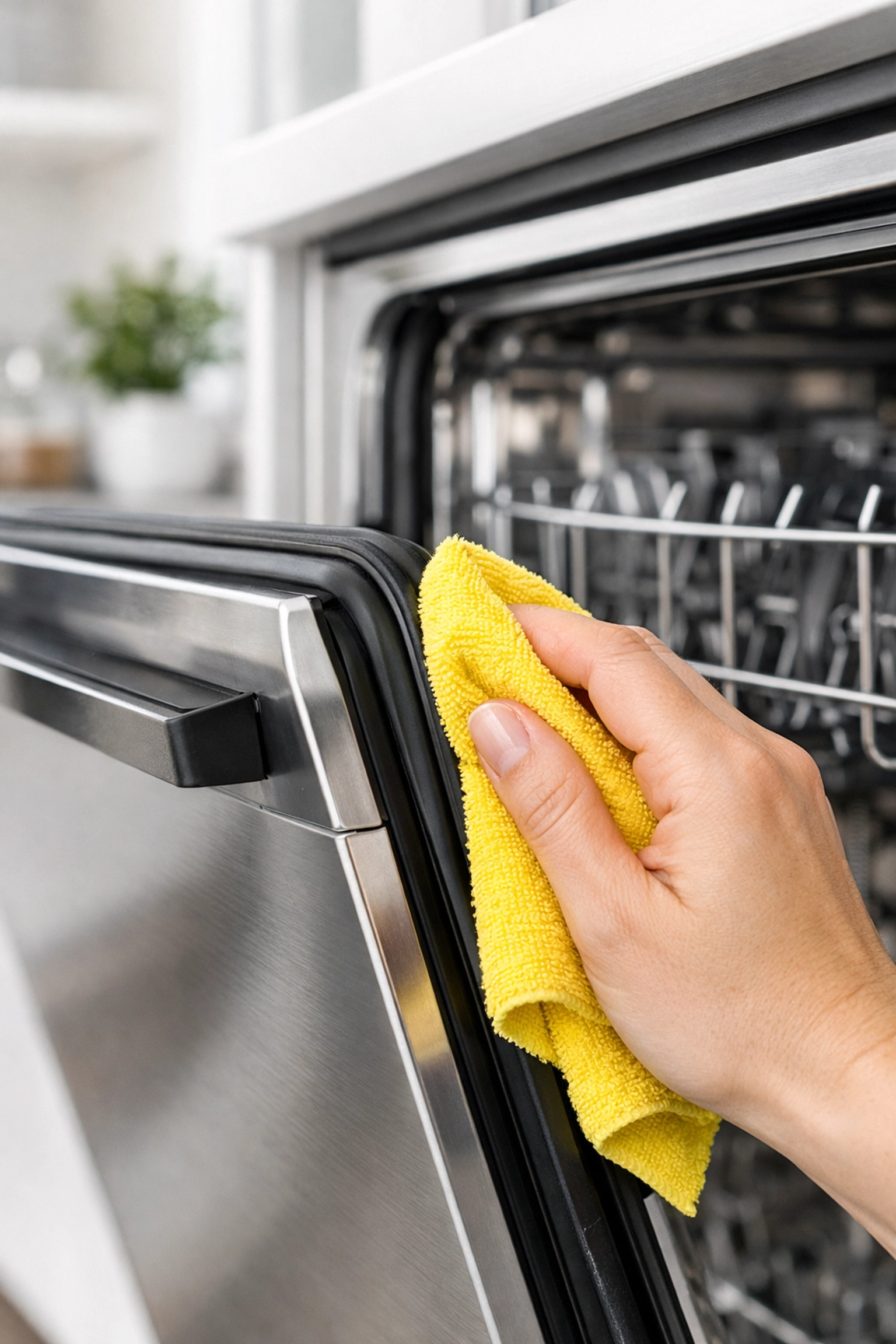
Wiping down the seals takes about two minutes, but it makes a massive difference in the overall hygiene of your kitchen. If you want to learn more about keeping your home in tip-top shape, check out our About Us page to see our philosophy on deep cleaning.
Step 5: Clear the Spray Arms
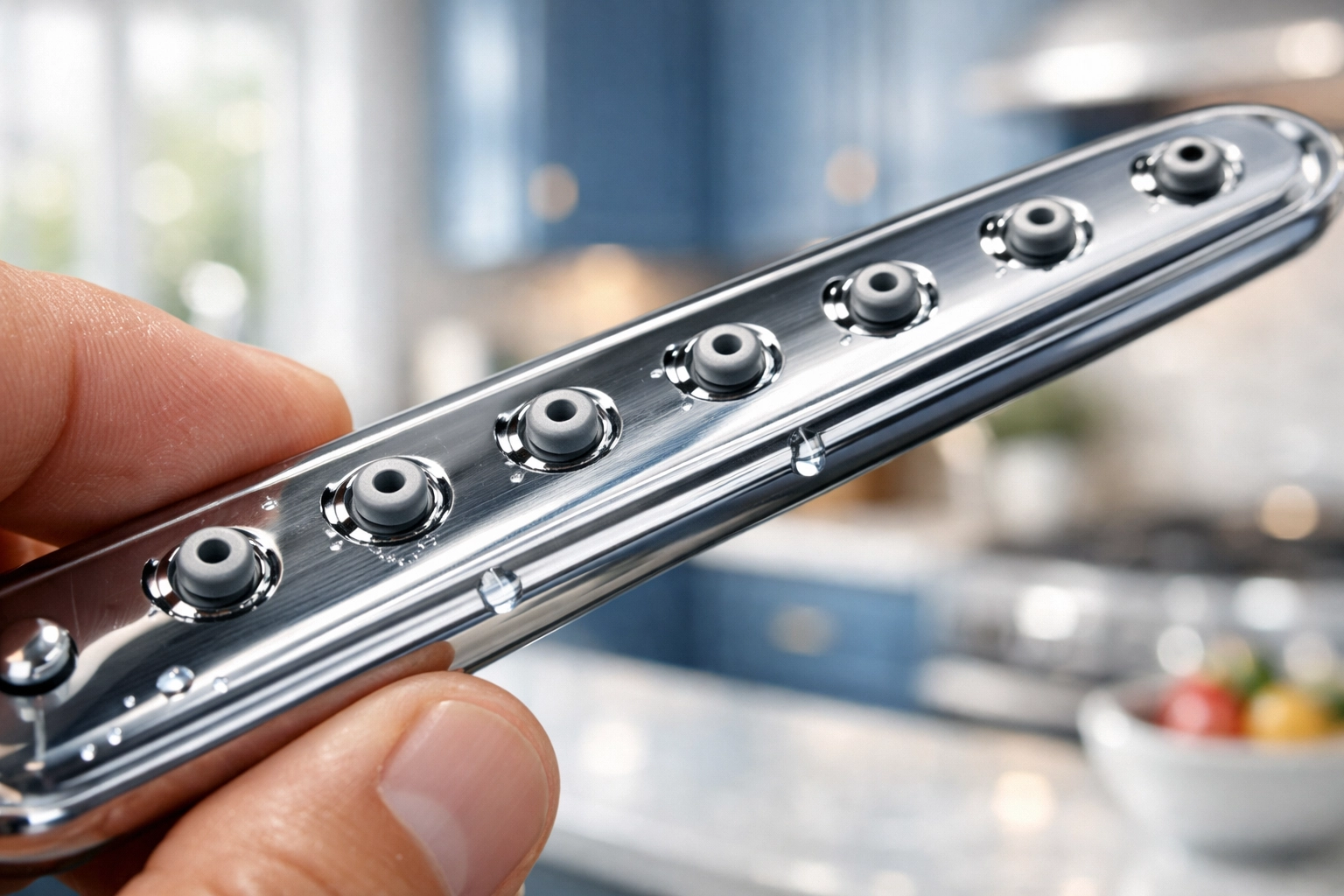
If your dishes are coming out with spots or bits of food still attached, your spray arms might be clogged. These are the rotating plastic or metal arms that shoot water everywhere. Small seeds, toothpicks, or bits of broken glass can get lodged in the tiny holes.
The Fix:
Check the holes in the spray arms. If you see any blockages, use a toothpick or a bent paperclip to gently poke the debris out. If the arms are removable (check your manual), you can take them off and rinse them under the faucet to make sure water is flowing freely through them.
Prevention: How to Keep the Funk Away
Now that your dishwasher is fresh, let's keep it that way. Here are a few daily habits that the Ninjas live by:
- Scrape, Don't Pre-Wash: You don't need to wash your dishes before putting them in the dishwasher (modern detergents actually need a little bit of food particles to work effectively), but you must scrape off the big chunks. That half-eaten piece of broccoli has nowhere to go but the filter.
- Check the Temperature: Your dishwasher needs hot water to dissolve grease. If your kitchen sink takes forever to get hot, run the faucet for a minute before starting the dishwasher so the machine starts with hot water right away.
- Leave it Ajar: After a cycle is finished, crack the door open for an hour. This allows the moisture to escape and prevents that damp, musty smell from developing.
- Use the Right Detergent: If you have hard water, you might notice more buildup. Using a rinse aid or a specialized hard-water detergent can keep the interior from getting cloudy and smelly.
When to Call in the Pros
Sometimes, a funky smell is more than just a dirty filter. If you’ve cleaned the filter, run the vinegar, wiped the seals, and the smell still won't go away, you might have a drainage issue or a clog deep in the hose.
If you’re feeling overwhelmed by your kitchen maintenance or just want a fresh start for your entire home, we’re here to help. At The Cleaning Ninjas Inc, we offer a variety of professional services that go way beyond just "surface cleaning." We specialize in the deep-cleaning details that make your home a healthier, happier place to live.
A clean dishwasher isn't just about avoiding a bad smell: it's about ensuring the tools you use to feed your family are truly sanitary. By taking 15 minutes once a month to follow these Ninja Tips, you’ll extend the life of your appliance and keep your kitchen smelling like a dream.
Happy cleaning!