We love our pets. They are family, they are our best friends, and honestly, they usually run the house. Whether you have a golden retriever who thinks he’s a lap dog or a cat who treats your living room like a royal palace, one thing is certain: they spend a lot of time sleeping. In fact, most dogs sleep between 12 to 14 hours a day, and cats? They’re clocking in closer to 16.
With all that snooze time happening on their favorite beds, those cushions quickly become a magnet for fur, dander, dirt, saliva, and… let’s be honest, that distinct "wet dog" smell. At The Cleaning Ninjas Inc, we’re all about making homes sparkle, and that includes the spots where your furry friends recharge. Keeping a clean pet bed isn't just about getting rid of the funk; it’s about hygiene, health, and making sure your home stays as fresh as possible.
Why Pet Bed Hygiene is a Big Deal
It’s easy to look at a pet bed and think, "It doesn't look that dirty," but looks can be deceiving. Beneath the surface of that plush fabric, a tiny ecosystem is often thriving. Pets bring the outdoors in. Every time they go for a walk or roll in the grass, they’re picking up pollen, dust mites, and bacteria.
When these particles settle into their bed, they can trigger allergies: not just for your pet, but for you too. If you’ve been sneezing more than usual, your dog’s dusty bed might be the culprit. Furthermore, dirty beds can harbor parasites like fleas or their eggs, and even fungal spores like ringworm. Regular cleaning is the best way to break the cycle and keep everyone in the house healthy.
How Often Should You Wash It?
This is the most common question we get at The Cleaning Ninjas Inc. While there’s no one-size-fits-all answer, a good rule of thumb is to wash your pet’s bed every one to two weeks.
However, you might need to increase that frequency if:
- Your pet sheds a lot: More fur means more trapped dander and oils.
- They spend a lot of time outside: Muddy paws and outdoor "adventures" bring in more grime.
- Anyone in the house has allergies: Frequent washing keeps the allergen load low.
- Your pet has skin issues: Oily skin or recurring hot spots require a sterile sleeping environment.
If you’re looking for more ways to keep your home tidy between professional visits, check out our cleaning tips for more ninja-level secrets.
Step 1: The Pre-Wash Prep
You can’t just toss a hair-covered bed straight into the washing machine. If you do, you’re asking for a clogged drain and a washing machine filled with soggy fur clumps. Trust us, that’s a mess you want to avoid.
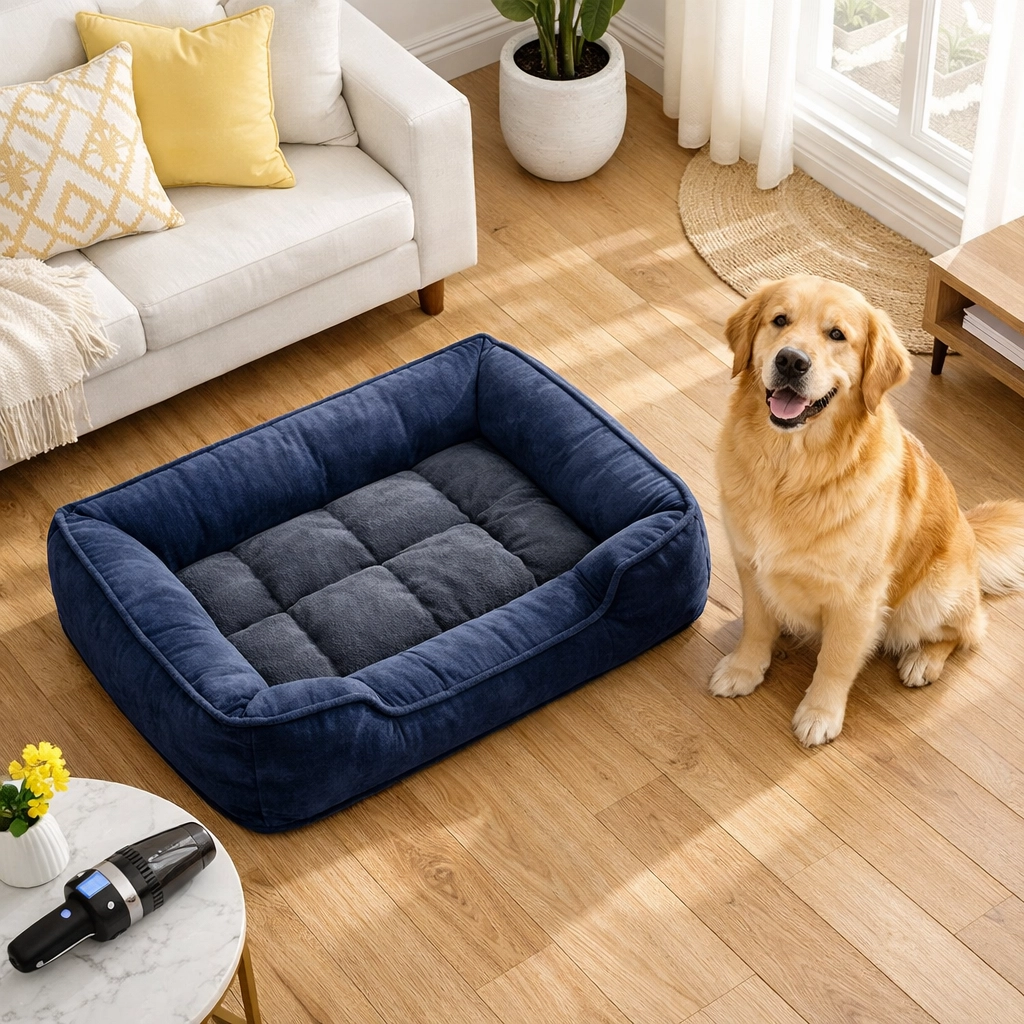
Start by taking the bed outside and giving it a good shake. This gets rid of the loose debris. Next, grab your vacuum. Use the upholstery attachment to get into the crevices where hair loves to hide. If the hair is really stuck in the fibers, try using a lint roller or even a damp rubber glove. Rubbing your hand over the fabric with a rubber glove creates static that pulls the hair right out.
Step 2: Machine Washing Removable Covers
Most modern pet beds come with a removable cover, which is a total game-changer. Once you’ve removed as much hair as possible, unzip the cover and check the care label.
Choose the Right Detergent
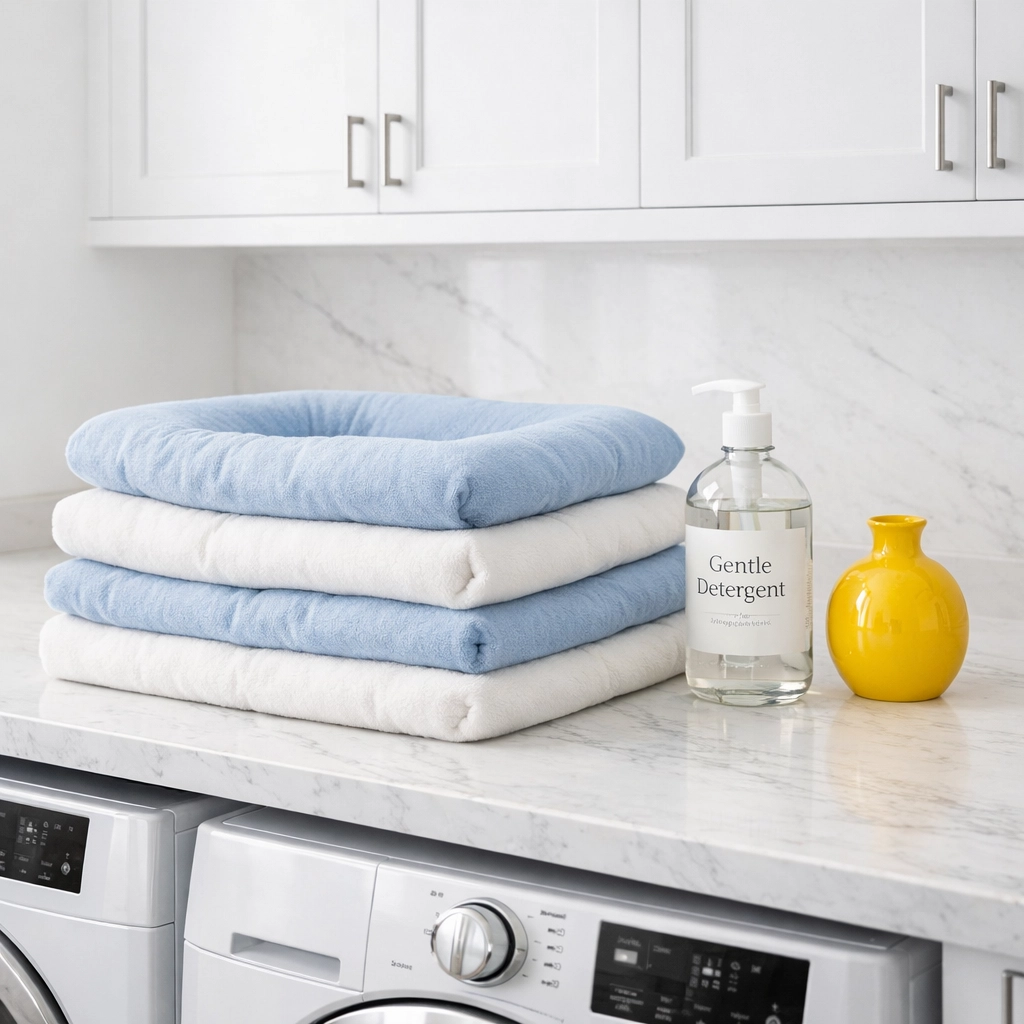
This is crucial. Pets have much more sensitive skin and a far more powerful sense of smell than we do. Avoid heavy fragrances, dyes, or bleach. These can cause skin irritation or respiratory issues for your pet. Look for a detergent labeled "Free and Clear" or a specific pet-safe cleaning solution.
Temperature Settings
While cold water is great for some fabrics, hot water (around 140°F or 60°C) is best for killing bacteria, dust mites, and flea eggs. If the fabric allows it, go for a warmer setting. If the bed is particularly stinky, you can add half a cup of white vinegar to the rinse cycle. It’s a natural deodorizer that won't harm your pet.
The Extra Rinse
Always run an extra rinse cycle. You want to make absolutely sure there is no soapy residue left in the fibers. Soap buildup can trap dirt faster and irritate your pet's skin.
Step 3: Deep Cleaning the "Non-Washables"
What if the bed doesn't have a removable cover, or it’s too big for your machine? You’ll have to go old-school with a hand wash.
- Fill the Tub: Fill your bathtub with warm water and a small amount of pet-safe detergent.
- Submerge and Scrub: Fully submerge the bed. Use your hands to squeeze the soapy water through the stuffing. If there are visible stains, use a soft-bristled brush to gently scrub them away.
- The Soak: Let it sit for about 15–20 minutes.
- Rinse Thoroughly: This is the most important part. Rinse the bed with clean water until the water runs completely clear of bubbles.
- Squeeze, Don’t Wring: Wringing can bunch up the stuffing and ruin the shape of the bed. Instead, press down firmly to squeeze the water out.
Step 4: Drying Without the Funk
A damp pet bed is a breeding ground for mold and mildew, which will make the "dog smell" ten times worse.
If the care label says it’s okay, you can put the cover (or the whole bed) in the dryer on a low heat setting. Throwing in a few clean tennis balls or dryer balls will help fluff the stuffing back up so it doesn't get lumpy.
If you’re air-drying, make sure the bed is in a well-ventilated area or, even better, outside in the sun. Sunlight has natural antibacterial properties that can help freshen the fabric. Just make sure it is 100% dry before you let your pet back on it.
Dealing with Stubborn Stains and Odors
Sometimes, a standard wash isn't enough to tackle "accidents" or that deep-seated musk.
- Enzymatic Cleaners: For urine or vomit stains, you need an enzymatic cleaner. These cleaners actually break down the proteins in the waste, removing the odor entirely rather than just masking it. This is important because if a pet can still smell their scent, they might be tempted to "mark" the spot again.
- Baking Soda Magic: Between washes, sprinkle a little baking soda over the bed. Let it sit for 30 minutes to absorb odors, then vacuum it up. It’s a quick way to keep things fresh without a full laundry day.
Pro-Tips for Long-Term Freshness
Maintaining a clean pet bed is easier if you have a strategy. Here’s how we do it ninja-style:
- Use a Liner: If your pet's bed didn't come with one, you can buy a waterproof liner to go between the cover and the stuffing. This protects the core of the bed from liquids and odors, meaning you only have to wash the cover frequently and the insert occasionally.
- Groom Your Pet: The cleaner the pet, the cleaner the bed. Regular brushing reduces the amount of fur that ends up in the bed, and regular baths keep those natural skin oils in check.
- Rotate Beds: If you have the space, having two beds allows you to rotate them. This gives you plenty of time to wash and thoroughly dry one while your pet uses the other.
Let the Ninjas Handle the Rest
Keeping a home clean when you have pets is a full-time job. Between the fur on the baseboards and the paw prints on the tile, it can feel like you’re always cleaning. That’s where we come in. At The Cleaning Ninjas Inc, we specialize in deep cleaning that handles the stuff you don't have time for.
Whether you need a one-time deep clean or regular maintenance to keep the dander at bay, our team is ready to jump in. Check out our services to see how we can help you reclaim your home from the "fur-nado."
If you’re curious about who we are and our commitment to a healthy, happy home, feel free to visit our About Us page. We love our community, and we love helping pet owners breathe a little easier!
A clean pet bed is a small detail that makes a massive difference in your home's overall hygiene. Your furry friend will appreciate the fresh spot to dream, and you’ll appreciate a house that smells less like a kennel and more like home. Happy cleaning!