We’ve all been there. You’ve got a big meeting, a wedding to attend, or maybe you just want your favorite linen shirt to look its best. You pull out the ironing board, plug in the iron, and start gliding. But suddenly, instead of a smooth slide, there’s a tug. Or worse, the iron leaves a mysterious brown streak or a trail of white flaky "snow" across your pristine fabric.
It’s frustrating, right? That’s the sound of your iron crying out for a little TLC. Over time, irons collect a cocktail of burnt fabric fibers, melted starch, and: the biggest culprit of all: hard water minerals and salt. If you’re living in an area with hard water, your iron is essentially a tiny limestone cave in the making.
At The Cleaning Ninjas Inc, we believe that every tool in your home should work as hard as you do. When your iron starts dragging its feet (or its soleplate), it’s time to intervene. In this guide, we’re going to show you exactly how to restore that "like-new" glide and get rid of the stubborn salt and scale that’s slowing you down.
Why Your Iron is Acting Up: The Science of "Gunk"
Before we dive into the "how-to," let's talk about the "what." Most of the issues we see with iron soleplates come down to two things: scorched residue and mineral buildup.
- Mineral Buildup (Hard Water & Salt): If you use tap water in your iron, you’re introducing minerals like calcium and magnesium into the internal tank. As the water turns to steam, these minerals stay behind. Eventually, they crystallize into "scale" or white salt-like deposits that clog the steam vents and create a rough texture on the bottom of the iron.
- Burned Fibers and Starch: If you iron a delicate synthetic on too high a heat, or if you use too much spray starch, a thin film of "burnt" material can bake onto the metal. This creates friction, making your chores feel like a workout.
If you find yourself struggling with more than just a dirty iron, remember that our team at The Cleaning Ninjas is always here to help keep the rest of your home as polished as your shirts.
Method 1: The Baking Soda Power Paste
Baking soda is a ninja’s best friend. It’s mildly abrasive: enough to scrub away grime, but gentle enough not to scratch the delicate coating of your iron’s soleplate.
What you’ll need:
- Baking soda
- Distilled water
- A small bowl
- A microfiber cloth
The Process:
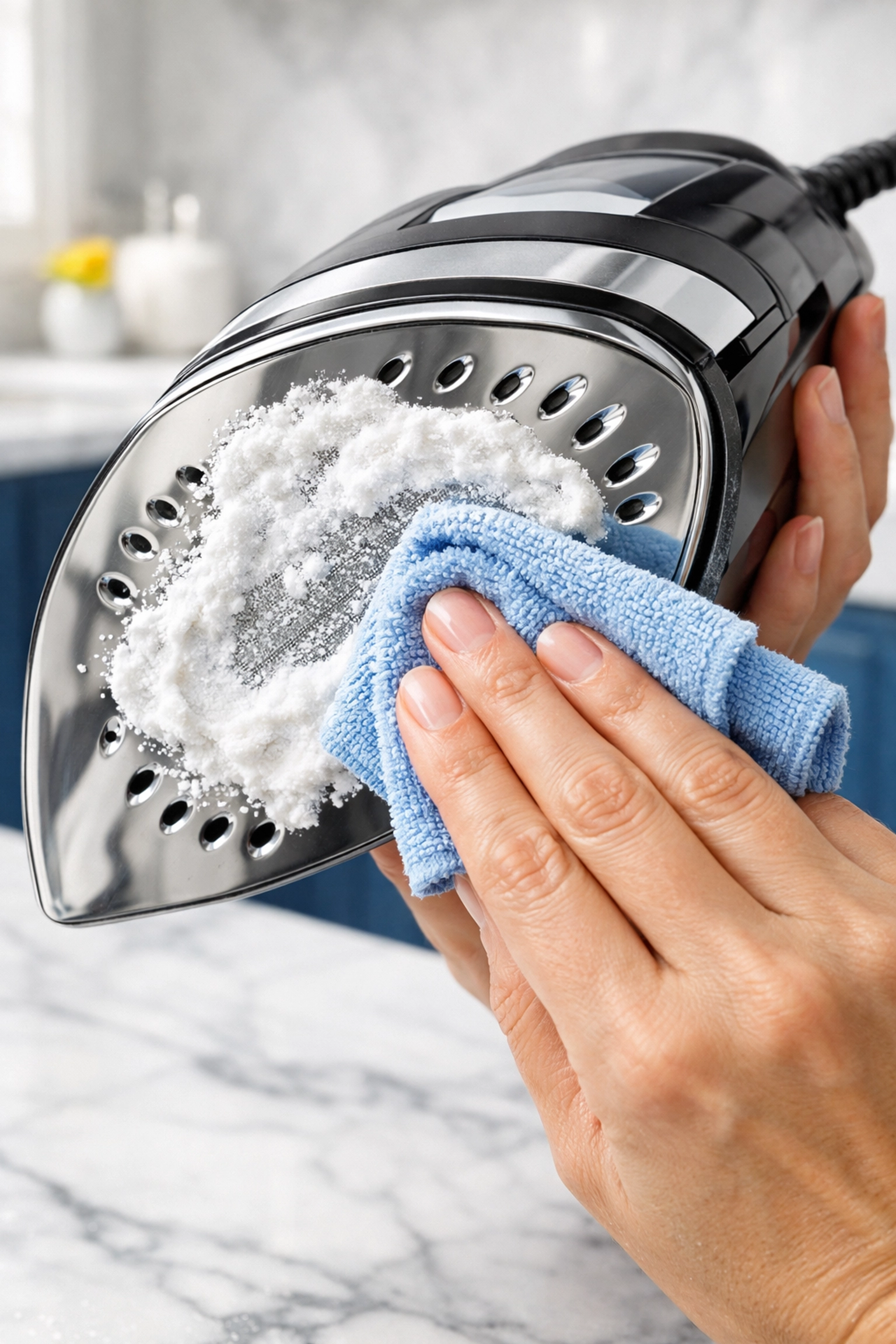
- Make the Paste: In your bowl, mix two parts baking soda with one part distilled water. You’re looking for a consistency similar to toothpaste.
- Apply: Ensure your iron is completely cool and unplugged. Spread the paste over the soleplate, focusing on areas with heavy staining or visible mineral crust.
- Sit and Scrub: Let it sit for a minute or two. Then, use your microfiber cloth to rub in circular motions. You’ll see the paste start to turn gray or brown as it lifts the gunk.
- Wipe Clean: Use a clean, damp cloth to wipe away all the paste. Be thorough: you don't want baking soda residue getting on your clothes later!
Method 2: The Vinegar Soak (The Ultimate Salt Destroyer)
If your primary issue is hard water scale or salt deposits, white vinegar is your secret weapon. The acidity of the vinegar breaks down the alkaline mineral deposits, dissolving them so they can be wiped away easily.
What you’ll need:
- Distilled white vinegar
- An old towel
- A shallow tray (optional)
The Process:
- The Towel Soak: Soak a clean towel in white vinegar.
- The "Rest" Period: Lay the towel flat on a surface and place the cool, unplugged iron face-down on the vinegar-soaked towel.
- Wait for the Magic: Let it sit for 15 to 30 minutes. The vinegar will go to work on the salt and hard water deposits.
- Wipe and Dry: Lift the iron and wipe the soleplate with a clean, damp cloth. The salt should slide right off.
If the buildup is particularly stubborn inside the steam vents, you can also fill the water reservoir with a 50/50 mix of vinegar and distilled water. Turn the iron to the highest steam setting and "iron" an old rag for a few minutes. This flushes the mineral bits out of the internal plumbing. Just be sure to run a cycle of plain distilled water afterward to get rid of the vinegar smell!
Method 3: The Toothpaste Trick
This is a great "emergency" method if you don't have vinegar or baking soda on hand.
What you’ll need:
- Plain white toothpaste (not the gel kind!)
- A soft cloth
The Process:
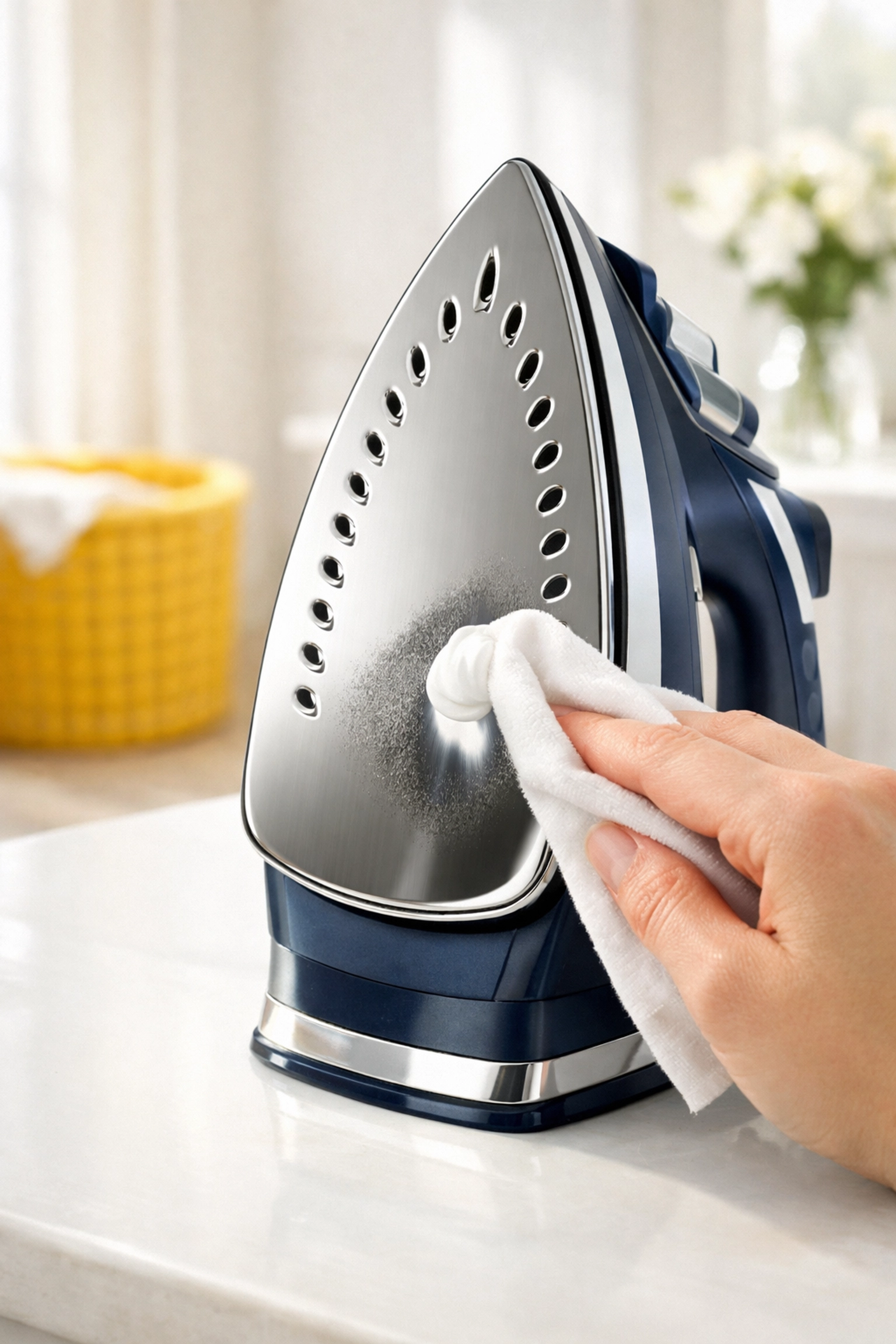
Simply rub a bit of the toothpaste onto the affected areas of the cool soleplate. Scrub gently with a cloth, then wipe it away with a damp rag. Toothpaste contains very fine abrasives that are designed to polish enamel, so they work wonders on metal soleplates too.
Don’t Forget the Steam Holes!
The soleplate might look shiny, but if the steam holes are clogged with white salt crust, your iron still won't perform correctly. This is where precision comes in.
Grab some cotton swabs (Q-tips) and dip them in white vinegar or distilled water. Insert the swab into each steam vent and twirl it around to break up the mineral deposits. This ensures that when you hit that steam burst button, you get a clean cloud of vapor instead of a spray of white flakes.
For more deep-cleaning insights, check out our Cleaning Tips blog where we tackle everything from kitchen hacks to laundry room secrets.
Preventative Maintenance: Keeping the Shine
Once you’ve restored your iron to its former glory, you’ll want to keep it that way. Cleaning an iron isn't hard, but not having to clean it as often is even better. Here are the "Ninja Rules" for iron longevity:
- Always Use Distilled Water: This is the #1 rule. Tap water contains minerals that create the "salt" you just worked so hard to remove. Distilled water is mineral-free and will keep the inside of your iron pristine.
- Empty the Reservoir: Don't let water sit in the iron between uses. Once you’re finished ironing, pour out the remaining water. This prevents "stagnant" scale from forming.
- Wipe After Each Use: Once the iron has cooled down, give the soleplate a quick wipe with a damp microfiber cloth. This removes any starch or fiber buildup before it has a chance to bake on during the next session.
- Check Your Heat Settings: Most "burnt" residue happens because the iron is too hot for the fabric. Follow the garment tags! If you’re unsure, start with a lower heat and work your way up.

When to Call in the Pros
We get it: life is busy. Sometimes, keeping up with the maintenance of every household tool feels like a full-time job. While we don't personally come to your house just to clean your iron, we do provide comprehensive cleaning services that take the heavy lifting off your shoulders.
Imagine coming home to a house where the surfaces are sparkling, the floors are spotless, and you actually have the time to sit down and enjoy a hobby: even if that hobby is ironing your favorite vintage tablecloth.
Final Thoughts: A Smoother Path Forward
A clean iron isn't just about aesthetics; it’s about efficiency and protecting your wardrobe. When your iron glides effortlessly, you finish your chores faster and your clothes last longer. No more snagged threads, no more mysterious stains, and no more "salt" snow on your black trousers.
If you’ve tried these methods and your iron still feels like it’s dragging, it might be a sign that the non-stick coating has permanently worn away. In that case, it might be time for a replacement. But for 90% of cases, a little vinegar and a bit of "Ninja" spirit are all you need to get back to a wrinkle-free life.
Ready to see what else we can do for your home? Head over to The Cleaning Ninjas Inc and let’s get your space looking its absolute best!
Happy ironing, and stay sharp! 🥷✨