We’ve all been there. You spend time loading the dishwasher, carefully stacking your plates and lining up the silverware like a game of Tetris, only to open it an hour later and find… well, a mess. Maybe there’s a weird gritty texture on your favorite coffee mug, or perhaps your "clean" dinner plates still have bits of last night’s lasagna stuck to them. It’s incredibly frustrating, and your first thought might be that the machine is broken or that you need to shell out hundreds of dollars for a new one.
But before you start browsing appliance sales or scouring the internet for a repair technician, there is one very likely culprit you need to check: the dishwasher filter. At The Cleaning Ninjas Inc, we see this all the time. Most people don’t even realize their dishwasher has a filter, let alone that it needs regular maintenance.
Think of your dishwasher filter as the unsung hero of your kitchen. It works tirelessly behind the scenes to keep food particles from recirculating onto your clean dishes. When it gets clogged, the system breaks down. In this guide, we’re going to walk you through why this happens, how to fix it, and how to keep it from happening again.
Why the Filter Matters (And Why It Gets So Gross)
Modern dishwashers are designed to be much quieter and more water-efficient than the behemoths our parents owned. Older models often had built-in "macerators" (essentially tiny garbage disposals) that ground up food bits and flushed them down the drain. While effective, they were incredibly loud.
To make machines quieter, manufacturers replaced those grinders with filters. The filter’s job is to catch food debris, labels from jars, and even small bones or seeds. However, if that debris stays in the filter for too long, it begins to decompose. This creates a slimy buildup of grease, detergent residue, and old food. Eventually, the water can’t pass through the filter efficiently. Instead of fresh, soapy water hitting your dishes, the machine starts circulating "dirty" water filled with tiny, pulverized food particles. That’s where that gritty feeling on your glassware comes from.
Signs Your Filter Is Crying for Help
If you aren't sure if your filter is the problem, look out for these classic red flags:
- The Gritty Film: If you run your finger across a "clean" glass and it feels like sandpaper, that’s a clear sign of food particles being redeposited.
- Visible Gunk: If you pull out the bottom rack and see orange or grey sludge sitting in the bottom of the tub, your filter is definitely full.
- The Mystery Smell: A funky, damp, or rotten odor coming from the machine is usually caused by trapped food rotting in the filter assembly.
- Standing Water: If there is a pool of water at the bottom of the machine after the cycle is finished, the filter or the drain line is likely blocked.

Step-by-Step: How to Clean Your Dishwasher Filter Like a Pro
Cleaning the filter isn't a glamorous job, but it is a quick one. It usually takes less than ten minutes. Here is the Ninja-approved method for getting it done right.
1. Clear the Deck
Start by pulling out the bottom rack of your dishwasher and setting it aside. This gives you full access to the floor of the machine. While you're at it, check the bottom of the tub for any large items that might have fallen, like a stray spoon or a plastic lid.
2. Locate the Filter
In most modern units (Bosch, KitchenAid, Whirlpool, etc.), the filter is a circular plastic component located at the bottom of the tub, usually near the base of the spray arm.
Most filters are a two-part system. There is often a cylindrical upper assembly and a flat lower mesh screen. To remove it, you typically turn the upper cylinder a quarter-turn counterclockwise. You should feel it "unlock," allowing you to lift it straight out. Once the cylinder is out, the flat lower filter can usually be lifted out as well.
3. The Rinse and Scrub
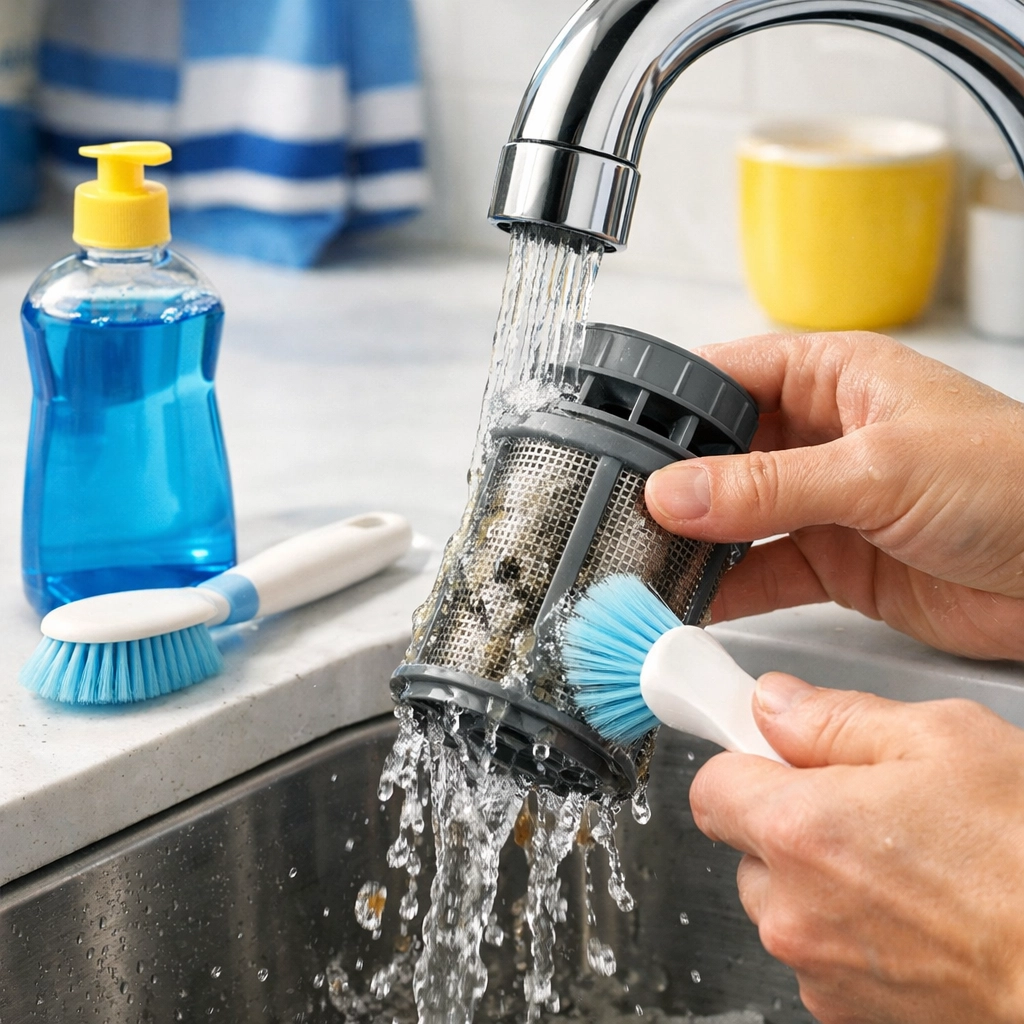
Take the filter parts to your kitchen sink. Most of the debris should come off under a stream of warm, running water.
Pro Tip: Do not use a wire brush or a harsh scouring pad! The mesh on these filters is quite delicate. Instead, grab an old soft-bristled toothbrush or a gentle sponge. Use a little bit of dish soap to break down any greasy buildup. Scrub gently inside and out until the mesh is clear and you can see through it.
4. The Deep Soak (For the Extra Grimy Filters)
If you haven't cleaned your filter in months (or years: don't worry, we won't tell!), you might see a white, chalky buildup. This is calcium or lime scale from hard water. To get rid of this, soak the filter parts in a bowl of warm water mixed with a cup of white vinegar for about 30 minutes. The vinegar will dissolve the mineral deposits and leave the filter looking brand new.
5. Check the "Sump" Area
While the filter is out of the machine, take a peek at the "sump": that’s the hole where the filter sits. Sometimes large chunks of food or even broken glass can get trapped down there. Be very careful and use a paper towel or a flashlight to check for debris before sticking your fingers in there.
6. Reinstall with Care
Slide the flat lower filter back into place first. Then, drop the cylindrical assembly into the hole. Twist it clockwise until it clicks or locks into place. This part is crucial. If the filter isn’t locked, it can float up during the wash cycle, allowing large debris to enter the pump and potentially cause a very expensive repair.
How Often Should You Do This?
The frequency depends entirely on how you use your machine. At The Cleaning Ninjas Inc, we recommend a basic cleaning once a month for the average household.
However, you should adjust based on your habits:
- Daily loads + minimal scraping: Clean the filter every two weeks.
- Daily loads + thorough scraping/rinsing: Clean the filter once a month.
- 1-3 loads per week: Clean the filter once every three months.
If you find that you’re constantly cleaning the filter, you might want to look at our cleaning tips for better ways to manage kitchen waste before it hits the dishwasher.

Better Habits for a Cleaner Dishwasher
Cleaning the filter is a "fix," but changing your habits is a "preventative." Here are a few ways to keep your machine running better for longer:
- Scrape, Don't Rinse: You don’t actually need to "pre-wash" your dishes. Modern detergents need a little bit of food protein to cling to so they can work effectively. However, you should scrape off large chunks of food, seeds, and bones.
- Check the Temperature: Your dishwasher needs hot water to dissolve grease. If your kitchen sink takes a long time to get hot, run the faucet for a minute before starting the dishwasher. This ensures the first fill of the machine is hot from the start.
- Use the Right Detergent: High-quality tabs or pods usually contain enzymes that help break down food particles, making it easier for the filter to handle the load.
- Run a Cleaning Cycle: Once a month, after cleaning your filter, place a bowl of white vinegar on the top rack of an empty dishwasher and run a heavy-duty cycle. This helps clean out the internal spray arms and hoses that you can't reach.
When to Call the Ninjas
We get it: life gets busy. Sometimes the "to-do" list grows faster than you can keep up with. If you’re tired of fighting with kitchen grime or just want your whole home to have that "brand-new" feeling without doing the heavy lifting yourself, we’re here to help.
Our team focuses on the details that often get overlooked, from the dust on top of the fridge to that dishwasher filter you’ve been dreading. You can learn more about how we work by visiting our About Us page or exploring the various services we offer to keep your home sparkling.

Summary: A Small Fix for a Big Result
It’s amazing how much a tiny piece of plastic can impact the cleanliness of your home. A clogged dishwasher filter doesn't just mean dirty dishes; it means wasted water, wasted electricity, and extra stress for you. By taking ten minutes once a month to give that filter a quick scrub, you’ll extend the life of your appliance and ensure your glasses come out sparkling every single time.
So, the next time your dishes come out looking less than stellar, don't panic. Just roll up your sleeves, grab an old toothbrush, and show that filter who's boss. Your dishwasher (and your sanity) will thank you!