We’ve all been there. You’re in a rush to grab a teaspoon for your morning coffee, you pull open the kitchen drawer, and: crunch. Not the sound of a delicious breakfast pastry, but the sound of your utensil tray grinding against a layer of stray crumbs, dried sugar, and mystery grit.
How do crumbs even get inside a closed drawer? It’s one of the great mysteries of the modern home, right up there with the single sock disappearance act. At The Cleaning Ninjas Inc, we see a lot of kitchens, and we can tell you one thing for sure: the utensil drawer is the most overlooked "hot zone" for grime in the entire house.
Cleaning and organizing your utensil trays isn't just about making things look pretty (though that’s a huge plus). It’s about hygiene, efficiency, and honestly, a little bit of mental peace. When your tools are clean and easy to find, cooking feels less like a chore and more like a craft. Let’s dive into how to tackle this hidden mess like a pro.
The "Empty Nest" Phase: Clearing the Deck
The first rule of Ninja cleaning is that you can’t clean around the clutter. You have to move it. If you try to wipe out a drawer while the forks are still in there, you’re just pushing the dust into the corners.
Start by clearing a large space on your countertop. Take everything: and we mean everything: out of the drawer. This includes the heavy-duty organizers, the loose corn-on-the-cob holders, and that one random soy sauce packet from three years ago.
Once the drawer is empty, you’ll likely see the "Crime Scene." You’ll find crumbs from every meal you’ve cooked this month, maybe some spilled honey that has turned into a sticky glue, and definitely a fine layer of dust.
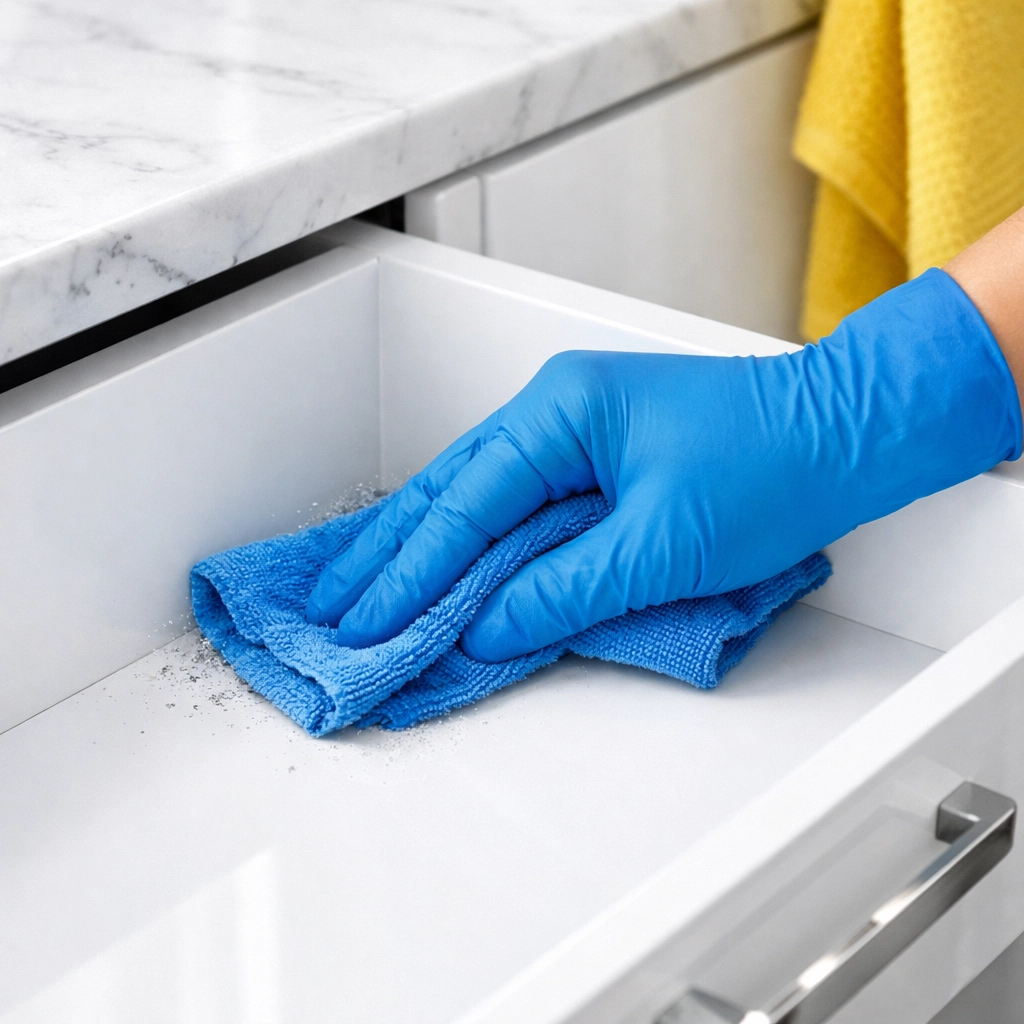
Step 1: The Deep Clean
Before we even look at the silverware, we have to address the drawer itself. Here is the Ninja-approved method for getting it spotless:
- The Vacuum Hack: Use your vacuum’s hose attachment with the small crevice tool. This is the fastest way to get those stubborn crumbs out of the tight corners without just blowing them around with a cloth.
- The Sticky Spot Solution: If you find sticky residue (syrup, jelly, or spilled spices), don’t scrub with a dry paper towel. Use a microfiber cloth dampened with warm, soapy water. For extra-tough gunk, a drop of dish soap directly on the spot, left for two minutes, will break down the sugars.
- Sanitize: Once the debris is gone, give the interior a quick wipe with a mild all-purpose cleaner or a mixture of water and white vinegar. This ensures the space where you keep your eating tools is actually sanitary.
- Dry Thoroughly: Never put organizers back into a damp drawer. Wood and MDF drawers can swell or grow mold if moisture is trapped under a plastic tray. Let it air dry or wipe it down with a fresh, dry cloth.
The Great Utensil Audit: Sorting and Decluttering
While the drawer is drying, it’s time to look at your "stuff." Most of us have more kitchen gadgets than we actually use. This is your chance to be ruthless.
Ask yourself:
- "When was the last time I used this strawberry huller?"
- "Do I really need four different pizza cutters?"
- "Why are there three broken rubber bands in here?"
Divide your items into three piles: Keep, Relocate, and Toss/Donate. If it’s broken, toss it. If it belongs in the "junk drawer" (we’ve all got one), move it there. If it’s a specialized tool you only use once a year (like a turkey baster), consider moving it to a higher cabinet to save prime real estate in your main utensil drawer.
If you’re feeling overwhelmed by the rest of your kitchen, you can always check out more of our cleaning tips to help you tackle the bigger picture.
Measuring for the Perfect Fit
The biggest mistake people make when buying utensil trays is "eyeballing" it. You head to the store, see a cute bamboo organizer, buy it, and get home only to realize it’s a quarter-inch too wide or way too short, leaving a "dead zone" behind it where junk will inevitably accumulate.
Before you buy a single organizer, grab a measuring tape. You need three numbers:
- Width: Measure from the inside left to the inside right.
- Depth: Measure from the front to the back.
- Height: This is crucial! Some modern organizers are "stackable," but if your drawer is shallow, you won’t be able to close it.
Choosing Your Weapons: Types of Organizers
Not all trays are created equal. Depending on your drawer size and what you’re storing, you might want to mix and match.
1. Expandable Dividers
These are the Ninjas of the drawer world. They adjust to fit the exact width of your drawer, eliminating that "sliding tray" problem where the organizer shifts every time you shut the drawer. They are great for standard silverware sets.
2. Modular Bins
If you have an oddly shaped drawer or a lot of different-sized gadgets (like whisks, spatulas, and measuring spoons), modular bins are your best friend. You can buy individual small, medium, and large bins and "Tetris" them together to fill every square inch of the drawer perfectly.
3. Stacking Organizers
For those with deep drawers but limited horizontal space, stacking organizers allow you to put your everyday forks and spoons on top and your less-used items (like steak knives or serving spoons) underneath.
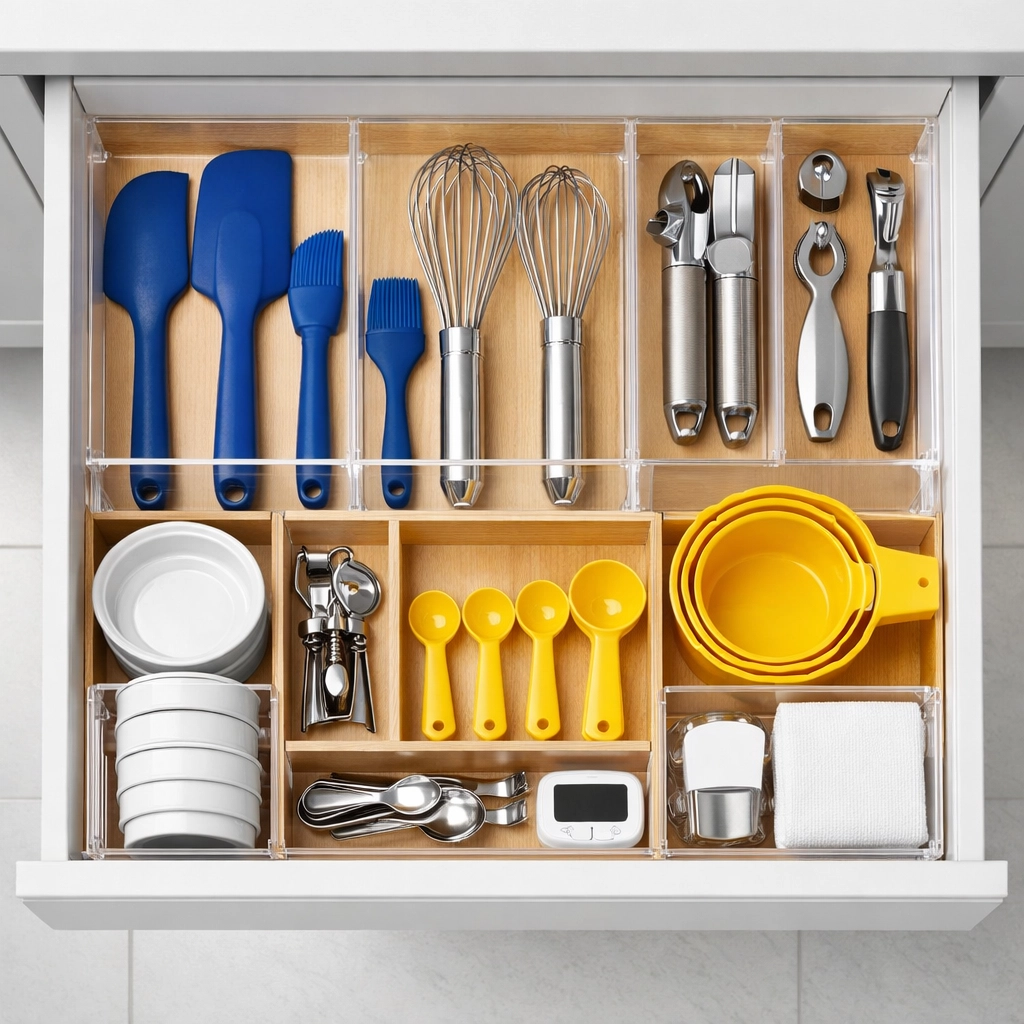
Step 2: Cleaning the Tray Itself
Don't put dirty utensils back into a clean drawer, and definitely don't put a dirty tray back in. Plastic trays can usually go right into the dishwasher (top rack only!). If you have a wooden or bamboo tray, wipe it down with a damp cloth and a little bit of food-safe mineral oil to keep the wood from cracking.
Make sure the tray is 100% dry before you start reloading your silverware. If you want to go the extra mile, you can even put a drawer liner down before the tray. A non-adhesive, grip-style liner prevents the tray from sliding and catches any future crumbs, making the next clean-up much easier.
The "Ninja Flow": Strategic Arrangement
Now comes the satisfying part: putting it all back together. But don't just throw things in. Think about "flow."
- Frequency of Use: Your most-used items (usually forks and spoons) should be in the front-most compartments.
- The Dominant Hand: If you’re right-handed, place the items you grab most often on the right side of the drawer.
- Logical Grouping: Keep all your measuring tools together. Keep your "cutting" tools together. This creates a mental map so you don’t have to hunt for things while the stove is hot.
- Handle Direction: Always place utensils with the handles facing out (toward you). It’s more hygienic because you aren't touching the part people put in their mouths just to find the right spoon.
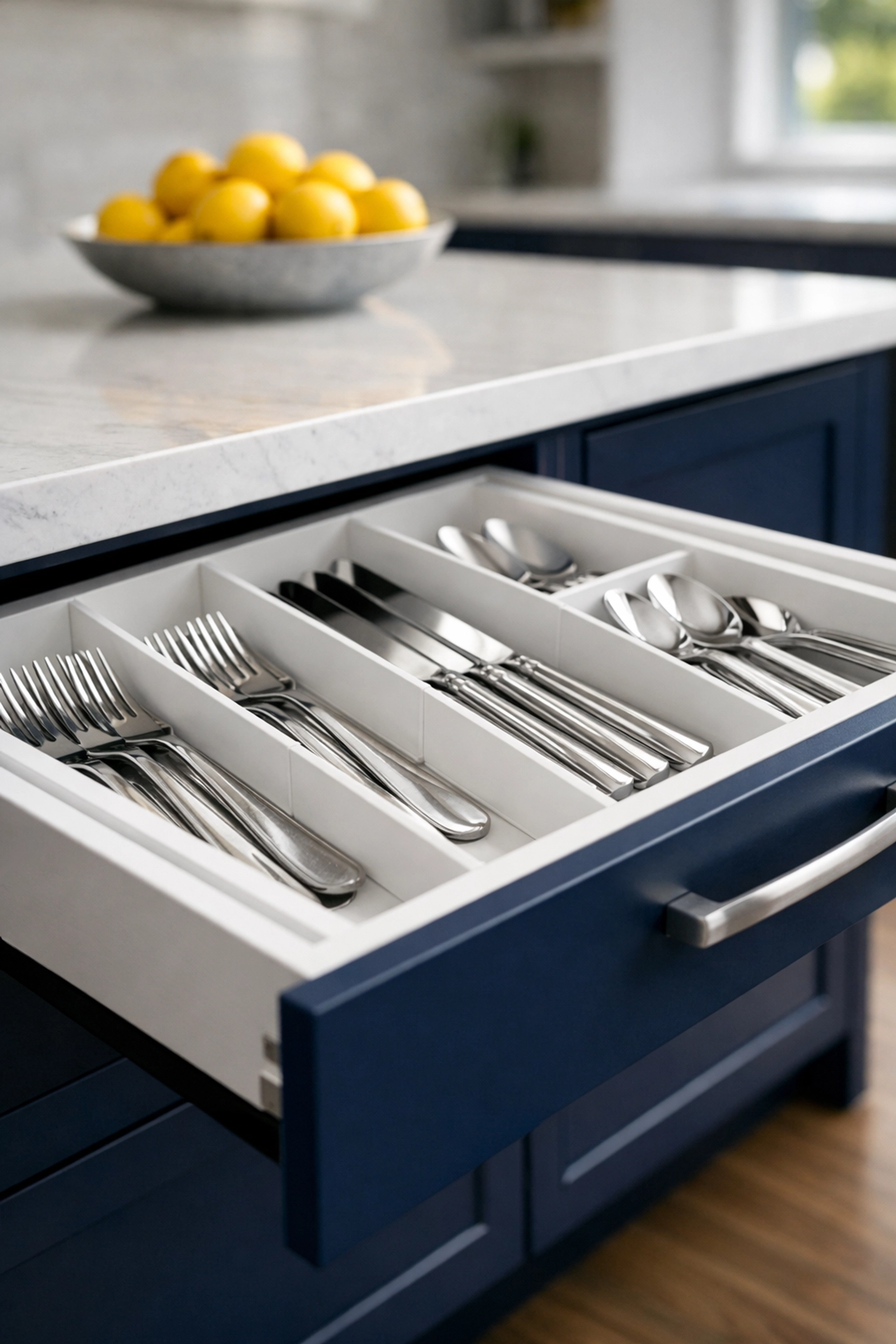
Beyond the Silverware: The "Everything Else" Drawer
Most kitchens have one drawer for silverware and another for "big tools": tongs, spatulas, rolling pins, and ladles. These are often the messiest because the items are bulky.
For these drawers, skip the standard "silverware tray" and go for long, adjustable drawer dividers. These run from the front of the drawer to the back, creating long "lanes" for your tools. This prevents your whisk from getting tangled in your potato masher, which is the leading cause of drawer-related frustration in America.
Maintenance: How to Keep It Ninja-Clean
You’ve done the hard work. The crumbs are gone, the trays are sparkling, and the spatulas are standing at attention. How do you keep it that way?
- The 30-Second Shake: Once a week, when you’re emptying the dishwasher, take a quick peek in the drawer. If you see a few crumbs, grab them with a damp paper towel right then.
- No "Wet" Tools: Make sure your utensils are completely dry before putting them away. Water trapped in a tray leads to water spots, mildew, and that weird "musty" smell.
- The "One In, One Out" Rule: If you buy a cool new gadget, something old has to go. This prevents the drawer from becoming overstuffed and messy again.
When to Call in the Professionals
We get it: life is busy. Sometimes the kitchen drawers are the last thing on your mind when you’re juggling work, kids, and a social life. That’s where The Cleaning Ninjas Inc come in.
While many people think of professional cleaning as just floors and bathrooms, our comprehensive services can include the kind of deep-detail work that makes a home feel truly refreshed. Whether it's organizing your pantry or deep-cleaning the inside of your cabinets and drawers, we bring a level of detail that would make a ninja proud.
Final Thoughts
A clean utensil drawer is a small thing, but it’s a small thing that you interact with multiple times every single day. Taking an hour to clear the crumbs, sanitize the trays, and organize your tools pay dividends in how your kitchen functions.
If you’re ready to reclaim your kitchen from the "crumb monsters," grab your vacuum and your measuring tape and get to work! And if you want to learn more about who we are and why we’re so passionate about clean spaces, feel free to visit our About Us page.
Happy cleaning, and may your drawers always glide smoothly! 🥷✨