Let’s be real for a second: dust is the ultimate uninvited guest. You spend your Saturday morning wiping down the coffee table, feeling like a domestic superhero, only to sit down with a coffee and notice a fresh gray film settled right back where you just cleaned. It’s enough to make you want to throw the whole house away and start over.
At The Cleaning Ninjas Inc, we deal with dust for a living, and we’ve learned that it isn’t just about how you wipe, it’s about the strategy. If you’re tired of feeling like you’re in a losing battle with skin cells, pet dander, and mysterious outdoor debris, you’ve come to the right place. We’re pulling back the curtain on our ninja secrets to show you how to keep your surfaces clean for longer than five minutes.
The Microfiber Manifesto: Why Your Old T-Shirts are Failing You
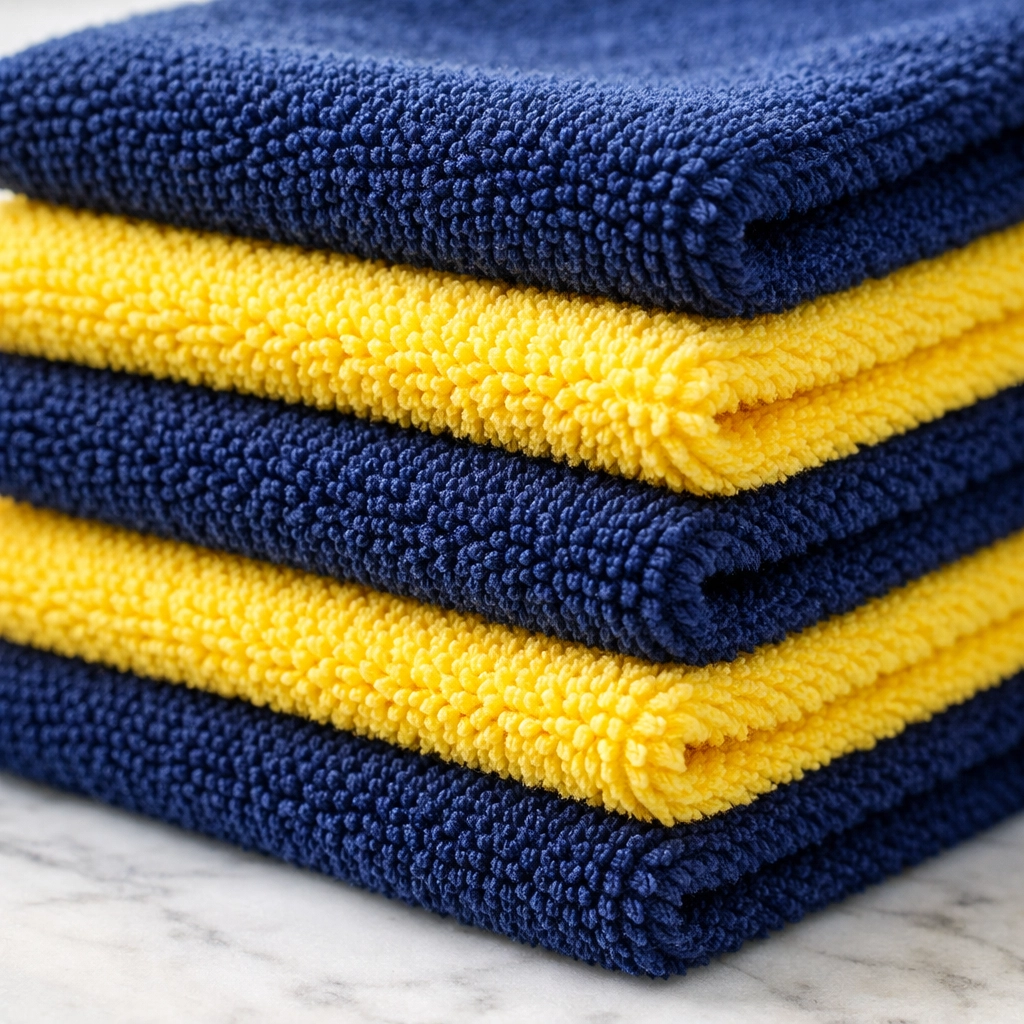
We know, we know. It’s tempting to use those old, soft cotton t-shirts or those yellow rags your grandma used. But here is the cold, hard truth: cotton and paper towels are essentially dust spreaders. They move the dust around, kick it into the air, and leave a trail of lint behind.
If you want to dust like a pro, you need to join the Microfiber Revolution. Microfiber cloths are engineered with millions of tiny loops that act like microscopic hooks. Instead of pushing dust into the air, these cloths grab the particles and lock them into the fabric.
Pro-Ninja Tip: The Folding Method
Don't just bunch up your cloth into a ball. That's amateur hour. To get the most out of your tool, fold your microfiber cloth in half, then half again. This gives you eight clean "faces" to work with. When one side gets loaded with gray fuzz, flip to a fresh side. This prevents you from just redepositing dirt onto your bookshelf.
The Golden Rule: Top to Bottom (Always)
If there is one law of physics that every homeowner needs to respect, it’s gravity. Dust falls. It seems obvious, but you’d be surprised how many people start with their baseboards or their coffee tables and then move to the ceiling fan.
When you clean high surfaces last, you’re essentially raining dust down onto everything you just cleaned. Our ninjas follow a strict "Top-to-Bottom" protocol.
- The Ceiling Crowd: Start with crown molding, ceiling fan blades, and the tops of door frames.
- The Middle Ground: Move to picture frames, lampshades, and window sills.
- The Low Lands: Finish with tabletops, electronics, and finally, those pesky baseboards.
By following this flow, any dust that escapes your cloth during the high-altitude mission will eventually land on a surface you haven't cleaned yet. It’s efficiency at its finest. If you're wondering how this fits into a larger home maintenance strategy, check out our guide on weekly house cleaning matters to see how this affects the air you breathe.
Dry Before Wet: The "Mud" Trap
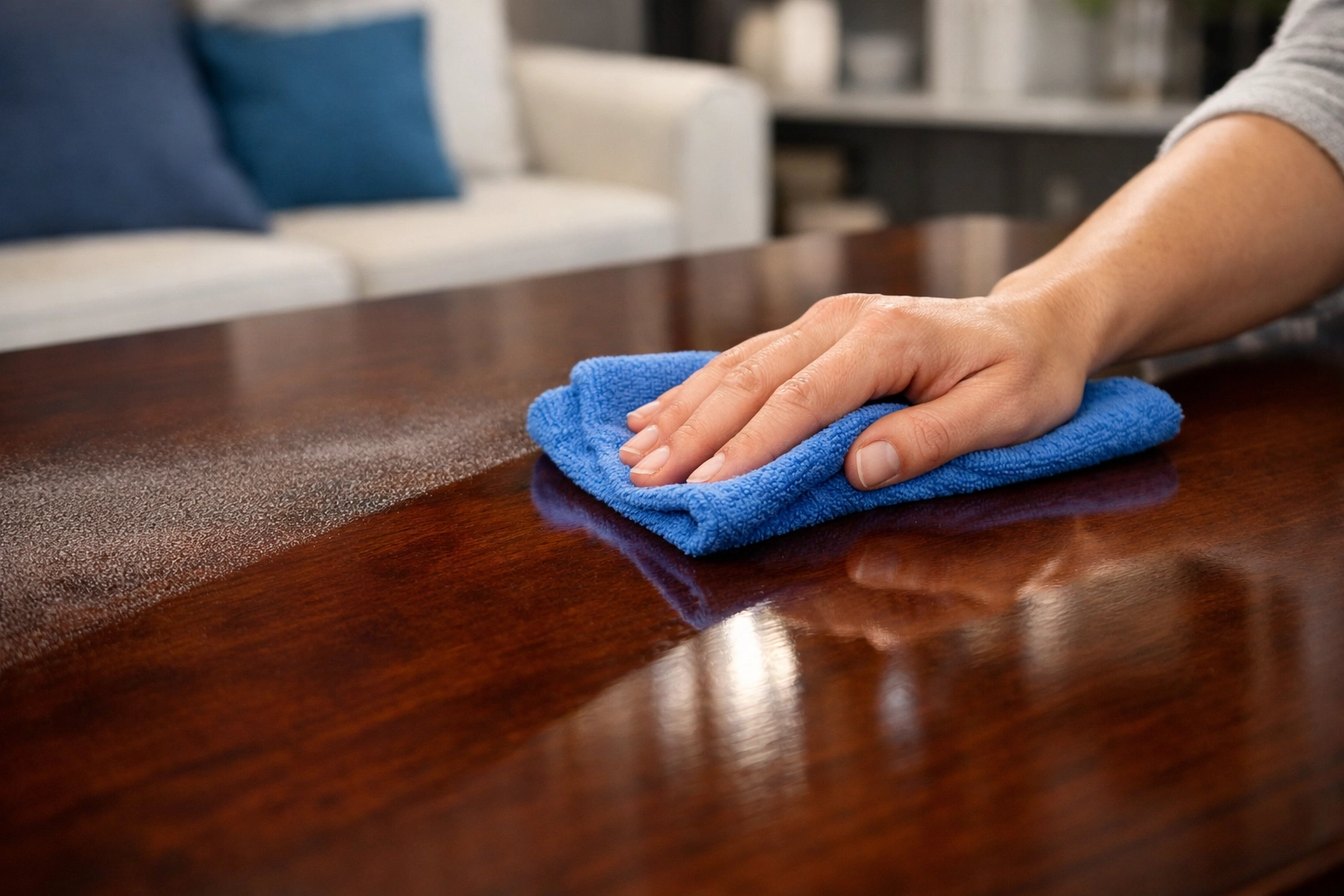
One of the biggest mistakes we see is the immediate reach for the spray bottle. While we love a good-smelling surface cleaner, spraying a dusty surface directly creates what we call "Dust Mud."
When you get dust wet before removing it, it turns into a thick, sticky paste that gets trapped in corners and crevices. It becomes ten times harder to remove.
The Ninja Way: Always dry dust first. Use your dry microfiber cloth to pick up the bulk of the particles. Once the surface is clear of the "fuzz," you can follow up with a damp cloth or a dedicated wood/glass cleaner to get that signature shine. This keeps your surfaces cleaner longer because you aren't leaving behind a sticky residue that acts like a magnet for new dust.

The Systematic "Clockwise" Sweep
Ever feel like you’re just bouncing around the room like a pinball? You dust a lamp, then jump to the TV, then realize you missed the window sill? This "randomized" cleaning is why spots get missed, and missed spots are where dust colonies begin their expansion.
When our team enters a room, we pick a starting point (usually the door) and work in a clockwise or counterclockwise circle. We don't leave a section until everything from the ceiling to the floor in that "slice" of the room is handled. This systematic approach ensures that you don’t have to go back over your work, and it keeps the dust from migrating to "safe zones" you haven't touched yet.
Tackling the Dust Magnets: Electronics and Fans
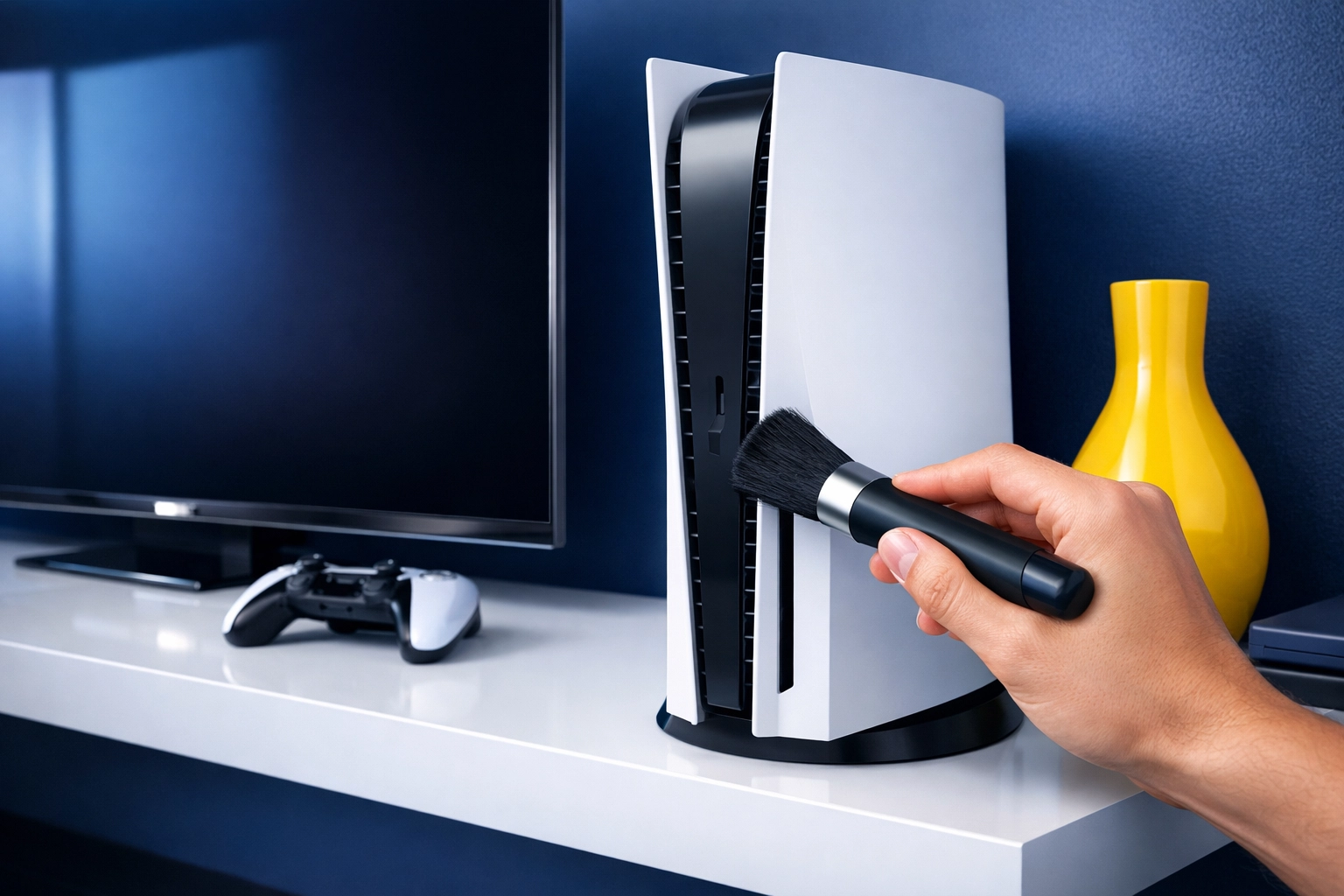
Some items in your home are basically dust vacuums. Electronics, like your TV, gaming consoles, and routers, carry a static charge that literally pulls dust out of the air.
- For Electronics: Use a dedicated electronic-safe microfiber or a soft-bristled brush to get into the vents. Never spray liquid directly on these items.
- The Pillowcase Trick for Fans: Ceiling fans are notorious for throwing "dust bunnies" all over the room the second you turn them on. To clean them without the mess, slide an old pillowcase over each blade. Pull the fabric back, and the dust stays trapped inside the case instead of landing on your bed or carpet.
If you’re feeling overwhelmed by these high-maintenance areas, you can always check out our services to see how we can take the "deep dusting" off your plate.
The "Hidden" Dust Sources
If you feel like you’re dusting every day and it’s still not enough, the call might be coming from inside the house. Dust isn't just "dirt." It’s a mix of skin, hair, fabric fibers, and outdoor pollutants. To keep surfaces clean longer, you have to address the sources:
- HVAC Filters: Change these every 90 days (or more if you have pets). If your filter is clogged, your AC is just a giant dust-circulating machine.
- Door Mats: 80% of the "dirt" in your house comes in on the bottom of shoes. Use heavy-duty mats inside and out.
- Curtains and Blinds: These are secret dust reservoirs. Give your curtains a good shake or a quick vacuum every time you clean to keep the particles from settling on nearby tables.
Frequency Matters: The Maintenance Loop
We’ll be honest with you, dusting isn't a "one and done" deal. It’s a maintenance game. However, if you dust properly using the techniques above, you’ll find that the "heavy" dusting becomes a lot lighter over time.
Regularly scheduled cleanings prevent dust from "bonding" to surfaces. When dust sits for too long, humidity and oils cause it to stick, making it much harder to wipe away later. This is why we often recommend a recurring schedule. If you're debating between different levels of help, our breakdown of weekly vs. bi-weekly house cleaning can help you decide which rhythm fits your lifestyle best.
Why Work Harder When You Can Work Smarter?
At the end of the day, your home should be a place where you relax, not a place where you're constantly chasing gray specks. By switching to microfiber, working top-to-bottom, and mastering the "dry-first" rule, you’re already miles ahead of the average cleaner.
But hey, we get it. Life is busy. Between work, kids, and trying to have a social life, "detailing the baseboards" usually falls to the bottom of the to-do list. That’s where we come in. Whether you need a one-time deep clean to reset your home or a regular "Ninja" to keep the dust at bay, we’ve got your back.
You can learn more about us and our mission to provide the best cleaning experience in the area. We’re more than just people with mops; we’re experts in the science of a clean home.

Final Ninja Thoughts
Dusting doesn't have to be a chore you dread. With the right tools and a little bit of strategy, you can cut your cleaning time in half and keep your home looking (and smelling) fresh for much longer. So, grab that microfiber cloth, start from the top, and show that dust who's boss.
And if the dust ever starts winning? You know who to call. Check out more cleaning tips on our blog to keep your home in top shape!